My Fair Lesson

Fail, fail again, fail better.
— Pema Chodron

I'm just back from a high school reunion where you get to see people you haven't seen in years--people who have struggled and people who have succeeded. People who have had a great year and people who are in a tough year.  People who love their kids and their families. But in addition to seeing old friends at a reunion, you also get to see yourself, your high school self--and wonder at the things that high school self did and the things she didn't do. The things she said and didn't say. And the the kindnesses she shared or held back. And on the four hour ride home from the reunion I had the time to reflect on the things I tried to do and failed at, and the things that I persevered at and succeeded--all of which I can see as the seeds of competence or perseverance across my life. But the seeds of courage were different. They seem to rest in the things that I didn't do then or couldn't risk. I can see that my adult courage began as fear. 

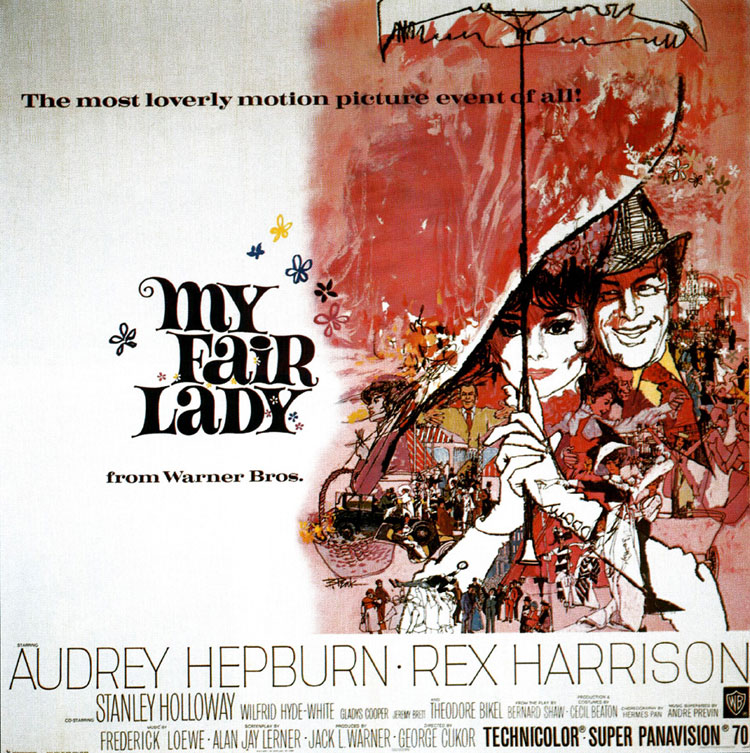
In the fall of 1981 I was not the star of the high school musical. The star was a young woman named Stacy Jarvis. She played Eliza Doolittle to Joe Scorese’s Henry Higgins in what I remember as one of the great New Jersey high school renditions of My Fair Lady. The real reason I was not the star was because Stacy was a gifted singer with a beautiful voice. She had been singing the national anthem and starring in high school shows since grade school.

But the important reason I wasn’t the star or even in the play at all was because on the afternoon of the audition I walked out of the auditorium.  After weeks of practicing the songs at home with the album from the library, I took one look at the crowd of kids gathered by the seats and walked out the door and sat under the stairs that led to the second floor.  From underneath the stairs I could hear everyone else, and I imagined that at some point I would regain my nerve and actually go and audition. But I didn’t. I waited until everyone finished and then I walked home.

I don’t remember now exactly what sent me hiding under the stairs, but I think it was fear of failing. But I do remember exactly how I felt on the walk home. I felt like I had lost the opportunity to do something amazing—as if I had been asked to suddenly go to Hawaii, and instead I had said “no” and walked home. I felt a huge sense of loss at the possibilities and the adventure I had left behind. I think most of all I was shocked that the mistake of not trying something –of protecting myself from failing, felt so much worse than failing itself.

I would never have gotten the role of Eliza. But I didn’t trust myself enough to survive the fall- or risk failing. Over the last 35 years I can’t say that I have grown to love making mistakes any more than I did then. I am not a personality that likes being a beginner—I like being able to already ‘do it.’ But the mistake of not making a mistake has propelled me into more experiences than any other. Whenever I feel fear of a new project, new conversation or new situation there is still a part of me that wants to pull back, that wishes for some protection from the anticipated mistakes, that is looking for the 2017 version of the stairs. But the other part of me is sitting at opening night in 1981.

On opening night Stacy wore a white dress and gloves in the scene at the Ball. Joe wore a tuxedo. I don’t remember what I wore, but if I had to guess it was jeans and my favorite Penn sweatshirt. When I am unsure about doing something new or risky I can see that sixteen year old girl in the audience looking at me. I see her watching a show that she wanted to be singing in. And she sees me and says, “whatever you are afraid of, it’s not as hard as this is. Go do it.” I know now that the risk of singing off key is not nearly as dangerous to the psyche as seeking safety under the stairs.  And with each passing year I remain committed to singing off key, to trying it anyway, knowing that I can as Pema Chodron says, fail, fail again, fail better. 

© Gretchen Schmelzer, PhD 2017
How we are all affected by the trauma of terrorism and what we can do to heal it.

Finding beauty in a broken world is creating beauty in the world we find.
— Terry Tempest Williams

When I first started writing my book on trauma and then this blog, I thought I would be writing for a very particular group of people who had experienced a particular trauma: those who had experienced repeated trauma—survivors of child abuse, sexual abuse, domestic violence, gang violence and those who had fought in or lived through war.

But over the last few years there has been such a consistent stream violence from global or homegrown terrorism and shootings that it feels now like I am writing for everyone. People who might have said ‘I don’t need to know about trauma,’ now really do need to understand it. They want to understand it for themselves or people they love or work with.

Why is understanding trauma helpful? Understanding trauma helps you cope and helps you heal. It helps you to keep your brain and heart working in a way that supports growth and healing rather than perpetuating trauma.

But if I wasn’t actually there, can it really affect me? The short answer is yes. The people who were actually near the trade towers, or on the finish line of the Boston Marathon, or in a Paris café , Brussel’s airport or the concert in Las Vegas will be coping with more severe experiences of trauma. But thanks to a never ending barrage of media –everyone is subject to a lot of incoming violent information. As it turns out, seeing, visually taking in the event, dominates in trauma. Seeing is so powerful that even if you didn’t see it, even if it were described to you, you would register a visual tape of the event.  Your brain creates a memory of seeing it, being there—even if you weren’t. Whether it was television and the internet, whether you actually lived through the mass shooting or bombing, or just watched it on television, your memory absorbed it as traumatic. Yes, the people who lived through it have more to deal with, but everyone who has watched it repeatedly has now been exposed to days of trauma. And this has now happened repeatedly. This is why I recommend turning off your television during these events. You don’t need more and more memories of a terrifying event.

When you are hit with the images—the hours of CNN replaying the same footage over and over, your body responds in a predictable way: your body releases adrenalin, the stress hormone, to prepare your body for fight or flight. This cascade of stress hormones has an intended job: It raises your blood pressure so that your muscles can get more oxygen to work harder—to run away or fight, and it tells your brain to narrow your focus. It instills fear and vigilance so that you are more likely to pay attention to what might hurt you. Essentially, adrenaline is your emergency response system. And by and large your system doesn’t care whether the threat is real or imagined. Real or on TV. Your body and brain are designed to over-anticipate threats.

And this can be a good thing in an actual crisis. You want to be able to react in a way that helps you survive. Survivors from today’s subway bombing talked about being focused on getting out of the train and finding an exit. This focus helped them get out. They weren’t distracted by anything else and they didn’t get overwhelmed by emotion.

But when we aren’t actually, physically under threat, but behave as if we were—this is where the impact of vicarious trauma is seen. Trauma is a stressor and high levels of stress make us behave in certain predictable ways: our cognitive focus narrows: we take in less information and we don’t think using our whole expansive brains. We get more biased towards others: we are more likely to want to be with people ‘like us’ and less likely to be inclusive. We get more rigid and less flexible. Trauma makes you want predictability—so instead of the best answer and outcomes, we are more likely to choose whatever feels familiar. And it can even take away our sense of a future—either we lose our sense of an expanded future, or we spend extra energy in our minds protecting ourselves from the trauma we just witnessed so we begin to live in an ever-present-past.

I watched some of this dynamic again after the Boston Marathon bombing, after Charleston, after Paris. After Colorado Springs and San Bernadino. And now after Las Vegas.

A traumatic event triggers fears: 1) fear of helplessness, 2) fear of another, more fearful event (fear of fear), 3) fear of separation from loved ones, and 4) fear of death.

When we talk about Post-traumatic Stress Disorder we are talking about a specific set of criteria for a psychological diagnosis. And the criteria specifically rules out exposure to trauma through the media, pictures, television or movies.

So I am not talking about diagnosis: I am talking about impact. There are a lot of things that can affect us sub-clinically and have an effect on our health and well-being. I am thinking of our diets: how eating too much sugar in our diet can begin to cause insulin resistance but not outright diabetes. Or how a lack of sleep impacts our ability to function. You don’t have to have an insomnia diagnosis to be affected by a lack of sleep.

During the era of the Virginia Tech shooting I was an adjunct professor at Northeastern. And the shooting changed my experience as I went to class each day that semester. I found myself noticing where the emergency exits were and the fire alarms. I looked for ways out of the building and out of my room. I wondered whether I would move the table or the desk in front of the door and how many of us it would take to move it, and then hold it there. I wondered whether I was brave enough to save my students. And then I would catch myself, and try to remind myself that it probably wasn’t going to happen and that I needed to concentrate on my work. I needed to come back to the present. 

The problem with the trauma response is that it is actually such a well-designed system for survival—and can run in the background as your operating system so well that you may not even notice it or notice how it is changing your behavior. But it is changing the way you take in information, it is changing the way you feel and express emotion, it is changing the way you experience relationships and communities. A trauma response is designed to help you survive: it is not the best way for anyone to grow or thrive—in fact it will get in the way of growth and health.

So what can you do to support yourself and others through this and get back to a place of health and growth?

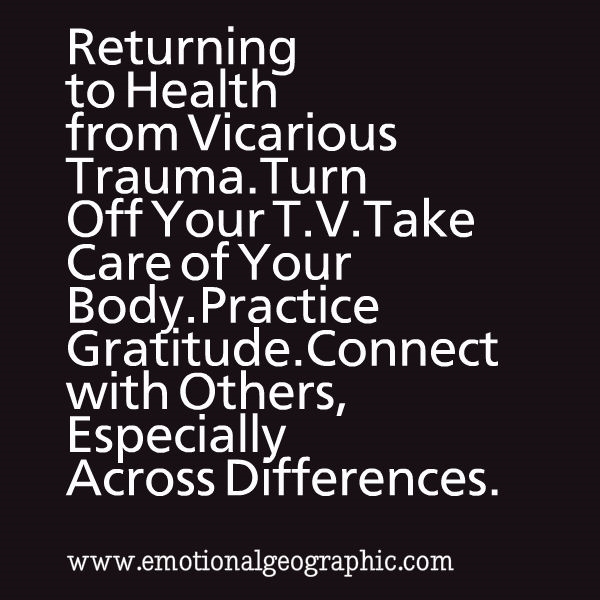
1.    Turn off the T.V.

2.     Take Care of Your Body: Trauma’s first impact is always our body—our physiological systems. So the first thing you need to do is to bring your stress level back down. Shake it off, dance it off, walk it off. Get moving, eat well, drink water, get sleep. Your body was hit with a big stressor and needs recovery. Do whatever you do to feel better, to soothe, to relax. By bringing your physiology back to a better state, your brain will shift gears too.

3.     Reconnect with Gratitude. Trauma is a world where you feel helpless and hopeless. Where there is never enough to cope. The antidote to this is the reminder of what we do have, and what we love. Say a round of gratitude at dinner or your staff meeting: just saying something you are grateful for, no matter how small or large.  Write down what you are grateful for each evening. Think of all the people you love and all the people who love you.

4.     Connect with Others, especially Across Groups. Trauma makes us want to pull inwards towards our clans, however we define them. In order to heal and in order to keep our communities healthy we need to counter this survival behavior with growth behavior—we need to reach out instead of pulling back. Do something kind for someone. Smile at a stranger. Ask if you can help. Inspire your families, workplaces and communities of faith to engage and heal the larger community. Help others be their best self.

© 2016 Gretchen L. Schmelzer, PhD


Journey Through Trauma -- The Galleys Are In!!!!

IMG_9849.JPG

The galleys of the book are here!! My book, Journey Through Trauma will be released February of 2018 and I wanted to share with you my excitement about it’s coming debut and a bit about how it came to be.

For all the years that I knew her, my grandmother had a yellowed sheet of paper hanging on her refrigerator with the famous quote from Margaret Mead, “Never doubt that a small group of thoughtful, committed citizens can change the world; indeed, it’s the only thing that ever has.” And this book is a result of many groups that I have been a part of—and you, my readers are part of an important group that brought this book to life.

Writing a book about healing from trauma and actually healing from trauma share a very important mantra: never give up. And my motivation for writing this book about healing from trauma was above all—that I had watched people who were very hurt, who had lived through trauma give up. Give up on treatment, give up on relationships, give up on work—and most of all, give up on themselves. For most of my early career I worked with kids and families in the communities in and around Boston—and I watched trauma be passed on from generation to generation. Grandparents who passed it on to the parents who passed it on to their kids. This intergenerational trauma could feel endless and hopeless. I wished that I could find a way to stop all of this trauma--stop it from impacting future generations, and stop it from robbing families and communities of the healthy people they needed. After 15 years, I expanded my work from psychotherapy to consulting and had the opportunity to work on a leadership program in Cambodia with men and women who had lived through the Khmer Rouge and who were working to heal from it—and rebuild their communities and their country. And once again I saw how hard it was to heal from trauma and yet how important it is to understand how trauma impacts your current behavior so that you have an opportunity to work with it and you can understand why healing from it is so difficult and so important.

And at some point the work I was doing as a therapist, and the work I was doing as a consultant in post-conflict countries began to combine with the work I was doing in healing from my own trauma and I began to look at what the process of healing entailed—I began to observe common patterns, stages, processes in all the places where I was working with trauma.

In 2005 on a consulting trip to Italy, I walked around Venice which has shops with beautiful marbled paper—and I bought a small, marbled notebook and took it back to the hotel—and sitting at the bar eating dinner I began to try to make some notes about what I thought the pieces of the trauma puzzle were. I boldly titled the notebook “On Integration” and once I began to make notes, there was really no going back. I had started a book. The book began the way healing begins—you have an inkling of something bigger and you start—and you start with small, fragmented pieces. The early years of the book were about writing notes and observations. Trying to translate the experiences I was having as a therapist, consultant and therapy client. Trying to map the trail I was traveling in all of the domains. The later years of writing were trying to craft these fragments into chapters.

There were many years of writing where it didn’t look like anything at all, let alone a book. And despite its slow progress and the difficulty of weaving it all together, I never gave up. And I never stopped believing that it could become a book.  I never gave up because I believed that having a trail guide to trauma would help more people stay on the trail so they heal their trauma and get their lives back, and giving up on the book would be giving up on them. And, I never gave up because I believed that this trail guide would help people NOT pass their trauma on to their kids. But working only during my breaks wasn’t allowing me to finish, so in 2013 I took four months from my work schedule and dedicated it to finishing the manuscript.

But a finished manuscript is not the end of the journey for a book. It’s barely a beginning.  Because in order to get published you need to find an agent and a publisher—and that’s where all of you become part of the story of this book. I did what I was told to do—I wrote letters to agents, and waited patiently for their replies, but that is a slow and difficult process with many moments of both hope and rejection. So while I was patiently waiting I did the next thing that everyone tells you to do: write a blog. I didn’t believe writing a blog would actually do anything, but I loved to write and it was a way to begin getting my trauma information and parenting information out to people. And In June of 2015 I wrote a post entitled “The Letter Your Teenager Can’t Write You” which went wildly viral—over 2 million hits as of this writing and it continues to circle the globe (and has been translated into French, Spanish, Greek, Russian and Italian).  There was one week in July of 2015 where my blog post was getting shared 48,000 times a day. And from that sharing an editor found the blog piece on her FaceBook page, passed my work on to agent, Ellen Geiger—who happily took me on, and she worked with me to find an editor, Caroline Sutton at Penguin Random House—and my book had found a home! Thanks to all of you—and many more who supported me on this long and wonderful journey.

Preorders for the book are available by clicking HERE. As a pre-order offer, for the first 150 people--if you take a screen shot of your completed order and email your screenshot to me (gretchen@gretchenschmelzer.com) along with a mailing address, I will send you a handwritten note to put in your book when you get it.  

Introduction to Emotion: The wild and wonderful weather of our internal world.

I cannot not sail.
— E.B.White

Emotions.  The wild and wonderful weather of our internal world. Emotions pose that classic “you can’t live with ‘em and can’t live without ‘em” dilemma. Research has proven that we feel before we think—emotions are not only part of being human, they are a necessity for decision making and learning. And for everyone I work with: leaders, parents, clients, kids—the biggest confusion is the difference between feelings and actions. Feelings are feelings—they are an internal experience. We don’t always choose our feelings. They just show up, like unexpected houseguests that we may or may not be happy to see.

What we can choose is our response, our reaction, our behavior. And this distinction between feelings and actions seems to cause the most confusion in the world of emotions. There is this assumption, especially with the emotions that we label as negative (like anger, for example), that to have that feeling means that you will behave badly. But feelings aren’t actions—though they can lead to actions. I can feel angry, but I don’t have to act angry. I can feel angry and share that I feel angry without being abusive. I can feel angry and channel that emotion and energy into productive action. There are all sorts of possibilities for me to experience anger and communicate that feeling that don’t include breaking anything or hurting someone else.

Emotional Intelligence is the ability to recognize your emotions and the emotions of others and manage your emotions in such a way to be effective for yourself and supportive of the others. The first two quadrants of the Emotional Intelligence Model described by Daniel Goleman are self-awareness and self-management.

Self-awareness is the ability to know what you are thinking and feeling in real time, as it is happening. It means you not only know what you are feeling, but you can also put a name to it. It is a way of knowing what your state of being is, and what the impact of that emotional state is, on you and anyone around you. This sounds simple and it is. But it is absolutely not easy. It's actually really hard to slow down and pay attention to your emotions--especially if they are emotions that are uncomfortable for you. 

Here’s the biggest facilitator of self-awareness: a non-judgmental attitude. You are merely being aware of how you feel. You don’t get to choose what you feel, so you may as well just take it in and observe it. The ability to be aware and notice your feelings and your current state allows you to get real-time data about what you need to be at your best.

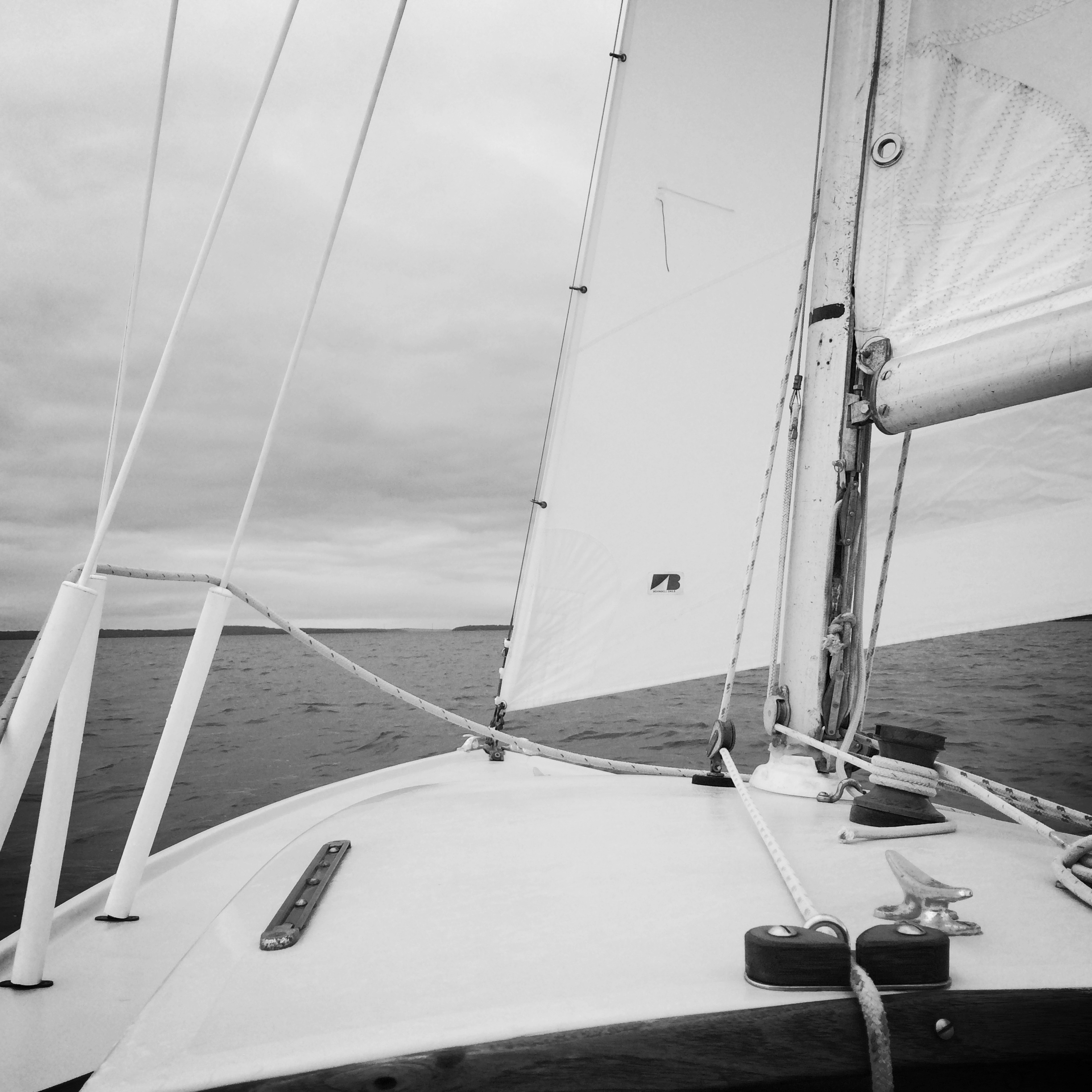
Even though I teach Emotional Intelligence as part of my work as a leadership consultant, my biggest learning about observing emotions non-judgmentally I continue to learn while watching my brother-in-law sail. Yesterday was a perfect example. We headed out in the afternoon—it was grey and windy, and we had a great sail out, and then when we turned around the wind began to shift a lot.

And as the wind shifts and you watch my brother-in-law adjust to the wind, you realize that self-awareness of emotions is really a lot like being aware of the wind for sailing. If you don’t know where the wind is coming from, you can’t really sail effectively. And you may not like where the wind is coming from because it might mean more work: tacking, or even sitting still for a while, but judging it doesn’t really help you, and denying it and trying to sail with the wind you would wished you had really wouldn’t work.

Self-awareness is just noticing what is there, non-judgmentally, and being able to have some language, minimally inner language for it, and even more helpfully, some external language for it. Self-management is the adjusting to the wind. Self-management is taking your self-awareness and making some choice about what to do with your thoughts and emotions.  You notice how you are feeling and you do what you need to do to just sit with that emotion and let it be, or do what you need to shift your state to be most effective at what you have to do. Self-management encompasses all of the stress management strategies, like relaxation and mindfulness, as well as self-talk and other cognitive coping strategies. Self-management is not just about containing or channeling difficult emotions, it is also about tapping into to positive emotions to help you shift your state. For example, focusing on gratitude or optimism in a stressful situation.

Self-awareness and self-management work together—much the way my brother-in-law managed the sails. Yesterday there was one spot on our trip where the wind continually changed direction. He adjusted the lines and then watched. It held for a second and then it shifted again. And he adjusted the lines and then watched. But it wasn’t just the sails he was adjusting. At one point as we sat with a sail flapping he looked around with a great relaxed smile and said, “It’s just a temporary lull” –which was an attitude or emotional adjustment for us. A reminder that the current state is temporary, and this may be one of the best mantras for emotional management that there could be: it’s just a temporary lull. It’s just a temporary anger. It’s just a temporary sadness. The winds will change and you can and will adjust.

Emotions and feelings aren’t actions. They are energy, they are information, they tell you what’s going on for you. You have the ability to adjust to them, to use them, or soothe them or channel them. You have the ability to adjust your internal lines and go where you want or need to go. I’m not saying that when the more difficult emotions show up, you won’t have a bad day. I’m saying with practice managing your emotions, you will get better at adjusting to them: at knowing what you need to do to keep an even keel through your bigger weather moments.

Depending on how strong the emotions are—you may end up on a different journey than you planned. Or you may end up just sitting with it for a bit. Just remember: it’s temporary. It’s a temporary wind. It’s a temporary gale. It’s a temporary rain shower. It’s a temporary lull. And all of it can make for a great sail.

© 2015 Gretchen L Schmelzer, PhD

Note: The neuroscientist, Antonio Damasio makes the distinction between emotions as the physiological experience and feelings as the thought/meaning aspect of the experience. However the words are typically used interchangeably in English and are used interchangeably in this piece.

For more on the links between feeling and thinking and decisions:

For more on Emotional Intelligence

And for encouraging examples of messy afternoon sails: