
Box it up or let it flow: Titrating emotion

Yesterday in describing the impact of trauma I talked about how some people shut their emotions down—how they can go numb and not feel anything—and that often this happens automatically. And how being numb can interfere with healing and being becoming whole.

This ability and pattern of shutting things down, of being able to flip a switch and shift your state of being is also known as compartmentalization. You can have the ability to take how your feeling, or what you are thinking about and put it in a box and close the lid. The thing about these strategies, these protections, these coping skills is that they are rarely learned—more often, and especially through trauma, we grab on to the strategy that worked for us—or that our brains and systems naturally gravitated to.

If you overuse shutting down or going numb or putting everything that is hard for you in a box—what’s the down side? Well, mostly, you eventually are cut off from your emotions and this interferes with your ability to be connected to other people and to make good decisions. We actually need emotion to make decisions—we feel before we think, and if we are shut down, we are not using all available information.

But the ability to compartmentalize is also a strength and a capacity that helps us function when we feel overwhelmed. When we just don’t have the resources to manage. When it’s too much right now. When we have to get something else done.

The opposite of being shut down is being overwhelmed. Flooded with emotions. And this can be even more problematic than numb because for people who don’t naturally compartmentalize, it can be hard to know what to do when they get flooded with emotion. In my work I have noticed that when people who aren’t good at shutting down or compartmentalizing go through trauma they are more susceptible to drugs and alcohol because they use these substances to become numb and shift state. 

But the real issue of having a defense, a protection, a coping skill isn’t whether the skill is good or bad because they are all useful or not useful depending upon the situation. The issue is choice: it is whether you are choosing to be shut down or choosing to be open to emotion. This issue is whether your coping system is driving you or whether you are driving your coping system. It’s the capacity to both open yourself to emotions or put them away for a bit that will allow you to be at your best for whatever you are working with, whatever you need to do.

How do stretch from one to the other?

If you are trying to learn how to expand your ability to sit with emotions and not shut down:

1.     Learn to sit with your own emotions: You can practice sitting with emotions. A good way to do this is to practice mindfulness or meditation. Sit for one minute or five minutes and just pay attention to how you feel. Name the feelings if you can. Just expand your capacity to be with whatever comes up without having to shift it. Some people like to sit in quiet. Some people like to use meditation tapes. Experiment and find out what works for you. My previous post on mindfulness and mindfulness and trauma might be helpful. The good news for you is that no one will ever be able to take away your capacity to shut it down or box it up. You are already good at that. Your job is just to build your ability to sit with emotion.

2.     Experience emotions by watching others. You can watch movies with emotional content, or listen to other people talk. You can read memoirs or biographies of others. You don’t have to do anything special, or feel anything in particular—it’s a chance to pay attention to the feeling part of your understanding of people. Try to guess how they are feeling. If you are listening to another person you can try to guess and then ask them to check it out.

3.     Write it down. Take 10 minutes each day and write. Don’t edit or censor—just write about where you are—how you are feeling, what you are thinking? What is top of mind? You don’t need to interpret, or judge. Just write. You are merely stretching your awareness and feeling muscles.

If you are trying to learn how not to feel so flooded and how to compartmentalize so you can function better:

1.     Part of the issue is learning to get some distance between you and the emotion or the ‘problem.’ Some people find that concretely writing down the problem and putting it in a folder, or a box helps, with a plan of when you will get back to it.

2.     There is the illusion that talking to other people about it will help. For people who shut down, talking about it can help them be more connected to the feelings. But if you are already flooded with emotion, talking about it can make it worse. It is probably best if you can to let other people know you are having a hard time, but not get in to the specifics. If you can, save the conversation for therapy or another trusted conversation partner, but for now, just ask for support to move away from that topic or those thoughts.

3.     Distraction can be your best friend. Read something, do a crossword or Sudoku, watch TV, listen to a book on tape, clean out a cabinet. Anything that helps you shift gears and take your mind off it.

4.     Short mantras to coach yourself. Statements like: “I’ve got this” “I’m ok” “I’ll figure this out.” “This too shall pass” can be really helpful. Brainstorm a few more and write all of them on 3 X 5 card or post it notes to grab when you need them. Photograph the cards on your phone and you will always have them with you.

© Gretchen L. Schmelzer, PhD 2015
A Savage and Beautiful Country..

“...but what a savage and beautiful country lies in between...”
— Diane Ackerman

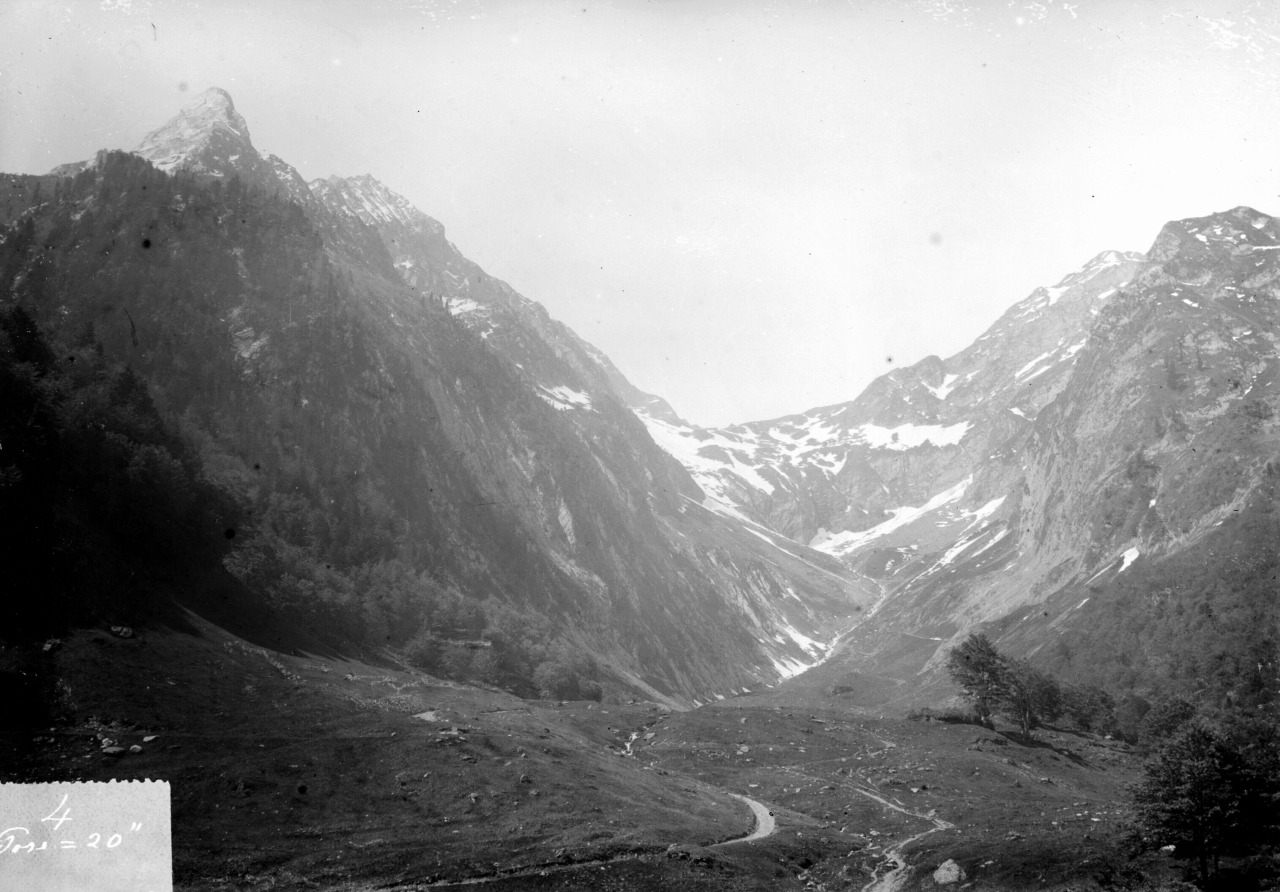
A savage and beautiful country. Yes. That is what it looks like and feels like once you begin to map and explore the terrain of yourself. Healing from trauma is a mighty steep and difficult climb. The weather can be treacherous. The way unclear. But the amazing views… And the experience of getting to know what it feels like to have your feet underneath you. To feel the sturdiness of your footfalls on even the most difficult terrain. To reclaim the landscape of yourself, for yourself.

And it is both: savage and beautiful. It is hard to hold them both. And often it is hard to see them both. Not unlike difficult mountain climbs, the work feels endless and the views are fleeting. It is why it is so important to watch the pace of healing. It is important to know when to take a break and go back down to a more comfortable altitude, or when to just take a break and look around wherever you are.

The problem with healing is that it’s hard to see the majestic nature of the climb when the challenges seem small. They aren’t small, but they can seem small. For example, one of the effects of repeated trauma is that you learn to shut off your emotions. You just shut them down. Well, you don’t so much as choose as your brain chooses for you. It is as if the smoke alarm keeps going off in your house. BEEP! BEEP! BEEP! What do you do? You unhook the wire so that awful loud sound stops. AHHHHHH. And this is what your brain learns to do with repeated trauma. It can’t stand the overload of emotion that trauma creates—fear, anger, sadness, terror. So, it shuts it down. This allows your brain to function and think again—it gives you the illusion of calm.

The problem is that this solution becomes habit. It’s like having a sore ankle. At first, just the ankle is stiff, but in order to protect your ankle, your whole lower leg becomes stiff and pretty soon its your whole leg. Our body creates a wider and wider buffer zone around our sore spots.  You get used to being shut down. To not having all your emotions. And you get used to feeling ‘in control’ of your emotions (which, admittedly, is easier when you can’t feel them.)

And then you mess up the plan. You start getting help for your trauma, you start therapy, you start sobriety, you start healing and you begin to have feelings again. You begin the climb up this mountain and the emotions rush in. And it feels savage.

When you are numb, the world feels organized. It’s not, but it feels that way. And when you start to get your feelings back it feels like there are gale force winds blowing through your entire life. When you are used to feeling in control, proud of your control—then any feeling at all can have you feeling off balance and out of control.

And there is some truth to the control thing: not that you are totally and completely losing it, but that your muscles for managing your emotions are actually flabby. They are out of shape. You haven’t used them because you have kept a rigid brace on your emotions for years and haven’t used your emotional muscles—haven’t flexed with them, and seen how they work. So when you start having feelings again you have to begin to build muscles again, and this can make you quite sore—it feels raw to go through this process.

But it’s not all savage. It’s not all terrible because the feelings, despite their messiness, feel real. You have glimpses, through the clouds of emotion, of yourself whole. You can sometimes feel more of yourself and feel more real than you have in years, or than you ever have. And you can sometimes wonder, which is worse, to feel all these feelings or to feel numb. What feels savage is that once you begin healing there are few days on the trail that feel comfortable. Either you feel all these messy feelings, but you feel real and whole—or you go numb, and feel in control, but exiled from this self you just glimpsed. And these are the poles you work from, ever gradually finding the middle ground. Helping your heart and brain to connect. Gradually bringing the emotions from the trauma and the story of the trauma and the new experience of healing all together in one place. That’s where you get the view.

And this is just the way it is in expeditions. It is just is. It is a long and arduous climb within a savage and beautiful country. But it is your country. And that’s something.

© Gretchen L. Schmelzer, PhD 2015


Whale Dreams.

“It’s not down on any map, true places never are”
— Herman Melville, Moby Dick

Trauma affects everything. Even your dreams. In fact nightmares are a hallmark of PTSD and are often the symptom that troubles people the most. If you come to trauma in adulthood you will notice the biggest difference because you would have had happy dreams before you began experiencing nightmares. In many ways, I think it is much harder for traumatized adults because there is such a stark experience of the nightmares. If you grow up with trauma you don't know anything else. You think that nightmares and dreams are the same thing. You are entirely used to them.

The very first dream that I had that wasn't a nightmare was when I was 32. I dreamt that I was standing high on a cliff on the west coast and from this cliff I could see a whale. It had come up to the surface and I was so unbelievably happy to see it. It rolled and waved its big flipper and I was so happy I passed out and landed on the shore. In the dream when I woke up I was still happy. And when I woke up for real, I carried the feeling with me and the awe of this wild creature who had surfaced. I also carried with me the possibility that happiness could and would surface. For now, in moments, but the whale in the dream gave me hope.

 Over the years the image stayed with me. Healing stirs up longing. Longing for connection, longing to connect parts of yourself back together, longing to inhabit a different state of being. The image stayed with me long enough to write the following poem—what if Moby Dick were understood from the whale’s perspective? So much of healing is about a desire for connection and an ambivalence about safety in connection. You have to hang on to the hope. You have to sometimes grab the end of the line.

The Finder and the Found

The assumption is that he

didn’t want to get caught.

That the entire epic struggle

was one of escape. They assumed

that his desire was for freedom.


But perhaps the great white whale

was just ambivalent about closeness.

Was afraid that Ahab would

hurt him, as the others had before.


Unsure of whether to stay below

or surface, giving signals of

his whereabouts to those

who would wish to find him.


Perhaps, he was secretly hoping

to be pulled in on a great line.

Welcomed aboard with shouts

of homecoming and reunion.


Maybe Ahab’s longing

mirrored his own desire:

The finder and the found

joined by the ends of a line.

GLS

© Gretchen L. Schmelzer, PhD 2015


Understanding Learning and Memory III: Understanding Re-enactment

“Bees dance their memories ”

Bees dance their memories. And so do we.  We dance them. We grow up learning the dance steps of relationship and attachment that we experience. We learn the dance steps so fully we don’t recognize them as dance steps, it is just the way we are. It is just the way we understand and see the world. We dance our worldview. We dance how we expect things to go.

Yesterday I talked about how trauma is intertwined with memory. How trauma becomes procedural or process memory. We dance our memories. We do our dance steps and we expect that the others we meet will dance the same steps. When others don’t respond the way we expect we often do our dance steps more pronounced—we try it harder, to get them to follow our lead. We may not like our dance steps, we may even be trying to change our dance steps, but the pull of familiarity is a gravitational pull. The pull of familiarity is illusion of safety, even when it is the furthest thing from it.

The holidays are now behind us, but I had many friends ask, “Why is it that the same things happen every year?” “Why does my __________ (Fill in the blank: uncle, brother, sister, father, mother) stir up the same argument every year?” “Why do I say those things again? Do those things again?

Why do we continue to do the same dance steps and why is this particular form of memory so strong and powerful? Why does it have so much power to inform our decisions? Earlier this week I wrote that all information from our senses gets routed simultaneously through two memory centers in the brain: the amygdala (the fear/fight/flight center) and the hippocampus-cortex (the main memory storage area). The route through the amygdala is the faster route: it is essentially a security check—Is this dangerous? It is a quick and dirty scan. The brain has a high tolerance for false positives. Better to jump away from a stick on the ground than blithely walk over a poisonous snake. The amygdala is where our emotional memory is stored and it is also where our memories of our first two years of life are primarily stored. And it is stored not as a narrative of what happened, because the amygdala doesn't traffic so much in language. Our memories are stored more in the form of choreography. They are stored as dance steps.  So when information comes in, it gets routed through the amygdala, who holds the archives of our dance steps. It is seeking the dangerous, and for trauma survivors-- the familiar, it is readying us for any familiar danger.

When I was doing my training I spent some time creating a mindfulness group on an adolescent inpatient unit. In my first attempts (since I was new at mindfulness at the time) I brought in mindfulness meditation tapes that I had bought to teach myself. I was new at mindfulness and leading this group and thought perhaps the kids would respond better to a professional tape, and it would leave me available to help kids who were struggling. But that isn’t what happened at all. After listening to the tape, the teenagers were angry. They all talked about how the person on the tape wasn’t friendly, how they didn’t like the voice, how they were sure that the person on the tape was judging them or didn’t like them. They all took a benign (or even kind intentioned) voice and only heard what they had ever heard: anger and judgment. They brought their dance steps and could only imagine the dance steps they knew.

But sometimes, especially with trauma, we don’t just dance our dance steps because they are familiar. We dance so that we can change the outcome. We dance the old dance hoping desperately, if unconsciously, for a different ending. The psychological term for dancing the old dance in a new situation is re-enactment. I have worked with many teenagers who grew up terrified from an abusive childhood, and then spent most of their teen years putting themselves in terrifying situations. They wished so badly to be rescued from the terror when they were young, but it didn’t happen. And so now as a teenager they were trying again. They were dancing with terror hoping that maybe this time they could change the outcome. Maybe this time they would get the rescue and love they didn’t get.

The pull to re-enactment is primal. It is powerful, and in a backwards way I have always viewed it as a sign of hope. There is something in the human psyche that wants to grow. That wants to heal. That wants to be whole. And this desire to get it right this time is a sign of hope. Hope for what couldn’t happen, hope that it someday might.

The problem is that reenactment alone usually doesn’t heal. In fact, it often re-traumatizes. Partly because we are all pretty good at finding similar scenarios to re-create the triggers of the old trauma responses, and partly because you can’t actually fix the past by reworking the exact ending. It is a little like missing lunch last Thursday and trying to eat today for it. It’s over. All you can do is acknowledge the loss of the meal from last Thursday, but you can’t change it today.

What does heal is being able to see the reenactment for what it is. What does heal is having another dance partner—someone in the healing profession—who can help you with your old dance steps—who can translate the memories you are dancing—and who knows that this is what the work is. Someone who knows that you are telling your story through dance steps as much as through what you remember. Someone who has the ability to both join the dance enough to understand it, and yet be able to step away and not get caught in it-- so that you can see yourself dancing. Can see that the dance steps don't belong to the present.

When the teens in my mindfulness groups were talking about their assumptions of the person on the tape they were telling me, with their dance steps, what their experience was in relationships. In order to learn new dance steps they had to be able to check their assumptions about the voice they heard. Become aware of their dance steps. This meant that I had to learn how to lead the meditation groups myself so that the voice they were listening to could be mistrusted at first (their old dance step) and then survive their mistrust so they could experience a different and new dance step. Yes, bees dance their memories, and so do we. And with a lot of hard work we can transform that dance. And dance our way into new memories. 

© Gretchen L. Schmelzer, PhD 2015

Learn more about the ways bees talk here.