Understanding Learning and Memory II: Trauma and memory are intertwined.

door.jpg

Repeated trauma and memory are intertwined. To understand the journey to healing from repeated trauma is to understand, appreciate the brain’s system of trying to sort it all out and survive. Yesterday I focused on the way memory is formed: either through urgency, repetition, or association. And today I want to talk about the type of memory—because there are different sorts which I alluded to yesterday and in a previous post about traumatic memory. There are essentially memories of content (which are also called declarative memories or explicit memories) and there are memories of process (which are also called procedural memories or implicit memories).

Content, declarative, explicit memories: these are what we all actually think of when we think of memory. When you ask someone: tell me what happened at the meeting last week—you are asking a question of the declarative sort—you want information, you want a narrative. When you reminisce about what you did on your honeymoon, or what you did in high school—you are pulling on memories that have a who-what-when-where. Information that can be categorized.

Process memory is a memory driven more by the senses—by feel (action/movement), emotion, spatial recognition, sequence, tone. When you learn to ride a bike—there is information that guides you (keep your hands on the handlebars, keep pedaling) but the motion of your feet and the feeling of balance is an implicit memory. Implicit memories are difficult to describe. When someone asks you ‘how do you do that?’ when you swing a golf club, or tie a knot in your shoe laces—you have to really think about the sequence. You ‘know’ how to do it—but you don’t know how you know.

If you have ever lived in an old house where there is a door that is too low you will recognize the learning that happens when you wack your head on the doorframe, and how you subsequently duck as you head to that door. You don’t need to think about it, you automatically do it, even in the dark when there is no visual cue for the door. You body just knows when it is near the door and ducks instinctively. And if there is more than one door in your house that is of an uneven height, you might begin to duck, even just slightly, at all doors—just to be efficient and be sure. This is procedural memory.

And trauma becomes part of our procedural memory. If we learned that being in relationships was dangerous, that we would, metaphorically speaking, wack our head on the doorframe, then we “duck” when we are near people who we associate with that feeling. We don’t think about it, we just duck. I think of procedural memories as blueprints or mental scaffolding. Our brains are so efficient. They experience the world and then make a plan of it so they can anticipate as much as possible. The key is that they make this blueprint or scaffolding from the memories that are the most well-worn. We work most off of over-learned memories—and as we saw yesterday- urgency and repetition make memories the strongest. And when you combine those two things with repeated trauma you get some seriously intense learning.

But the key to understanding repeated trauma is that the learning is not so much: this is exactly what happened when. It is more: I instinctively know when to duck. And I do it whenever I perceive myself to be in a similar situation. Procedural learning is often generalized learning. I don’t need to know how to ride each specific bike, or drive every specific car because I know the important things to look for and how to work them. And we do this with learning, with relationships, with how we approach things, or avoid things.

And with trauma we are even more likely to generalize the learning, the fear, because strong emotions and fear make us more likely to generalize and more likely to hold on to this learning. They recently did a study of mice where they trained them to fear one tone with something frightening, like a foot-shock and paired a different tone with a something neutral like a color. These tones were far away from each other on the auditory scale. And when the foot-shock wasn’t that stressful the mice distinguished between the two tones. But when they increased the stress and fear of the mice from the foot-shocks—in other words, increased their trauma, they stopped distinguishing between the two tones and basically jumped at any sound. They ducked at any door. This is what brains do when they get stressed repeatedly.

This is why when I teach graduate students about becoming a therapist I try to explain that lots of people coming in for help, especially with trauma histories,  aren’t going to experience therapy as helpful—not at first, and often not for a long time. Their blueprint for relationship has them imagining that they are going to hit their heads on the door—so they duck. And they don’t trust any other way of being for a long time. So repetition becomes a powerful instructor to revise the old patterns and old associations. As helpers we believe that our clients should know that we are different than any of the people who have hurt them in the past, but that’s not how brains work. They generalize. People hurt me. People are dangerous. You are a person. You are dangerous. And it takes both unlearning and new learning to shift this. Lots and lots of repetition of this. And as clients we can get frustrated too—we know logically that the person trying to help us is different, but we are stuck in our patterns—and no matter how hard we try to hold our head up through the door, we find ourselves ducking. For a while we only have our dance steps that we brought with us and have learned so well.

Tomorrow we will look at those dance steps and how to understand them better so that we can have more patience with the process of healing.

Resources for trauma and memory: Article: Memory from traumatic experiences in early childhood.

© Gretchen L. Schmelzer, PhD 201

Understanding Learning and Memory: The Neuroscience of Repetition

“Lather, rinse, repeat...”
— Instructions on every shampoo bottle

How do we learn things? How can we make change? If we have done it once, why do we find ourselves falling back on old habits? Maybe the first thing to understand is how our brain creates memory. It is important to understand the basics of memory in order to understand learning and change. It is also important to understand the basics of memory in order to better understand traumatic memory. And I want you to understand how the brain makes memories so you can understand why practice and repetition are so important.

In today’s blog I will simply start with the idea that information comes in through our senses—our ears, eyes, skin, nose, or tastebuds. And this information gets routed either through the low road —the amygdala (our emergency fight-flight/emotional memory storage center), or the high road—the hippocampus-cortex (our memory storage center.) And once information comes in, it needs to get encoded—and by that I mean, it needs to be ‘written’ in a language the brain understands so it can be stored and remembered.

Here we make a distinction between short term memory and long term memory. Short term or what is also called ‘working’ memory is the holding area where information stays when it first comes in: someone tells us their phone number and we repeat it back keeping it in working memory- it’s like a whiteboard you scribble on in your brain for your incoming information. Short term memory lasts minutes. When short-term memory makes the shift to long term memory-- long term memory can lasts day, weeks, years or forever. How does information move from short term memory to long term memory?

There are only three ways that information can move from short-term memory to long term memory: urgency, repetition, or association. Urgency, with the release of stress hormones, creates a powerful wash of chemicals that strengthens the connection between neurons or synapses. And, urgency also determines how and where the brain encodes the information into long term memory. Urgency can create a very long lasting memory—after a single exposure to a threat, the amygdala can retain that memory for an entire lifespan. However, the encoding or labeling of the event—the ability to recall or retrieve the memory can be more troublesome, and not under conscious control—so that the information gets stored with an emotional, rather than a narrative marker. I can pass by where I had my car accident and get anxious, even if I don’t have a conscious memory of the event.

Repetition is the most familiar learning tool --everyone has memorized facts or vocabulary words by repeating them, and some have improved basketball free-throw shooting or playing piano scales through practice. Repetition creates long term memory by eliciting or enacting strong chemical interactions at the synapse of your neuron (where neurons connect to other neurons). Repetition creates the strongest learning—and most learning—both implicit (like tying your shoes) and explicit (multiplication tables) relies on repetition. It is also why it is so hard to make behavior change, because the new behavior must be repeated for so long—and the old behavior must be held in check.

Association is the ability for a piece of information to tap into a neural connection that already exists. It’s the equivalent of already having a file folder for the new learning to go in to. For example, if I read a list of ten numbers out loud and asked you to remember them and say them back to me--- typically you would find this a difficult task. But if the ten numbers also happened to be your phone number then the task would be easy, and if I asked you a year later what the numbers were, you would still be able to give them to me because they were already part of a previous neural connection.

All three of these methods affect the neuron or synapse level in similar ways for long term memory. The stimulation from urgency, repetition or association will actually create new proteins inside your neuron-- at the level of the synapse a self-perpetuating protein is created which keeps the connection going between neurons. This is a long lasting self-perpetuating protein, and it gets strengthened with repetition. In addition to this self-perpetuating cycle, the neuron, through the protein process also creates a new synaptic terminal growth—to increase the connection—it adds another branch on its tree to strengthen and increase the network.  So repetition actually grows the brain’s neural network.

So with rare exception repetition is the only real option for learning, unlearning, and re-learning—and yet as adults we so often believe that we can and must learn everything fast. Everything is supposed to be 3 easy steps, or maybe 5, but not 100. We are designed to learn through practice. Can you imagine how hokey it would sound to say, “Play the cello just like Yo-Yo Ma in 3 easy steps!” It would be absurd. Elite musicians spend 15-15 years of practice to become the artists that they are. And depending upon what you are trying to learn, trying to heal, trying to unlearn or re-learn it can take a long time too. It’s okay. It’s the way we were designed to learn. And our own internal symphonies are worth the practice and time and care. 

© Gretchen L. Schmelzer, PhD 2015


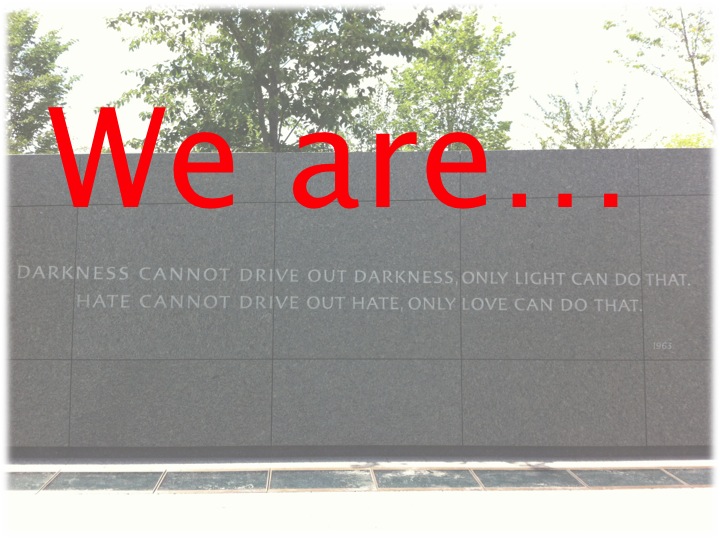
We are.

“Injustice anywhere is a threat to justice everywhere. We are caught in an inescapable network of mutuality, tied in a single garment of destiny. Whatever affects one directly, affects all indirectly.”
— Martin Luther King, Jr, Letters from Birmingham Jail

We are Charlie. We are the NAACP. We are Newtown. We are Trayvon. We are Boston. We are Virginia Tech. We remember. We can’t breathe. It feels like we barely get a break from one heartbreak in the world and the next arrives. How do we hold it? How do we hold each other? How do we remember that we are a we?

This past week there was an internet, and mostly Facebook phenomenon of Photo Doggies for Anthony where over 900,000 people (myself included, it was impossible to resist) sent in pictures of their dog to a 16 year old boy who was getting chemotherapy treatment. It just went viral. Everyone so easily, and immediately sent a picture of their dog to this page with the most lovely notes of well wishes. It was a mighty storm of kindness. And I wish we could figure out how to do that more. And by that I don’t necessarily mean doggy Facebook pages, but how can we create mighty waves of kindness? How can we create these storms of love so we could use them for healing and for change? How can we rally around the hurt parts of our world the way we rallied around Anthony? There wasn’t a worry that other people from different political parties or religions or countries were sending in dog pictures. We could be a we. And we need so much more of that.

History is full of heartbreak. We are Auchschwitz. We are the Killing Fields. We are the Triangle Shirtwaist Factory. We are Wounded Knee. We are Montgomery. Violence, terrorism, evil—they have a playbook that has been used for a long time. And it is so hard to know how to stop it.  It seems that increased attacks, or violence is the only way. Yet, as Martin Luther King, Jr. said,

“Violence never really deals with the basic evil of the situation. Violence may murder the murderer, but it doesn’t murder murder. Violence may murder the liar, but it doesn’t murder lie; it doesn’t establish truth. Violence may even murder the dishonest man, but it doesn’t murder dishonesty. Violence may go to the point of murdering the hater, but it doesn’t murder hate. It may increase hate. It is always a descending spiral leading nowhere. This is the ultimate weakness of violence: It multiplies evil and violence in the universe. It doesn’t solve any problems.”

But what does solve the problems? It feels like the violent and the cruel have a playbook handed down over centuries. Where is the playbook for peace? Where is the playbook for change in the face of heartbreak and evil?

In reading Parting the Waters by Taylor Branch, I felt like I finally came across a playbook for change. The actions of the civil rights leaders in the 50’s and 60’s came as close as we may ever get in some very fundamental structures that they used to create a mighty wave of kindness for each other to hold each other as they sought change. They knew something about the we that we have all forgotten. Martin Luther King’s premise was that we were all a we, even as it was not yet a lived experience, even as there were forces working against that, powerful forces. He started with that premise as an aspiration and he worked toward it. He never let go of the we.

The movement would not have been what it was without the churches and the mass meetings that were held nearly nightly during the most difficult parts of the struggle. That was a structure of we. And the civil rights leaders worked really hard to collaborate and listen and flex with the work as it grew. They struggled and they were imperfect, but they were open to making sure the we could expand.

In a study of why young people join terrorism groups, it wasn’t because they already had strong beliefs about something or their religious fervor. It was actually because they were seeking something to believe in, they were seeking meaning, they were seeking a stronger identity. The same was true when they researched suicide bombers. It wasn’t religious fervor; it was a range of motivations more connected to finding meaning in dire situations. And there has been similar research about why young people join gangs.

Finding meaning isn’t easy. Finding meaning in something means being able to see outside yourself, see the bigger picture, believe in something bigger than yourself. Finding meaning means hard work. But finding meaning rarely happens by yourself. When people are seeking meaning they are also seeking connection and so the question is, ‘how can we all work to create better moments of connection?’ How can we strengthen a ‘we’ that is bigger—how can we see the ‘we’ when tragedy isn’t currently befalling us?

I heard a wonderful story of elders in an Alaskan village who helped combat suicide within their youth. They did it by saying that their youth were their responsibility, that they were a ‘we.’ They decided that no youth should walk to and from school alone. They decided that they would look out of their windows and if they saw a youth alone, they would walk with them to school or walk them home. The suicide rate in the village plummeted. When they were a we, the elders and youth had meaning. And meaning meant life, meaning meant health.

Every act of violence has different roots and different motivations. There is no one answer to these tragedies. But we do know that individual acts of courage, and collective acts of courage have been what has changed the world—whether walking a child home, collectively praying for change, or peacefully protesting injustice. We need to work on our we, because, We are, and we need we.

© Gretchen L. Schmelzer, PhD 2015

At the Edge of Healing

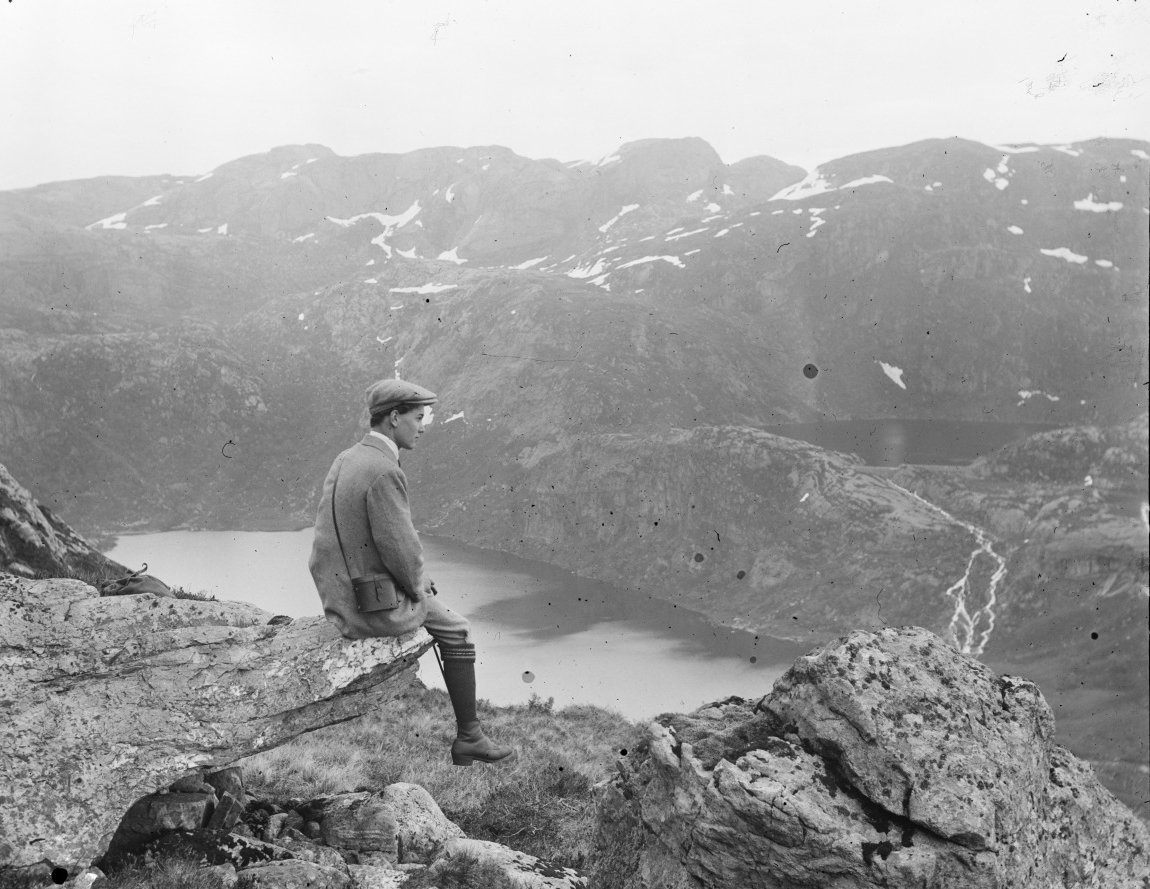
“Where is an edge—a dangerous edge—and where is the trail to the edge and the strength to climb it?”
— Annie Dillard

Where is your edge? This is a much better question than any new year’s resolution. Where is your edge? It isn’t about anyone else’s edge—or what’s hot or new. It is your edge. The place where you run up against your self. Where you need to go, but you aren’t sure you can. You aren’t sure you have the strength to climb it.

Truth be told, there are some times in life, and in healing from trauma especially, where finding your edge and sitting there looking at the view, or simply finding shelter right there is all you can really muster. Often you didn’t choose to be at your edge. Most of the time, as it often is, a convergence of things brought you along the trail to your edge. And there are also times when you thought you were going to be climbing, and instead you are simply at your edge. You know it in every fiber of your being. You can’t yet move. Your job right now is to be brave enough to just be at your edge and not change it. Or as Oriah Mountain Dreamer said, not hide it or fade it or fix it. Just be there at your edge and get to know the landscape.

When you are clinging to the side of your mountain it can be annoying to hear about other people’s goals. It can be annoying, especially at this time of year, when people are talking about these wonderful life changes they want to make, or that their biggest problem is gluten or carbs, and all you can do is think to yourself, ‘My goal right now is to not get blown off this dangerous edge. My goal is to be brave enough to stay with this.’  Your brave act is often invisible to those around you. This can be incredibly painful.

And this is why I call my website ‘Emotional Geographic.’ I have been a National Geographic fan since I was six years old and sat in my grandfather’s musty basement reading them for hours. It was my first real contact with exploration and bravery and people doing things that hadn’t yet been done. And there were maps! Maps of places far away and people making the maps of the places they were exploring. I read about people traveling around the world solo in a sailboat, teaching sign language to a gorilla, or going up Everest. Then two years ago in a blizzard where I lost electricity for four days I amused myself by once again reading National Geographics for hours by a battery powered lamp. One thing you notice in the original National Geographics was that there were no journalists; the writers were the explorers. The writing wasn’t perfect, but the observations were great. I read the same ones I had read as a kid, and I was struck by how this narrative of the explorer was missing from the trauma work I was writing and reading about. Yes, people write about trauma all the time.Trauma makes a great story—the terrible things that happened—but the road back is almost never the story. 

Healing from trauma is a reconnaissance mission, and I want there to be a place where the inner explorers who are healing from trauma are honored. I want there to be a place where the work of healing is seen as just as courageous and cool as the expeditions of the National Geographic explorers. Healing is slow and often tedious work. And sometimes the work looks like just staying at your edge. The work can be invisible on the outside.

And the truth is that all of those mountain expeditions were mostly slow and tedious too. When they show an hour an ½ movie of an Everest climb they are cutting out a year of preparation and thousands of hours of climbing. This is also why I think there is a lot to learn about healing from those old geographic expeditions. Those explorers knew a lot about patience, and persistence, focus, will, fortitude, resilience and teamwork. Healing from trauma is an endurance event. It is helpful to learn from anyone who has truly learned how to endure. 

So where is your edge? Are you already there? Is that as far as you want to go right now or can go right now? Trust your gut. There is so much to be learned from just staying at your edge.

And trust yourself if you find yourself climbing. What I have found is that you don’t really choose to start climbing again. When you can climb, you climb. There is a wonderful energy in the world that pulls us toward growth, toward healing. When we clear the path, when the weather changes, when we have the resources, when our inner wisdom knows its time, we generally brush ourselves off and climb, and we keep climbing until we meet our edge again. 

© Gretchen L. Schmelzer, PhD 2015

Learn from the explorers. Subscribe to National Geographic here.