Feeling lost? Go into the woods...

“Stand still. The forest knows
Where you are. You must let it find you.”
— David Wagoner

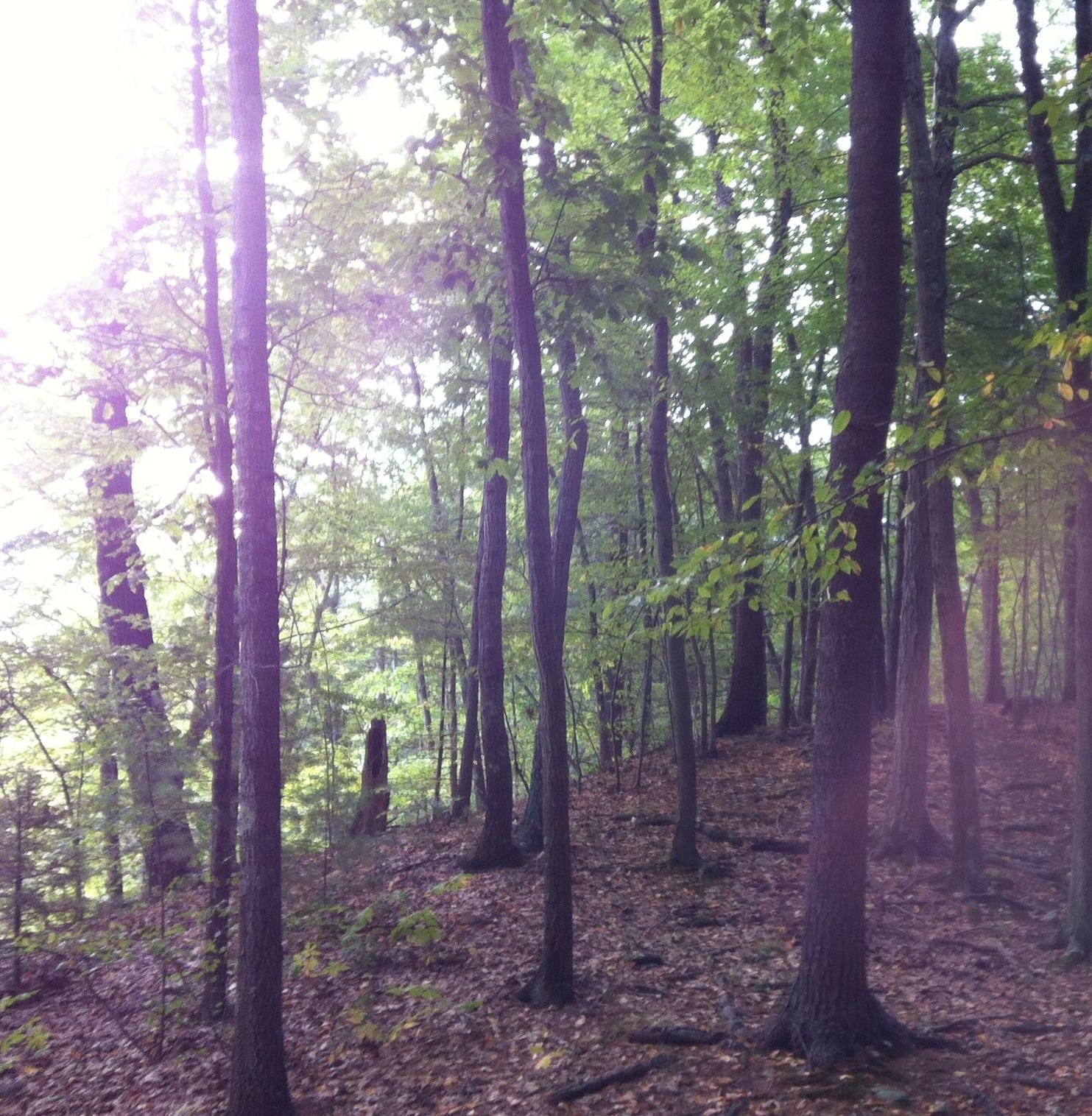
When the world feels like too much, or when anxiety hits, or I just can’t seem to feel comfortable there is one place where I can always find my feet again, where I can feel grounded and whole—the woods. From the minute I enter the forest everything begins to shift. I breathe differently. I slow down to notice the patterns of colors and light. Even though these are the same woods I see each day the palette of colors shifts entirely depending upon the light and the season. As I walk through the woods I find my center again, sometimes solid, sometimes wobbly, but I can feel it and I can bring it home with me. The Japanese have a term for this walk in the woods: Shinrin Yoku “Forest Bathing.”

While I am sure that this practice of Forest Bathing is actually quite ancient, the practice was created in 1982 by the Forest Agency of Japan to encourage citizens to lower their stress and increase their well-being. Forest Bathing is defined as ‘making contact with and being in the atmosphere of the forest.’ I think of it as forest mindfulness.

How does it differ from a standard walk in the woods? It differs only in your attention. You bring your attention to the woods—using your senses as fully as you can. Smell the air and the earth and the leaves. Look at the colors, the textures. Listen to the sounds of the forest—birds, the crunch beneath your feet. Shift your view, look up, look out, look down. And use your body—feel the ground under you, touch the bark or the leaves, raise your arms up and imitate a particularly inspiring tree--pretend your feet are roots reaching deep into the earth. Research shows that simply upon entering and standing in a forest, your physiology shifts to a healthier state: cortisol levels are lower, there is a lower pulse rate, lower blood pressure, greater parasympathetic nerve activity, and lower sympathetic nerve activity than in a city environment. Other studies showed that regular Forest Bathing reduced anxiety and depression and increased immune functioning. Being out in nature makes you feel more alive and makes your brain work better. In fact, even looking at pictures of nature improved how your brain works.

I have known a number of returning veterans who chose to use the forest and the mountains as their re-entry: they hiked the Appalachian Trail or the Pacific Coast Trail. My grandfather was a World War II veteran notorious in the family for his difficulty in relationships stemming from the war: but he was able to create a relationship with nature and I believe this saved him and allowed us to know at least some of the best parts of him. He maintained a section of the Appalachian Trail in the Adirondacks and while it was a volunteer job, it was also medication.

So whether you can take your medicine in the form of a walk in the woods or in the form of a picture of a tree, the forest is a powerful medicine. It knows where you are. Let it find you.

Want to connect with nature?

Appalachian Mountain Club 

National Parks- FInd a Park 

Central Park, NYC 

Best Urban Forests

© Gretchen L. Schmelzer, PhD 2014


Understanding Long Term Trauma (Complex Post-Traumatic Stress Disorder)

In an earlier post on how all trauma is not the same, I talk about how single incident trauma and repeated trauma impact people differently. A single incident of trauma catches us off guard and breaks through our defenses. But when trauma is repeated as it is in child abuse, domestic violence, gang violence, or war, then we don’t wait to get ‘caught off guard’ -- we unconsciously, yet wisely, build a system of defenses against being overwhelmed and getting caught off-guard again. Building defenses to survive and experience the repeated trauma conserves our energy for survival. Instead of getting flooded with emotion—with terror, fear, and all the responses to it—we build walls, moats and methods of escape. We go numb, we feel nothing, and we do whatever we have to in order to maintain our distance from ourselves and others.

Most forms of treatment for trauma focus on what I would call the first form of trauma: What did happen. These are the events that you may have a clear memory of, the actions or words of violence, abuse or neglect. Treatment often consists of telling your story and focusing on coping strategies for managing the aftereffects of the trauma: flashbacks and startle response.

But in repeated or long term trauma, ‘What happened’ is only one part of the trauma. If trauma gets repeated, a second form of trauma occurs. This second form of repeated trauma is the systems of psychological and physiological defense that one constructs to survive the trauma. People change themselves to survive trauma. The responses to trauma are no longer ‘symptoms’ but instead these protective responses get incorporated into your personality—into the way you function.

These protective behaviors, beliefs and attitudes not only become how you are the in the world—they are your main defense against feeling the terror of trauma again. While most people have some difficulty with change, or giving up some aspect of themselves that helps them cope, for survivors of repeated trauma, when they lose the ability to use the defense that they feel keeps them safe, they are often thrust into either an emotional or physical flashback—they will panic and experience the feelings that accompanied the original trauma.

In the psychology literature there is a distinction made between a ‘state’—a short term experience, like anxiety about big exam, and ‘trait’ –something that is an enduring part of your personality, like being a generally anxious person, even when there is no event to trigger the anxiety. In short term trauma, the symptoms that one uses to cope can be temporary. These short term solutions that you used to protect yourself might actually be described as a defensive state. For example, during a hurricane, you might put plywood sheets over your windows to brace against the wind and water. The plywood is a temporary fix: you can choose to put it up and take it down at will. In situations of long term trauma the coping strategy is better described as a defensive trait; the protective response becomes a core of your personality. Instead of choosing how to respond, you have basically one, fixed, protective response. This is the body and brain’s genius of efficiency at work. Your body and brain can’t manage the repeated high energy responses to each particular trauma—the responses just become too much. Rather, the body and brain find a way to use their energy and resources more efficiently.

Rather than use something temporary like plywood, in long term trauma the metaphorical equivalent of protecting yourself from the hurricane would be covering the front of your house with brick and cement up to the roofline. True, you’d protect yourself from the hurricane and water wouldn’t get in. But, neither would air or sunlight. And, your wall has no flexibility—it can’t be easily removed. In protecting yourself from repeated trauma you do protect yourself from the things that are most frightening, but you also end up cutting yourself off from the things that you also most need.

This is why healing from repeated or long term trauma is not a one-size-fits-all situation. Everyone constructs different walls to survive their trauma. It is also why many of the treatments for trauma reduce intrusive symptoms like flashbacks or anxiety, but they don't seem to help the problems many trauma survivors face in terms of difficulty in relationships or managing mood. The walls built to survive the trauma were genius, they were effective, they were strong. And you can't just knock them down because they are woven into who you are. This is why healing from repeated trauma is often a long term project: you need to slowly take down the bricks and let light in. But the good news is that healing is possible.

Other websites/Resources for Complex Post-Traumatic Stress Disorder:

http://www.ptsd.va.gov/professional/PTSD-overview/complex-ptsd.asp

http://healingfromcomplextraumaandptsd.wordpress.com

http://www.psychologyineverydaylife.net/2012/09/20/heal-complex-post-traumatic-stress-disorder-dr-deborah-khoshaba/ 

© Gretchen L. Schmelzer, PhD 2014

The Storms of Grief

2013-08-10 18.58.54.jpg

There’s no Doppler radar for this. You almost never see it coming. Sometimes it gives you a hint at its arrival—losing your keys, forgetting appointments, a sudden wish that everything would stop or everyone would shut up. But mostly, grief slams into you full force, leaving your insides shattered. Grief doesn’t pick your best day or even your worst day. It picks any day it damn well wants. It picks the very day and time it needs to.  Grief doesn’t run on your, or anyone else’s schedule. It runs according to its own inner maniacal, goddam, genius wisdom.  And it leaves you in pieces, taking one simple breath at a time wondering how you are going to get through the next hour.

Meanwhile, what is so absolutely crazy, is that everything else in the world looks normal. Completely and utterly normal. You have been hit by hurricane force winds and a massive storm surge. And no one else sees it. You are standing in the room, soaking wet and blown around and everyone else is just talking like nothing happened. It’s insane. You stare at them and try to make out their words and sentences. You try to nod and smile so no one notices your soaking clothes and your windblown hair. And for that moment you hate everyone around you for acting like it’s all okay. Acting like there isn’t this giant loss, this gaping hole where your heart usually is. And forget language. Words are entirely too small to describe your current condition. It feels pointless to try.

When it hits, like it did for me today, you have to work so hard to remember that there is something beyond the storm. This is why grief is so very hard at the beginning of any loss or any journey of healing. It is why we stay away from it. In the beginning all you know is the storm. You haven’t come through it once, or even twenty times to know what’s on the other side. And knowing it never, ever makes the storm less powerful. Knowing what’s on the other side doesn’t make the grief feel better, or less painful. It just helps you hold on long enough for the storm to pass. It keeps you from running from it. It helps you allow the grief to do its good work.

The good work never feels good. There’s no magic on the other side of a storm. But there is more. More of something.  What’s been splintered during the storm has opened up space. More space inside you where there was tightness or pain. More ground beneath your feet. It won’t protect you from the next wave of grief, but it does allow you to hold the love and grief of others in a bigger way—and eventually it allows you to hold your own. And that is good. 

© Gretchen L. Schmelzer, PhD 2014

I'll follow the sun...

I knew that the clouds blocked the sun, but in my childish brain as a kid, I pictured the clouds going all the way up to the sun. I believed that a cloudy day or a cloudy night was some sort of darkened state. I think I believed that on a cloudy day even the sun thought it was a cloudy day.

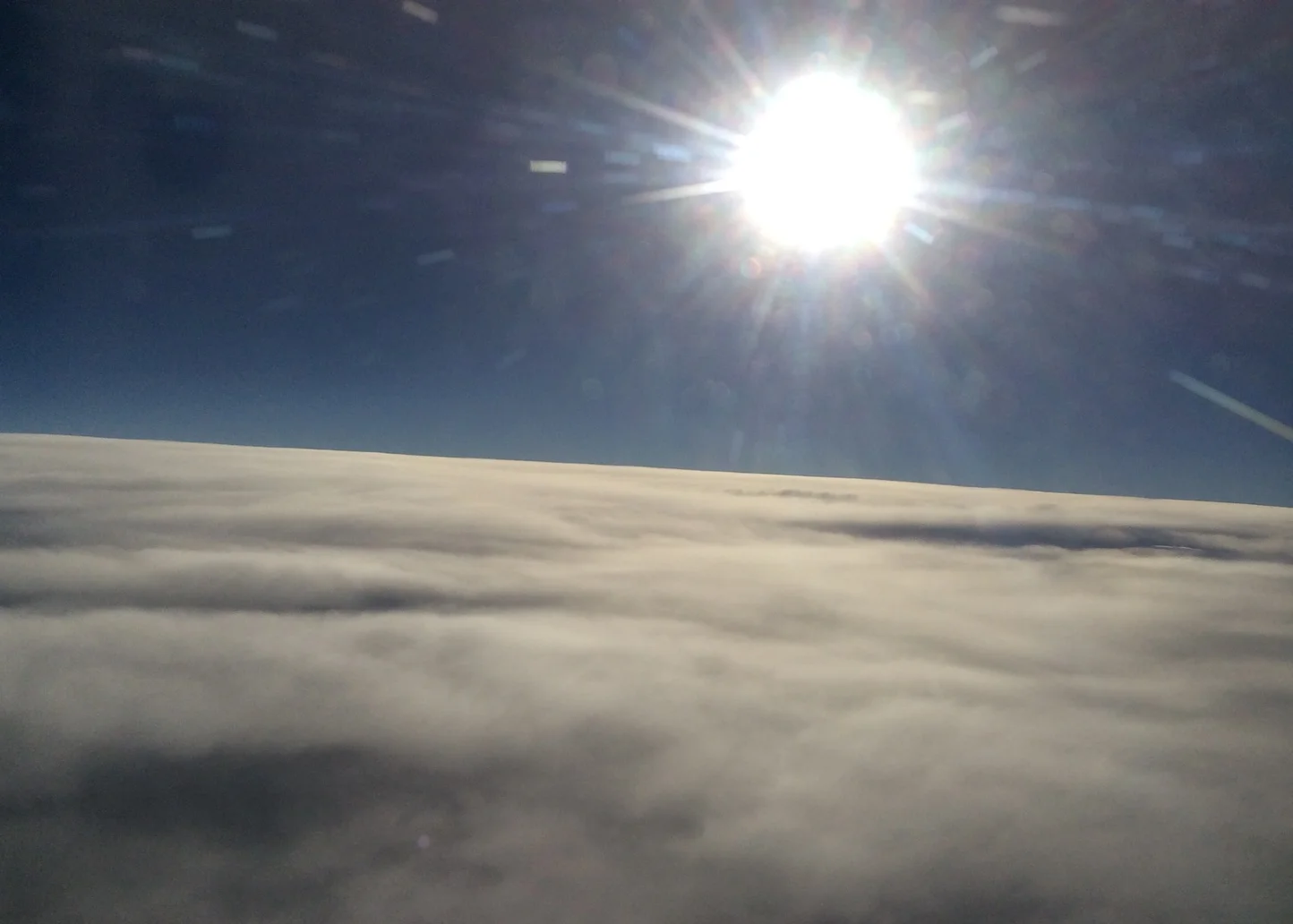
It wasn’t until I flew in a plane and had that moment when you break through the clouds of a rainy day into blinding sunlight that I realized that there is a constancy to the sun –or the stars.  A constancy that is unimaginable. From the ground, life is cloudy. But above those clouds the sun never stops.

Weather is really just that: whether. It’s this or that. It’s here and it’s gone. But that’s not how it feels. A cloudy day can bring you down and you can completely forget that above those clouds the sun always shines. Mood and weather have so much in common, both blow through and yet when you are in them—they can feel so permanent.

There is something miraculous in knowing that the light of the sky is never actually gone. Yes, it is hidden from your view, but it isn’t gone. And there are so many days I have wished for the same faith in my own light—when I have felt cloudy and dark--and I have forgotten that the light doesn’t leave, even if it is hidden from view.

That’s why you have to write yourself notes on your good days, on your sunny and starry, full moon days. You have to write notes to your cloudy day self. You have to write notes and have pictures to remind you that the light is still there and to help you have faith that the light will return. You have to make lists of things to do that work for you and put it in an easy place to find: on the fridge, or a post-it on your computer monitor. You have to put notes and quotes in places that you use all the time. You have to make it easy for you to have moments where you can take off and rise 30,000 feet and break through your clouds and catch a glimpse of your unending sun. Yes, tomorrow may rain, but you can follow the sun. 

© Gretchen L. Schmelzer, PhD 2014