zinnias, hummingbirds, and grace

A hummingbird descends from the pine tree and drinks from a large red zinnia.

I want to start this story at the end because I want you to have that beautiful image in your head as long as you can. I want you to know that magic really can happen anywhere.

This story begins in July when I returned after months on the road. I spent a weekend in the garden weeding and clearing the raised bed. Acknowledging the reality of my schedule, I decided that rather than many sorts of vegetables and flowers, I would buy two flats of zinnias and pack them into my raised beds and borders. The next day I left again for two months.

Actually, let’s start the story years even before that. In the summer of 2020, my garden was the place that absorbed and soothed my Covid anxiety and my cabin fever from lockdown. It was the place that helped me --a country mouse-- feel at home in a city. It was a big enough plot to challenge me and a small enough plot to not overwhelm me. It was a harmless place to let my desires and wants run wild—with stacks of seed catalogues and trays upon trays of chubby green seedlings. It is hard to describe what a lifeline of hope my garden was during that time. And how much it taught me to look for love in small things.

There were years of presence in my garden –where I was planting seedlings, growing vegetables, and cooking dinners for friends from the vegetables I grew. Radishes and butter. Fresh pea soup. Roasted eggplant.  And there were years of absence—where I was recovering far away from home with my legs in casts, or far away working with groups. These years of absence meant that I needed to get help in my garden—which meant that it was cared for and tidy—but it ceased to look like my garden—with a new lawn, smaller borders, and fewer plants. It felt like a home that had once been filled with children and dogs and now sat empty. It was respectable, but it didn’t feel like mine.  

Which brings me to yesterday. When I returned home two days ago to teach a class, I peeked out the window to my garden. I saw lots of green, and not much else, and I couldn’t make myself open the back door. I wasn’t sure I could face the loss of what the garden had been or face what it might have become. I didn’t have the energy to manage the disappointment I anticipated and decided to wait a day and do it after a good night’s sleep. A lot of difficult things in life are better (if it all possible) if you wait a day and get a good night’s sleep. So yesterday after teaching, some lunch, and a bit of a rest—I put on my green overalls and headed out my back door into the garden.

It was all very green, and things were overgrown, but not horribly so. And the lawn was tall, but mow-able. I pulled out the reel mower and mowed the lawn first, so it would already feel a bit more contained--which helped me feel less anxious. And then I began to pull the tall and tangly weeds from my raised beds. Crab grass. Morning glory vines wrapped around the plants. Clover. Chickweed. Grapevine.

But most remarkably, the garden was filled with color. Zinnias stood nearly my height, covered in blooms that were bright and clear. Pink. Red. Orange. Yellow. They filled one raised bed and they bloomed in the midst of a morass of leaves in my perennial border—flanked by pink spirea and purple butterfly bush.

I worked my way through my garden, pruning branches that blocked the common alley way, and pulling grapevine from the border, until I got to the raised bed filled with the zinnias. I bent low, pulling weeds and trying to free the area around their base so that they could get air, and rain, whenever it came. Finally, I stood up, and I looked at the flowers, free from the distraction of weeds among them, colors clear and bright in the late afternoon sun.

Words feel too small to say how grateful I was to these flowers for holding vigil over my garden these many months. Like helpful neighbors or loving aunts—beings who swoop in bring love when its needed. For bravely carrying on in my absence. For being so radiant and cheerful. For welcoming me home in a hard week.

And I was still reeling in gratitude, trying to catch my breath from the hard work of weeding and the immensity of appreciation I had for gift of the flowers when suddenly a hummingbird descended from the pine tree, and I watched it dip in for a drink from the big red zinnia. It hovered for a bit, sunlight catching its wings, turned toward another flower, and flew away.

I burst into tears.

To witness wildness and beauty is one thing. To watch it bring its tenderness to something you love and care about is something different. The moment was fleeting. So full of light and motion. So small, really, in every way. But huge. Grace, unearned, changes you. Yesterday, I walked into my garden one person. And I walked back into the house, another.

© 2024 Gretchen L Schmelzer, PhD 


Everything happens at once

Everything happens at once

Nothing really changes

for the boat rocking

gently on its mooring.


It doesn’t matter if

the tide is coming

in or going out.


A seagull perches

on the faded buoy

and stares out to sea.


The dingy slaps the water

and the halliard’s

metal clasp on the mast

of the sailboat

sings in harmony.


How can motion and stillness

happen at the same time?


High tide is round and dark

and full and lush with ease—

until it’s suddenly gone.


And in it’s place, an expanse--

a low tide that’s wide and

sparkles with sun on shells—

seaweed covering rocks

hiding and revealing everything

at the same time.


The heron fishes

and the osprey screams

and there’s a swirl of fish

in the distance. Everything

is beautiful. Everything

is harsh. Everything

always happens

at once.

© 2024 Gretchen L Schmelzer, PhD 


Patience with what you can't yet see

My life’s motto ‘How hard could it be?’ means that I tend to be driven in the things that I do—whether it’s a writing project, a work project or my own healing. This tendency helps me persevere which has its benefits. But the downside is that I can get a kind-of ‘missile lock’ on productivity and getting things done where I get more and more rigid about time and expectations. There’s probably some perfect tipping point where the right amount of effort yields continuous effectiveness, but I often blow right past that imagined point to a place where the rigidity and expectations either exhausts me or paralyzes me.

The good news is that I recognize this place much faster than I used to. I woke up this morning, and even before getting out of bed, I was already fighting the despair of what I was not going to complete today. When I find that I have fallen behind before my feet have even hit the floor, I know something is wrong. I took it as a sign that I what I actually needed was a break – so after lunch I headed to a nearby mountain range.

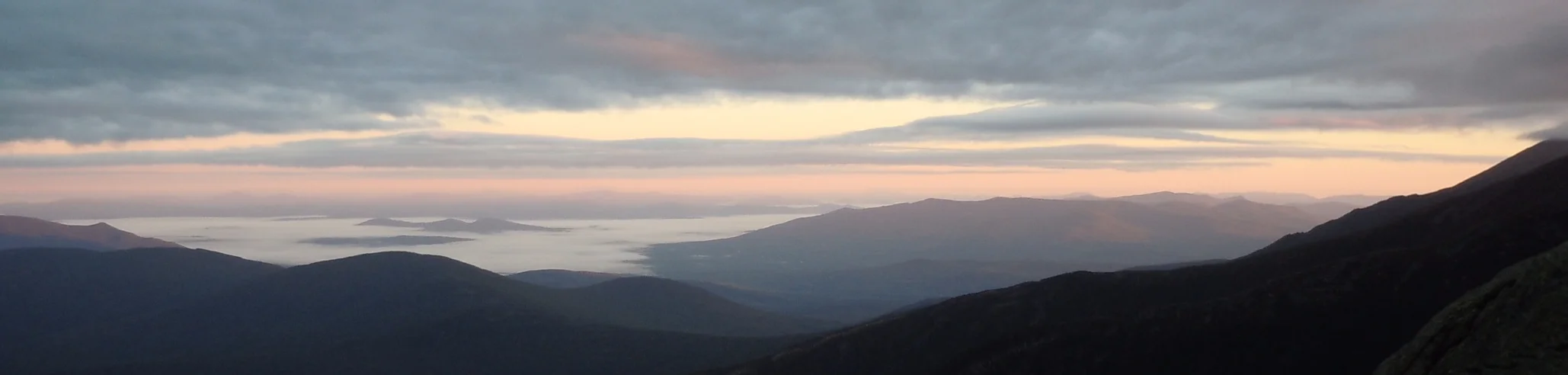
It was a rainy day, and I figured it would be a good day to go for a walk and have the woods to myself. I walked through a sea of greens, and mist and moss. It was a steep climb for about an hour and eventually I got to a summit lookout. There was a bench, an opening in the trees, and no visibility whatsoever. Fog, whiteness, nothing.

A mountain summit in the fog is a funny mix of knowing that you’ve made progress because of the tiring effort you felt on the way up—breathing hard, tired legs, heart pounding. You know because your watch tracks the miles and the hour it took to get there. But there is no confirming visual, no ‘proof’ of being at the top.

The metaphor feels all too real for me this week. I am at a point in my writing project that feels a lot like this hike. Where I have a sense of the work that has gotten me to the place I am standing. I have a big pile of research articles I’ve read—all with yellow legal pad notes stapled to the front. A strategy I’ve been using since grad school to digest what I’ve read and have clarity about what I can use from that research. And I have folders with all of the writing I’ve done for the past four years organized into rough chapters. But like the hike, I am able to see what’s close up: the trees, the rocks, the lichen. The pile of research, the books, the manilla folders. But the larger whole. The view. That remains hidden right now.

And in my own healing, it was a foggy week. I can feel the long trail I have walked, and I can feel my footfalls, and I can appreciate the strength I’ve gained, but I’m not sure of my bearings.

The thing about fog and mist and the lack of certainty that gets created is that other things can become clearer. A walk in the fog is more of an interior experience—a sensory experience—feeling the rain, seeing the bright lichen, smelling the wet leaves. Fog and mist—a bit of healthy disorientation—helps you be open to something new. Helps you see something old in a new way. This is the heart of learning.

In my writing, all of the new research  and re-reading of old books helps me let go for a moment to what I think I know so that I can understand what I know in a new way. So that I can integrate what I have learned this year from my work, and let those new experiences collide with the reading I am doing so that I can see my old frameworks differently. So that maybe I can see some new solutions to old problems.

And when you are healing, fog takes away the sharp edges of things you thought you knew about yourself or how you thought you needed to figure things out. There may be something protective about fog—about not yet having to see or know something you aren’t ready to take in. Something that keeps you from being certain before you’ve learned all that you need to know yet. Protected from taking in too much at once—forced to take in what’s close in—what you can see or understand that is within arm’s reach.

And both walking in the fog, and healing in the fog require the same action: paying attention to the moment—where your feet are. Putting one foot in front of the other. One sentence after the other. To noticing what you are thinking in the moment. To beings able to say one true thing—even if it contradicts the one true thing you just said. To embracing the feeling of lost so that the new thing might be found.

© 2024 Gretchen L Schmelzer, PhD 


Healing from trauma requires holding two tracks

Early in my own work of healing from trauma I watched the movie 28 Days with Sandra Bullock and had such a longing to go away from my regular life so that I could focus on healing and come back ‘fixed.’ It can be hard to feel so bad and have to go about your life as if you weren’t feeling that way. It can be hard to feel what you feel on the inside and feel like you have to walk around ‘acting normal’ and not be able to share it on the outside.

And sometimes, especially depending on what you are dealing with, going away might be necessary for your healing. But for most people healing from trauma, it’s not about going away to get better, it is about learning to stay. Stay with the part of you that is healing. And stay with the part of you doing your day-to-day life. Healing from trauma is about learning to hold both: your life in the present and your trauma history--all at the same time.

Holding both is rarely stated directly. This explicit instruction –that you have to hold two tracks of your life running simultaneously—is often unsaid and left entirely implicit. Yet I have found it to be one of the more important skills required for healing. Letting your life run on two tracks at the same time is actually what allows for healing. It doesn’t matter whether it’s a single person or an entire country—you have to be able to do both at the same time—manage the pace of life of you are living in the present and manage the pace of trauma work—so that both exist in a balance that allows you to both function in your life and continue to heal. There will be days you have to focus more on the present, and there will be days you will focus more on your trauma history—where you need to take extra time to recover.

There is an illusion, once you start working with your trauma history, that you can muscle through it. That once you start taking on your trauma history—that is all you are going to do, in sort of a linear all out effort. But the pace of healing—allowing yourself time to digest what you are healing from, to rest, to gather your feet under you, and then to head back in, is what allows for real mending of what had been torn.

The two tracks, present and past—are what weave you together into a whole—and allow a new future to begin to emerge. I have found in my work that when people are working through a difficult trauma history that the present can get ignored—both in treatment and in their attention to what else is going on outside of treatment. But the present is what keeps you connected to your center. The present acts a set of belay ropes connecting you to a sense of stability and safety. The present is where you can feel the solidity of your feet. The present is where you look around and feel that whatever your history was, you have survived it. The present is where you recognize that the trauma is over and you are currently in an entirely different chapter in the book of your life. Your ability to find an anchor in the present will give you a much greater capacity to heal your past.

Sometimes the metaphor I like to use is someone who is working two jobs—or really one full time job and one job they are trying to do on their own time. Like the person who is working full time and then comes home every day to work on renovating their house. Both are true: they are doing the work they need to at their job AND they are doing the work in the evening to renovate their house. It isn’t easy.  It can feel tiring and overwhelming. Sometimes things go wrong in one place or the other. Or both. But you stay aware of both tasks. You hold both tasks as important.

Whenever you feel yourself getting too overwhelmed with your trauma history—you can reground yourself in the present. You can focus more on the everyday and mundane: clean a closet, get the oil changed in your car, meet a friend for coffee. Do something in the present that you can see, feel, hear.  And only when you feel solid again in the present, can you return to your work in the past. It can be really difficult to have both tracks playing in your head at the same time. It can be really difficult to hold the aspects of yourself—the ‘you’ you were then, and the ‘you’ you are now. But it is a skill worth working on, a muscle worth strengthening. And the more you practice holding both tracks, the more solid your healing journey will be.  

© 2024/2014 Gretchen L Schmelzer, PhD