Forget the Presents, Bring your Gifts.

help.jpg
And as we let our own light shine, we unconsciously give other people permission to do the same.
— Marianne Williamson

I’m not sure how we got to this place with Christmas. How did we get from a holiday that began in a manger with hay and animals to where every room in our house is supposed to have its own decorated tree? Where the shopping for presents for this holiday has nearly eclipsed another holiday altogether? Where it seems that no matter what we do, nothing is enough?

How do we bring ourselves back in to the spirit of Christmas and get untangled from the perfectionism and drivenness that this holiday has come to embrace?

I say, forget the presents and bring your gifts.

When I think about the things I most treasure, the biggest gifts I have been given, none of them came in a box. They were the people in my life being exactly and wonderfully who they were: they were bringing all of themselves to the world—their strengths, their mistakes, their passions, their quirkiness.  And I think equally important is the fact that many of the people whose gifts were so important to me didn’t even know that they were giving them: they weren’t gifts given directly. By being who they were, by sharing their love, their light, themselves—they allowed me to experience the day or myself differently.

I had a first grade teacher who had a tremendous gift of understanding her students and the creativity to figure out what they needed. She created the space for me to go the library every afternoon and as a result I have a love of learning (and libraries) that has made me who I am. And I had a friend in high school who was a stellar track athlete—she just shined--and she pulled me in to her track orbit. I had no ability at track, but her ability and friendship kept me in, and the running gave me the confidence to eventually try out for rowing in college, which, at the risk of sounding cheesy, changed my life. 

A few summers ago I took a class where at the end of the class we had a talent show. I was skeptical because I hadn’t been in one of those since grade school and yet on the night of the show, I learned again what it meant to bring your gifts. Each person shared of themselves: they played the piano, they sang, they recited ballads—they braved being all of themselves for a moment—and have it witnessed and received. No one was flawless, but they were all perfect. And I carry the gift of their bravery, and my own that night, with me in to every new challenge.

It really can be enough to watch people shine. I loved watching my father-in-law with his grandchildren—he could spend an hour just walking behind my nephew as a toddler—let him walk and explore the forest floor. I love watching my brother-in-law manage his boat—especially when the wind comes up—and my sister-in-law with her kids and grandkids. And I love watching my brother make pizza—throwing the dough in the air and sharing his love of food and the food itself with others. I love watching my friend work with large complicated groups—getting people to understand themselves and each other. Marianne Williamson was spot on when she said that when you let your light shine you gift others permission to do the same.

Yet, I think when we think of gifts we think only of our bright and shiny selves and not of the parts of ourselves we are less proud of, the parts that make mistakes, or don’t get it right. And yet, how often have we been relieved to hear that someone else has struggled with that problem too? Just this week a friend shared a difficult conversation that she had with her husband and I found myself so thankful: not that she had a hard time, but for the fellowship of humanity she provided by reminding me that figuring out relationships can be difficult—that we all struggle with that at times.

One of my favorite holiday memories was in fact one of my biggest holiday mistakes. I had gotten up early to get two large turkeys in the oven. My mother-in-law had left me a big bowl of onions and celery and instructions that dried sage was hanging in their walk-in entry. I made the stuffing, found the sage, stuffed the turkeys and everyone came down to breakfast. My mother-in-law went in to the entry and asked why I hadn't used the sage. I said I had and pointed to it. Only it wasn't the sage. I had used Artemesia Silverking--a dried perennial that looks somewhat like sage. There were a few moments of panic as we read whether Artemesia was poisonous. And then lots of laughter after we found it out it wasn't poisonous, in fact it was used as an herbal remedy: it was an aphrodisiac. 

People don’t remember perfection and neither will you. It’s like going to a concert or an opera – you don’t remember all the words of the songs you hear. You remember the colors . You remember some of the melodies.

So slow down enough to listen to the melodies. Slow down enough to dance with the people who are around you. Slow down enough to hum your joy of the day, and share your song, your love, your gifts with others. 

© 2023/2015 Gretchen L. Schmelzer, PhD


Seeds of love

Faith
is the bird
that feels the light
And sings
when the dawn
is still dark.
— Rabindranath Tagore

I have been thinking a lot about faith. And about love. This week I have travelled to attend a funeral to be with people who loved and cared for me many years ago when I was an exchange student. I have been thinking about how love lasts over time. How love lasts though loss. How we can’t measure love.

It can feel so exhausting and complicated at times—this life of ours. Where does one find faith? Where can one get renewed? Where are we supposed to put our energy? The world’s problems feel so big—and it’s hard to imagine the kind of love that is big enough to heal it, or even act as ballast.

And I have begun to wonder about love as something that doesn’t exist in amounts at all. It simply is: small or big. It is all the same. It’s a light. It’s a presence.

My host aunt, whose funeral I attended, let me stay at her house early in my consulting career. I stayed a week while doing a big project, translating interviews, writing a report and creating a presentation. It was a lot of work, and it was challenging work. And the whole week she took care of me in the most wonderful of small ways: I worked in her living room and she brought me cut up fruit for snacks, glasses of water. We had dinner together and watched tv at night. It was practical love, simple kindness. And I think of these acts now as seeds of love. Seeds of love that had lain fallow for years in the soil of who I am.

I had many years of hurt, and while I could recognize kindness, and I could show people love and I could act as if  I felt it—I couldn’t feel kindness. I really couldn’t. When you keep yourself numb from hurt, you also keep yourself from feeling kindness. From feeling love. But the kindness, the love, wasn’t lost. They were seeds. They stayed.

I stood at the graveside this week, and the headstone next to hers was her first husband—who also had shown me much kindness. Had taken a week of his spring vacation to show me his hometown and region of Germany so he could share his love of his region—the food, the churches, the city walls and even a sip of the region’s wine. I could feel the gratitude with each breath. I could remember the fun I had.

And thanks to the good misfortune of my broken legs this year and the constant and non-judgmental kindness and care of my friends—the walls broke down and kindness and love could get in. And the seeds, that sat for so long, have begun to grow.

Love stops time. It slows things down. It cradles, it buffers, it holds. It’s light and heavy at the same time, like the best featherbed. Love is small and can get through the cracks. And it’s as big as it needs to be. Love is an element that is both effort and nourishment at once.

But I think it’s important to say that as small as love is—and as practical as love can be—love isn’t easy. I recall a lovely piece in Toni Morrison’s Paradise where she states that “Love is divine only and difficult always…And if you are a good and diligent student you may secure the right to show love. Love is not a gift. It is a diploma.” It is important to say that there is work, effort, a practice, in the giving and the receiving. It’s not instantaneous. It can take years. Love becomes. It deepens.

And love requires effort—sometimes laborious—but most often, constant. Being there. Again. And again. Showing up. Packing the lunch. The picnic. Folding the laundry. Raking the leaves. Feeding the birds. Sitting quietly or talking into the night—as my host cousin and I did the night before the funeral. Talking about love--the love from her mother that remains even with her loss. But most of all I could feel in the candelight of that night the love that surrounds us if you let it. The love that remains and returns, like the dawn, even after the darkest of nights.

© 2023 Gretchen L Schmelzer, PhD


Want to enjoy the holidays? Learn to Oversupport yourself...

Too much of a good thing can be wonderful
— Mae West

I was sitting down to write today’s blog on what I thought was going to be about how to best support yourself during the holidays—especially if you have experienced trauma or significant loss—when I realized that I kept wanting to say that the main thing that you would need to do is oversupport yourself—and I realized that this whole idea of oversupporting needed to be a blog in and of itself. The blog before the blog so to speak.

As we head toward that most puritanical of holidays (with its emphasis on gluttony not withstanding) the idea of oversupporting oneself needs some clarification. I have used the term with myself and my clients for a long time and it always takes a long time to explain because here in America with its constant push for excess there is a cultural rule that you shouldn’t actually need anything—especially support and extra care, and if you do, you should only take the bare minimum. It’s like some weird anorexia of self-caretaking that is secretly lauded.

This whole problem is partly fueled by the habit of comparing our insides to other people’s outsides and coming up short. This has only been exacerbated by Facebook with photos of smiling families and Pinterest with a thousand ways to decorate a house or a cupcake.

What does oversupporting yourself mean? It means doing what you need to do to take care of yourself: getting enough sleep, getting enough food, doing what recharges your batteries –and then doing even more. It means on the week that you have volunteered at church and both your kids have away games and the boss is coming in to town—that you do not decide to make every meal from scratch unless that is exactly what recharges your battery. It means letting yourself off the hook and buying cupcakes for the event instead of feeling like you must bake the cupcakes and turn them into Disney characters even though it means staying up until midnight to do it.

Oversupporting yourself means doing what you need to do to keep that internal cellphone battery of yours all the way charged. This is the main difference between surviving a week and really living a week. For some reason we believe that keeping our internal batteries just out of the red zone is enough—rather than being fully charged. If you can lean into oversupporting yourself, even if the week is stressful for whatever reason, you will have enough resources to really live it. It means letting other people help. Letting them fold the laundry even though it won’t be folded perfectly. Letting someone bring the pies or the mashed potatoes even though they won’t be exactly how you would have made them. Letting someone else write the report. It means being able to distinguish the difference between perfection and good-enough and then know that for 80% of life good enough is exactly what is needed. It means recognizing that your kids would really rather have a happy parent than a perfect cupcake.

Oversupporting yourself is actually not easy. I have witnessed many clients struggle with it. This is because most people believe that they shouldn’t need any support so they often feel badly when they try this for the first time. They have to fight back all of the voices in their heads that shout things like, “No one else needs this much help.” But if they can bravely accept and work toward support they all notice that they have way more ability to enjoy the people in their lives and they have more ability to roll with the ups and downs that always come with busy times. If you oversupport yourself—then when the car gets a flat tire, or your kid gets sick, or the oven breaks or the client requires an emergency meeting—you have something left in your tank to manage—and you aren’t on your last raw nerve.

For people who have experienced trauma and loss oversupporting yourself not only allows you to get through the holidays without fear of coming apart—with enough support holidays can actually be times of healing. You will have enough space inside you to both mourn the losses and take in the present—and by holding both you can feel more whole. The losses mend.

So as you head into the holiday season. Be brave! Be radical! Do more than you need to do to feel solid and cared for. Buy the pie! Don’t rake the leaves! Leave the dishes! Experiment with what it feels like to take care of yourself and do just a little more. And help others in your life do the same.

© Gretchen L. Schmelzer, PhD 2023/2017


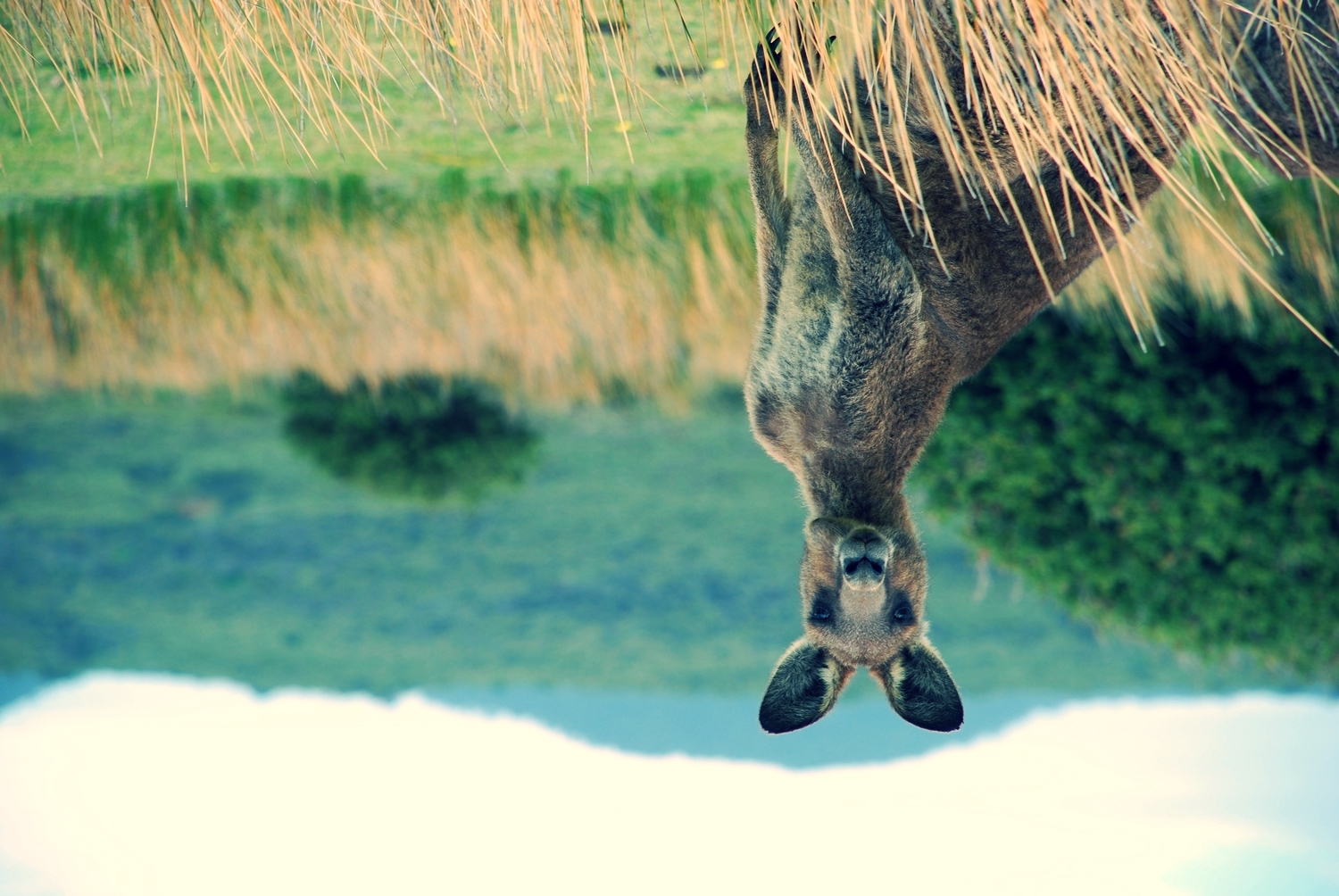
Trauma makes you live in 'backwards world.'

If I had a world of my own, everything would be nonsense. Nothing would be what it is, because everything would be what it isn’t. And contrary wise, what is, it wouldn’t be. And what it wouldn’t be, it would. You see?
— Lewis Carroll, Alice’s Adventures in Wonderland

Trauma makes you live in a backwards world. My great uncle was test pilot during World War II. I remember one story about him taking off and finding that the controls had been put in backwards. In order to land the plane he had to do everything in reverse. He figured it out and lived to tell about it.

Trauma creates a backwards world. Especially repeated trauma. In trauma the ordinary and the extraordinary change places. What seems mundane becomes the warning sign of impending danger. What is dangerous becomes normal. What seems small becomes big, what is big, seems small. If you spend years with this backwards view of the world it can become habit.

In this backwards view of the world—the mundane is dangerous, and the dangerous is safe. Small is big, big is small. This backwards view is one of the invisible wounds of trauma. It isn’t listed anywhere on a symptom checklist. There are no medications to change your thinking. But this backwards view impacts your life, your decisions, your work, your relationships.

Being in a plane like my great uncle and getting immediate feedback that everything you know is backwards is a massive wake up call—you know immediately that you are looking at the situation from a vantage point that will impact your life. But when you have lived long enough with the view that the mundane will kill you, and believed that danger is safe — you don’t even notice that you are living on the other side of the looking glass. Your backwards world is the way the world is—at least for you.

The only way to truly see it is to break one of the backwards rules. You need to do the opposite. It is the only way to check to see if your assumptions are true.

Many years ago I had to get electricians in to take care of some wiring issues. I lived in very old house and I'd known that the house had wiring issues all along. I took care of it at that time because I had to, it was a requirement of sale. I had never done it before because a mundane issue like wiring was a huge issue in my mind. In my imagination they would check one outlet and would have to tear out every wall to rewire the house. Mundane problems trigger the end of the world as you know it. Let sleeping dogs lie. Let old outlets work poorly.

Of course, as those of you who don’t live in a backwards world know, it turned out to be no big deal. Two young guys finished in a half day. They fixed everything and it wasn’t even a massive setback financially. It was a half day problem and no walls came down.

But I stayed away from that problem for a decade because the operating system of my brain still believes that small problems are always big problems. The problem with operating systems is that they aren’t as obvious as the airplane controls. You don’t see how they work until you put yourself in a totally new situation, and then rapidly see that the controls are in backwards.

Trauma makes you pay attention to the smallest signs: the snapped twig, the sound of the door shutting, the music that was playing on the radio, the mail on the dining room table. Once trauma learns the first small signal it goes looking for the next small signal. It creates an entire data-base-dictionary of what every small thing could mean.

Meanwhile, used to terror or violence, no big challenge ever seems big enough. You miss the warning signs of the big problems because you are focused on avoiding the small ones. Cause and effect in backwards world get disconnected from reality. Even when there is proof around you, you don’t see it, you don’t believe it.

I worked for years with teenagers who had lived through trauma and followed the rules of backwards world. They avoided the small tasks that might have helped them—the paperwork they needed to hand in, the homework they needed to do, and instead dove headlong into situations they should have gotten help with—like staying up all night with a suicidal friend. This particular impact of trauma is usually perceived as ‘laziness’ or ‘defiance’ or ‘stupidity.’ But this behavior is a problem of perspective. The teenagers saw a meadow that was studded with landmines and a minefield as something safe and familiar. They couldn’t see it any other way.

This is why we need to change the conversation about trauma. The impact of trauma reaches long into your everyday life—and it’s the things you can’t see, that feel familiar, and the small things, that feel huge, that can be the biggest handicaps in your life as you move forward. And it’s why as we try to help ourselves and others heal that we have to help them see the world from different vantage points, and especially to try and break the rule of backwards world. With help and kindness from you. And me. And all of us. 

© 2023/2015 Gretchen L Schmelzer, PhD