Learning to love (and share) your violets

Willfried Wende for Pixabay

When I was training to become a psychologist I often felt lost trying to figure out how to be helpful—and how to channel the love and care I had for my clients in a useful way. One of the stories that I heard during that time that had the biggest impact on me was the “Violet Queen” story from the psychiatrist Milton Erikson. The story may be more legend than truth, but as I heard the story-- a client of his was very concerned about his aunt who was very depressed. The client heard that Erikson was traveling to the same town as the aunt for a lecture and the asked if Erikson would check in on her—visit—see if something more couldn’t be done.

As I was told the story—Erikson took a psychiatry resident with him on this visit. The aunt was wheelchair bound. She had once been involved in her church and community, but now she rarely left the house. The house was cluttered and dark—except for one corner: there was a shelf of African Violets. Erickson and the student sat with this woman in the dark and Erickson talked with the woman about her experience but didn’t really do a typical visit and didn’t probe her symptoms that much. But as he was leaving, he turned around and gave the woman one prescription—that she should get the dates or information of all of the births, deaths, engagements—and other life events from her church community and on those occasions, she should give them one of her African violets. She should share her love of violets with other people and not keep them all to herself.

The student Erikson brought with him on the visit was completely baffled by how he handled the meeting with the old woman. Walking away from the house, the student said, “She was completely depressed—but you didn’t ask her anything about that. You only talked to her about her plants, I don’t understand.” He had expected a lot more from the famous psychiatrist. He was waiting for the lesson for how to treat depression.

To which Erikson is said to have replied: Sometimes you just have to grow the violets.

Years later Erikson received a newspaper obituary sent by the client about his aunt— a beloved woman who graced every occasion at her church with African violets and how dearly she would be missed.

The relief I felt as I heard this story for the first time was immense. There was something so powerful and so simple about looking for the tiny seedling of love –and figuring out how to help your client grow it. How to look for the tiny seedlings in my own life—and grow them. It took problems that were so big, and seemed so insurmountable—and made them small, manageable, tangible. Rather than try to ‘fix’ what was wrong—I worked with clients to look for the violets: what could we grow? Where could they connect to something that mattered? Where could they share love?

And I think in this era of emerging from Covid—that it’s an especially important time to look for those tiny seedlings of love—to learn to grow our violets –and share our violets—and help others find and grow theirs. Look for what is small, but lovely. Look for what is seemingly insignificant in the midst of what seems messy or dark. Look for what brings a spark to someone’s eyes or energy to their conversation. You know love when you see it. It’s suddenly brighter than it was before. It’s lighter.

There’s a lot we can’t fix right now, but that doesn’t mean we can’t be working to help ourselves and the world heal. That doesn’t mean we can’t make a difference. Sometimes we just need to connect with and share what we love. Sometimes you just have to grow the violets.

© 2023 Gretchen L. Schmelzer, PhD

The Healing Power of Routines

I am looking for friends. What does that mean — tame?”
”It is an act too often neglected,” said the fox. “It means to establish ties.”
”To establish ties?” “Just that,” said the fox. “To me, you are still nothing more than a little boy who is just like a hundred thousand other little boys. And I have no need of you. And you, on your part, have no need of me. To you I am nothing more than a fox like a hundred thousand other foxes. But if you tame me, then we shall need each other. To me, you will be unique in all the world. To you, I shall be unique in all the world....
— Antoine de Saint-Exupéry, The Little Prince

Many years ago when I worked out in western Mass, I drove the same route every morning at 5 am. And if I passed a certain spot on the road at approximately 5:16 am, I saw a red fox on his appointed rounds. It became part of my morning routine, trying to make sure I was there at the right time for a fox sighting. In the story of the Little Prince, the Little Prince tames the fox. I would have to say, that this fox tamed me. The Little Prince defined tame as ‘to establish ties.’ And while we never met face to face, this fox changed the way I lived my morning—I made the fox a priority. He became part of my morning routine. I felt better when I got to see him.

When we let ourselves be tamed by routine, we get a chance to rest in something else, in something bigger. You create through the act of repetition, and if you wish, devotion, something that can help you feel tethered, grounded, more connected. You establish ties.

Routines can help us feel that we can count on ourselves—can count on the world. Yes, it is true that you can’t predict everything, but you can give yourself a few things that you can mostly count on.

Trauma and big loss can throw us off balance, can make us feel like there is nothing solid in the world, nothing we can count on. And healing can stir up that same sense of disequilibrium, and loss of balance, loss of knowing what you can count on. And having a few well placed routines can help you feel more solid, give you sea legs on the pitching boat of healing, give you a sense of the horizon again.

Children know all about routines. They hang on them like the fixed ropes that they are—and they use them to keep climbing the steep and exciting mountain of growth and development. Routines are what help their brains learn that the world can have an order and predictability to it: that one thing follows another. And the truth is, the fixed ropes of routines can support us all—whether we are healing or growing. Fixed ropes don’t keep us in one place—they allow us to keep moving and stretching and climbing. They allow us to use all of our efforts at forward motion, and not on figuring out how to stay safe.

It doesn’t need to be an entire regimen or anything. Though when needed—a regimen can be really helpful. When I worked in residential treatment and a client was having a really bad day we would sit down with a piece of paper and schedule her entire day in half hour increments. 8:00 am—wake up. 8:30—eat breakfast. 9:00-watch morning TV, etc.  The first time I did this with a young woman I was surprised how effective something so simple it was. It was a whole day of things she could count on and it buoyed her—she was much stronger by bedtime. It’s a really easy and inexpensive fix for bad days—with no negative side effects. I use it myself when I am feeling untethered.

Yes, a routine can be something really simple. But it doesn’t always mean creating something. Sometimes it is a matter of appreciating and being mindful of the routines you already have: your morning coffee or tea, feeding your pet or filling the birdfeeder, reading the paper, waking your children, your morning run or trip to the gym, packing your briefcase for work, opening your laptop or turning on your computer. Take some time to just notice your routines this week, the ones you do daily without pausing to think.

And sometimes, it might be important to add in routines in that can support your health and healing even more: meditation, walks, prayer, a favorite book at bedtime, a cup of tea in the afternoon. What might you add in as a time to anchor yourself, soothe yourself, give yourself a moment to pause, breathe and connect—to establish ties to yourself- and the world around you?

© 2023/2015 Gretchen L. Schmelzer, PhD 

The Sacredness of Constancy

Talons gripping the edge of the nest
wings spread, gauging the wind
the young osprey pushes off,
soaring.

With each practice flight,
the young bird returns to the nest
and places at his mother’s feet,
one twig.

Every evening
in the dark, bright, quiet
of the moonlight the young bird
sleeps.

While his mother,
taking his twig,
builds a nest in
his heart.

So when he flies away
wherever he lands
the young bird
is home
— Gretchen Schmelzer

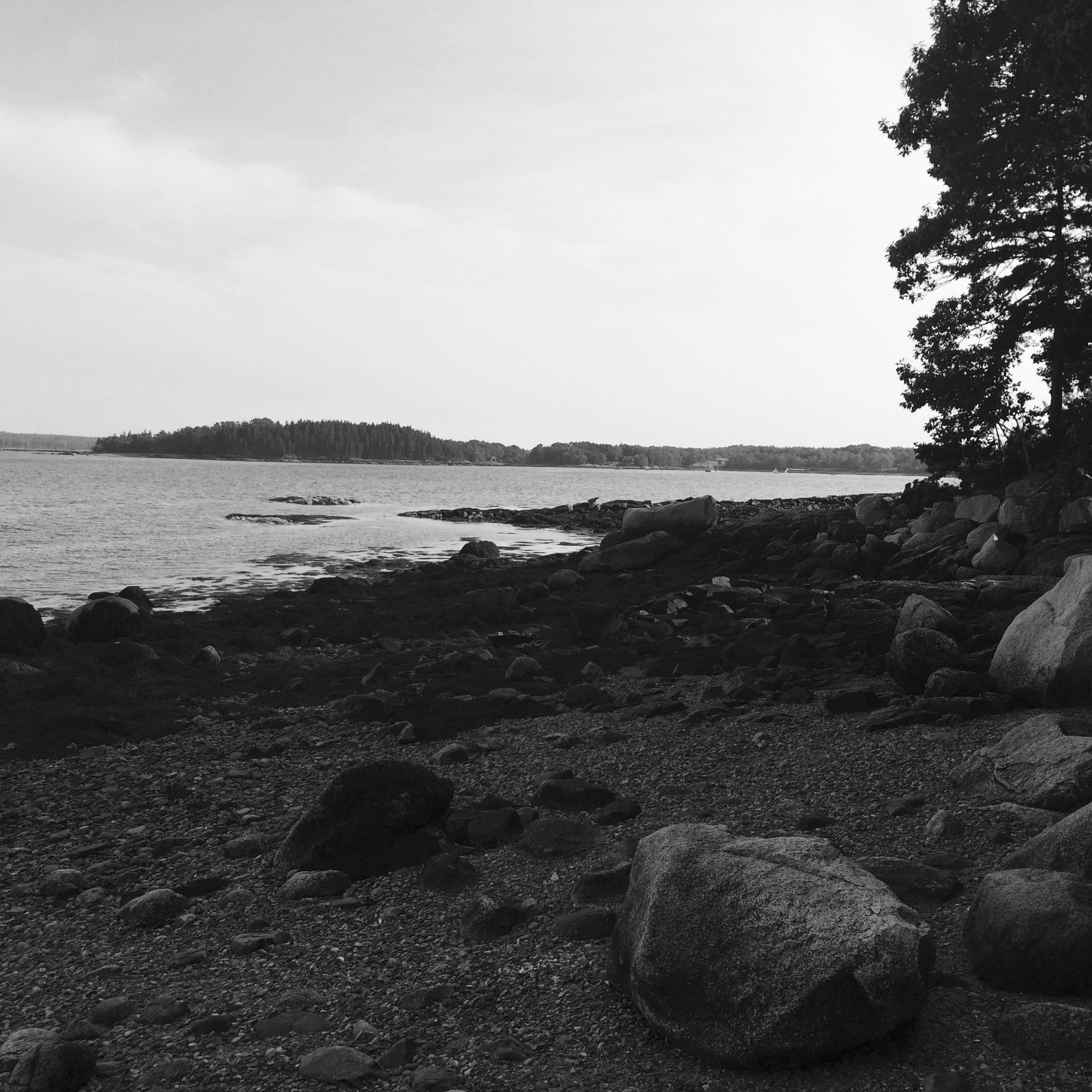
On the coast of Maine, the tides go out, and the rocky shoreline appears and then the water comes back in, right up to the shore. It may be a small thing in the grand events of the world, but there is such solace in that constancy—in knowing that as you watch the water go away from shore, you also know it will return. It is a twice-daily event, which adds to the experience and learning of the constancy that nature provides. The moon disappears from view and it comes back. The sun disappears from view and it comes back.

The very best of parenting is like the constancy of the tides. Children are their own force of nature. It is the sacredness of constancy that helps hold them and shape them. You are the tides for your children. You are the air.  You are the sun and moon that their world revolves around.

Constancy isn’t cool, or hip, or sexy, or most importantly, marketable. “Hey, let me sell you a ticket to watch the tide roll back in over the course of hours!” Constant moments aren’t Facebook postings: The First Day of School, Graduation, Soccer Championships, Recitals. These are all wonderful and I personally love to see the pictures whether I know you or your kids or not: there is such joy and humanity in those photos. But these aren’t pictures of tides, they are pictures of special events: like meteor showers and rainbows—the colorful moments of life that occur, but you catch them and enjoy them when you can.

I can market Disney and make you feel great about being the kind of parent who takes their kid to the Magic Kingdom. But there is no equal marketing for you getting the 5th glass of water that night. Even if that 5th glass of water is actually the thing that will become part of the fabric of your daughter. Even if that act is the nutrient all children need. Much like there is marketing for Sugar Cereal and Junk Food and not carrots.

The sacredness of parenting rarely shows up in pictures, it’s hard to share on Facebook, it’s hard to see when you are in it. The sacredness of the everyday—the mundane, routine, constant all-of-it—that is what makes the warp and weft threads that create a person. The sacredness of the everyday of parenting is what makes up the fabric of who a child is, the self and worldview they rest in, the blueprint for relationship they will carry with them.

There are no pictures of you putting a Band-aid on arm that actually doesn’t have a cut on it. Of picking up cereal, or socks, or Legos off the floor. The endless laundry, dishes, trash. There are no pictures of the hundredth viewing of ‘Frozen’ or reading of ‘Goodnight Moon.’ The seventeenth math problem. The tears after a fight with a friend. There are no pictures of bedtime after bedtime, and breakfast after breakfast. Of the wrestling matches of putting on socks and finding shoes and NO I WON’T WEAR THAT COAT. Your ability to shepherd all of these things are the tides that come in and out.

I have such a perfect image of my niece as a toddler, all wrapped up in a towel after a bath at night, sitting on my sister-in-law’s lap. She was just hanging out, her wet hair slicked back, pink cheeks, sucking on her fingers, her blue eyes looking out, but not all that interested in the grown-up conversation around her. This was one of those sacred moments of childhood—where it was nothing special—to the outside world--but it was everything special to her inside world. This is the sacred everyday act of parenting. The absolute building blocks of safety and security and contentment and confidence. This was just the end of bathtime, the beginnings of bedtime, the transitions of the everyday. But they are the bricks of healthy capacity—put thousands of them together and you have a foundation that can hold anything.

The very definition of this constancy is that you can take it for granted. You believe in its existence utterly. I don’t worry whether the tide will come back in. I know it will. I don’t worry that the moon will reappear. I know it will. And the constancy you provide your children is something that they can and should take for granted. I am not talking about material things or that they will never learn to pick up their own Legos. I am talking about the constancy of asking for help and hearing a response (even if that response is age-appropriately telling them they can do it themselves). I am talking about the constancy of nighttime after nighttime of good-night, and morning after morning of good-morning, of bath, books, and bed; of lunch boxes and walks to the school or bus stop; of someone who listens again and again to the same story, the same movie, the same knock-knock joke. Of whatever it is we will figure it out.

Your super powers are your indestructability and your ability to show up over and over again. What makes your work important are the thousands and thousands and thousands of small threads that you weave around their heart, their soul, their growing being. This is what makes constancy sacred. You are building a space in their heart for this constancy—for this ability to hold the world and themselves. You are building this constancy in them so they can hold the rest of the world--which so often isn’t constant. Like the poem of the Osprey above with each mundane, routine, sacred constant act, you are building a nest in their hearts that they can return to for strength and comfort for the rest of their lives.

© 2023/2016 Gretchen L Schmelzer, PhD

The Geology of Silence

I need you to hear everything I say, and everything I can’t say must be heard too. It is terrifying to listen this way, leaving everything behind. Maybe I ask something impossible.
— Anne Michaels, The Winter Vault

Oh that there were more words for silence.

Many years ago I worked in an elementary school and a six year old girl was brought in to talk to me by her teacher because she had filled an entire notebook with the sentence “I hate myself’ in black marker. This is not what six year olds usually do, even when they get upset. She was an adorable chubby girl with tears streaming down her face, and she didn’t say anything. She just sat on my lap and cried. When I asked her to talk she said everything was fine. But she continued to cry. Eventually she stopped and we played awhile. It was the end of the school day and her teacher sent her mother in to pick her up and talk to me. Her mother’s first question in a defensive tone was, “So. What did she tell you?”

‘Nothing,’  I said. Which was both true and untrue. She said nothing with her words, but her writing and tears said a lot. I told the mom I was concerned and that this type of behavior was worrying—her daughter was asking for help, and we could fit her in to our counseling schedule. Her mother said, “Absolutely not, we don’t talk to outsiders.” I said I understood and suggested she find a counseling center in her neighborhood, where she felt more comfortable. I also was pretty sure this would never happen. She took her daughter’s hand and left, saying nothing more to me.

This was one of many, many lessons I learned about the Code of Silence that is the cultural underpinning to many of the communities around Boston. But my travels and work have taken me much further than Somerville or Dorchester or Southie and I have found that the Code of Silence expands across the wide world. Wherever there has been great hurt, great shame, great loss, great despair—where people have endured years of struggle, there you will find a reverence and an obedience to silence that has a power and vortex of its own. Silence becomes one of the natural laws, like gravity. You have no other choice but to follow it because if you don’t, it feels like the world you know would come apart. Silence becomes something that everyone can agree on, even when nothing at all seems certain. In a world of hurt, or rage or shame, silence can be the one thing that everyone is proud of.

Silence gets treated as if it were all the same thing. Maybe the legend of 100 words for snow wasn’t accurate, but it is true that the Inupiaq of Wales, Alaska have over 70 words for ice, and the Inuit of the Nunavik region of Canada have 53 words for snow.  Silence—all the many types of silence—could really benefit from this same linguistic expertise. The many words for ice were a necessity—they describe conditions that could make distinctions that allowed people to be safe or fed –matters of life and death.

And silence is its own complex landscape. The study of trauma is, in many ways, the study of silence--the way geology and archaeology are also the study of time. Silence exists in layers, and needs names and descriptions the way we can name the layers of geologic time in the Grand Canyon. Layers and layers of silence. For there is no long term trauma without a deluge of silence that overwhelms it. Silences rush in to trauma like the endorphins that flood our bodies and help us survive. Silence cushions our identity, our sense of safety and our ability to think. It connects our communities even as it keeps us apart.

I have found that most people see silence as a form of direct resistance: a sort of a defiant silence. The kind of silence where you know what to say but just refuse to say it. And in my experience working with trauma and working with people all over the world, this is the most rare form of silence.

When this form of silence shows up the biggest obstacle is typically fear. I am silent because I am afraid—afraid of retaliation, afraid of conflict, afraid to hurt someone, afraid of my own feelings.  I am silent because I feel shame or fear being shamed for what I must speak.  It can feel impossible to speak because what you need to say, what has happened is 'unspeakable.' I’m not dismissing the difficulty of this silence, and the courage it takes to overcome it. Or the need for compassionate listening to witness the conversations.

But when you encounter this silence in yourself (I know what I need to say but I am afraid or it feels impossible) or in others (I can’t trust you yet). You know where you are, you know where the work is, you have found the trail. Now you just have the slow and arduous and rewarding work of staying on it. Of trying over and over to get the words out.

But with repeated trauma and deep grief you can experience a far bigger, deeper canyon of silence. Sometimes it is the silence of despair: It feels as if there is just no point to talking about it. No one would get it. I just don’t have the energy or the interest to try because it just doesn’t matter. This is an exhausting silence. It feels endless and hopeless and it makes you want to sleep. To go where silence is just the expected norm.

And then there is the silence that can come from no words at all. No story at all. You may have feelings, or a sense of something. But it can feel so amorphous or disconnected that you don’t feel like you can talk because it feels like there is literally ‘nothing’ to talk about. A fog has descended on memory or experience.

Some of this has to do with traumatic memory. Science tells us that stress hormones inhibit our memory for knowledge, making it more likely that we will store trauma as emotional and implicit memory. Memory of experience that we don’t have a story about. And to make that even more likely, during trauma there is reduced blood flow to the language centers in our brain making it even more difficult to attach language to the experience.

This is where I wish for other words for silence. For the silences that are foggy, or distant. For when you aren’t afraid to speak the words, you can’t find them at all. For the silences that are a complete blank and the silences where words float in and out so quickly, like wispy clouds and when you try to grab them they disappear. For silences that feel like a heavy weight that you can’t lift off your chest or the ones that grab your throat. There are just layers and layers of silence.

And the thing about silence, about the layers of silence, is that in trauma, you usually get all the layers. And just like the canyon, the forces of your life and time itself will wear away the layers--and will expose some of the story and some of the feelings and you will begin to try to talk. You will have some things you know and don’t want to talk about, some things you feel that you can’t find words for. And some things that just feel so big or so far away, so ineffable, they don’t yet have any way of being described—things that don’t feel like yours yet, or maybe never were.

Rumi said that "Silence was the language of God and all else was a poor translation." I don’t know about that, but I would say that Silence is the language of creation. Silence protects a place that needed to grow under better conditions. That hid away seeds and spores that would grow and bloom when the floods came to take them away to a new place where they could find light. So whether it is your silence or someone else’s –wonder what word for silence would better describe it. Wonder where in the layers of your history this silence exists. And be in awe of what you can create when you are courageous enough to work with it. 

© 2023/2015 Gretchen L Schmelzer, PhD