A Natural History of Beauty and Loss

...for everything flowers, from within, of self-blessing;
though sometimes it is necessary
to reteach a thing its loveliness
— Galway Kinnell

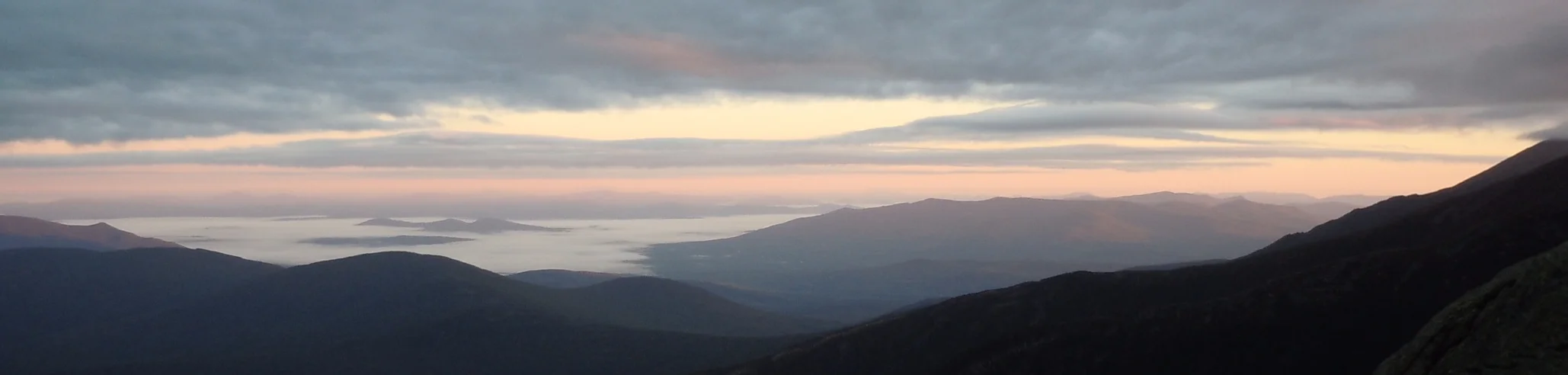
I have been thinking a lot about moments of beauty in hardship. Maybe it’s because this week –in a week of November cold and grey—in a week of rain—there have been amazing glimpses of beauty—of blossoms. Earlier this week on my walk I saw an azalea – a shrub that blooms in May—covered in pink flowers. Yesterday a white rose in full bloom still held its June fragrance. And today, a bright yellow forsythia blossom shined its April radiance on a cold afternoon. It was a reminder to me that you don’t always know when beauty will show up. And that some beauty shows up in the places you expect it the least.

I began my psychology career as a staff member at a residential treatment center for adolescent girls. I worked first in the dorms and later became the art teacher and activities director. This was more than thirty years ago, but everything I have done since has dug its roots deeply in that first soil of experience. I doubt that the staff and girls I worked with then would ever imagine how much they have traveled with me. How much I learned from them and lean on that learning all the time.

Early on in my work in the dorms I created a routine of summer weekend activities that started with Walden Pond on Friday nights. The early afternoon would be spent baking brownies or cookies and packing a picnic dinner. And then we would leave at dinner time in a large station wagon. The girls were mostly city kids and skeptical of nature and lakes. But it was hot and there wasn’t air conditioning in those days—so a chance to be cool won out over their resistance.

What was striking about this trip was the juxtaposition of the week that had come before it –and the evening at the lake. Often the weeks were stressful—and the girls fought with each other and us. There was anger, disappointment, frustration. Sometimes even on the car ride out. But we would get to the parking lot and pile out—girls trailing towels and bags. Some with suits if they had them and some in shorts and t-shirts. Staff carrying blankets and bags of food. We would cross the street and head down to the lake—where the girls would wander into the crowd sometimes saving a space for us, and sometimes being truly teenage—and asking us to sit further away.

We would swim, eat our sandwiches and brownies. Hang out on towels and watch the sun go down over the far end of the lake. The girls would go from their tense and angry, and perhaps, fearful selves into something that was truly miraculous—they would relax—and be calm and content. They laughed. They rested. They absorbed the beauty of the place.

They always looked different as we headed back to the car. They were quieter and more thoughtful. They were more relaxed—less pulled together—their hair disheveled from swimming—clothes more haphazard-- which seemed to let their beauty shine through. They laughed more easily. They were easier with each other.

It’s hard to know whether the beauty shined through because the stress had lifted –or whether there was a beauty available only because of the sorrow they had lived. I’ll never really know—but the glimpses of it were not unlike the flowers I have seen this week. Rare gifts that nourish and sustain.


A Natural History of Beauty and Loss

Dusty cement walls,

Windows with bars.

Wood crate chairs too heavy to lift.

Everything here a defense

against some form of protest or escape—

a citadel of cinderblock

feigning refuge.


Girls crash land here

blown in on the winds

of their own personal storm

or washed ashore on

a riptide of abandonment.


Their wreckage delivers

black garbage bags

that float in and out

with every new arrival and departure.

Bags marked like the girls

with their name but no location,

piled precariously in the hall.


Black bags that weigh nothing.

T-shirts, leggings, underwear, socks,

one shoe with no laces,

a blanket with Tigger or Care Bears,

half of a spiral notebook,

and always hairspray and comb,

but never a toothbrush.

The staff will unlock one from the cabinet.


What is heavier are the photos.

Crumpled pictures of their child selves,

in Brownie uniforms

or bathing suits,

sitting on the floor with a brother,

holding a kitten, in front of a cake

blowing out candles,

wishing for a future.


Heavier still is the chart,

an oversized rust colored

folder—Sisyphus’s rock.


A chronology of loss

pushed endlessly uphill

by a tired social worker

standing in the doorway

shaking her head and declaring

time after time that—now--

is their very last chance.


Sorrow and exhaustion

streak the faces of young staff

who look older than they are.

But the girls are protected,

for now,

from the weight of despair--

their emotions frozen and numb.

Not gone, but buried the way

ice holds memory blue and deep

for millions of years.


It is true that ice can fracture

dangerous and loud

when you try to learn its history

by bringing its core to the surface.


But I’ve also heard that

without winter’s biting cold

spring flowers won’t bloom.

© 2022 Gretchen L. Schmelzer, PhD

Quote above from St. Francis and the Sow by Galway Kinnell
Be careful with the word "Hero"

A true war story is never moral. It does not instruct, nor encourage virtue, nor suggest models of proper human behavior, nor restrain men from doing the things men have always done. If a story seems moral, do not believe it. If at the end of a war story you feel uplifted, or if you feel that some small piece of rectitude has been salvaged from the larger waste, then you have been made the victim of a very old and terrible lie.
— Tim O'Brien, The Things they Carried

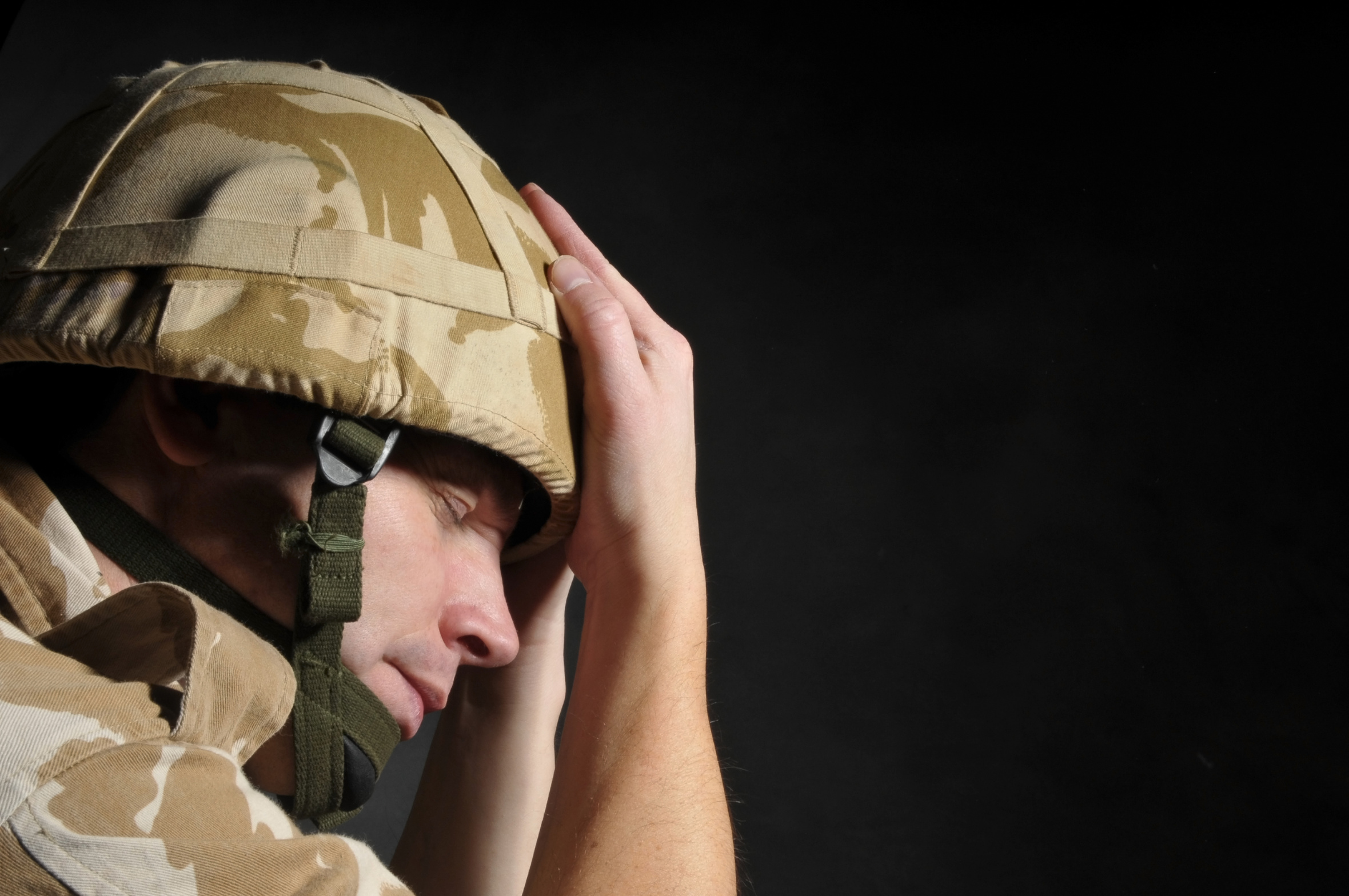
Be careful with the word hero. I know it’s Veteran’s Day. I know the instinct and intention to use the word is good. I know you are trying to show respect and gratitude. But the problem with the word hero is that most people who live through war, most people who live through any long and repeated trauma, and most people who witness war and repeated trauma do not always feel heroic.  Most trauma involves experiences of helplessness and terror. These experiences usually result in shame, not courage; in fear, not bravery; in despair, not resilience.

There is a tacit agreement between a population and its soldiers: you go to war, we call you a hero, and we never have to know what really goes on during a war. If we call you a hero, we never have to hear the real war stories, because we have made it so that you can’t tell them. We call you a hero to make ourselves feel better, and it keeps you quiet.

In old Native American culture, warriors returned home from battle and shared their stories with the community in a big ceremony. The community as a whole had to hold these stories –not the individual warriors. We don’t do that and we ask our warriors to hold the stories themselves.

The injuries to soldiers are vast—with TBI on the increase. And the public is now widely aware of PTSD. But there are other injuries that are difficult to measure, discuss and treat. Yes, a soldier can suffer the traumas of flashbacks and anxiety of the war. But PTSD doesn’t cover the complete loss of self: the loss of who I was before the war, the loss of my sense of dignity. How do I hold the me I thought I was with the me who knows what I did during war?

Surviving war doesn’t feel heroic. Surviving any trauma doesn’t feel heroic. When you use the word hero you need to know that the people hearing that word can feel miles away from your intentions. You say hero and they remember shooting a screaming old woman or a dog. You say hero and they remember feeling frozen and not being able to do what they wanted to do. You say hero and they remember themselves at their most helpless.

Psychiatrist Jonathon Shay calls this injury to your sense of self a moral injury. The invisible wounds of war that keep soldiers injured long after the symptoms of PTSD clear. PTSD is what Shay calls a primary injury--it's symptoms are visible like the break of a bone. But a moral injury is like internal bleeding. It is a silent killer. Soldiers often report feeling like a piece of them died during the war and others have referred to it as ‘soul murder.’ Soldiers fear telling their stories because they think people will hate them for what they have done. We ask them to go to war and then we ask them to hold their stories by themselves. This is likely too big a burden. The suicide rate among Veterans is staggering: 22 Veterans die from suicide a day.

As citizens we can and should be grateful for their service, but we shouldn’t be naïve about their sacrifice. We need to have a more complex view of the impact of war and trauma and expand the conversation of healing all the injuries of war—not just the medical symptoms we can see and treat more easily. We need to support the soldiers in their healing by not telling them who they are and what their story is, but instead creating the possibility that they could tell their story—tell their whole war story. We need to change the conversation about trauma to include the long term impact and the symptoms that we can't see. On this Veteran’s Day, let’s thank them for their service and ask to hear their story with the reassurance that we will hold their story with them.

© Gretchen L. Schmelzer, PhD 2022 . Edited and reworked original post from 2014.

One True Thing

If its interest in truth is linked only to amnesty and compensation, then it will have chosen not truth, but justice. If it sees truth as the widest possible compilation of people’s perceptions, stories, myths, and experiences, it will have chosen to restore memory and foster a new humanity, and perhaps that is justice in its deepest sense.
— Antje Krog, Country of My Skull

Not long ago I was teaching a group about complex trauma and I felt stuck. I was aware that what I was teaching was hard. Trauma is complicated—especially in systems. There’s individual trauma. There’s family trauma. Organizational Trauma. And the traumas of systemic racism and oppression. There’s all that trauma. There’s all the healing that was needed. And there’s the work that the group was tasked to do. I felt the weight of it all—the heaviness of the trauma and expectation. I was aware that what the group was experiencing was hard. And I was aware that there was something more that was needed at that moment. I began to feel frustrated in my ability to make myself clear, disappointed in myself that I couldn’t integrate what was happening fast enough—which combined into shame that I wasn’t going to give this group what it needed.

This place I had found myself with the group wasn’t entirely new territory. Somewhere in the middle phase of my healing journey I was in this place a lot. It is a place that I used to call ‘lost.’ It’s a place where I feel spun around, where I can’t find my bearings. I feel like my mind is blank and my body is full of feelings and I can’t seem to find a story that I can talk about. It feels like I am standing in a big empty forest that goes on forever. No matter where I look I can’t see a pathway, and in that feeling of lost I can feel lonely or isolated—even if someone is there listening to me. It’s hard to remember in that moment of lost that you aren’t actually lost at all.

In my work with the group—I was aware of all my feelings and my thoughts, but instead of being able to lean on my awareness—which actually held good and useful data, my survival skills from trauma kicked in. The emotions I was feeling triggered my old responses to danger—GET IT RIGHT (I can’t!) HIDE! (your feelings and thoughts) PRETEND IT’S OK. It’s what I often refer to as an emotional flashback. When I experience an emotional flashback, despite lots of practice, my first instinct is not to say what is true.  My very first thought is “I wish this wasn’t happening. Please make it stop.” My first feelings aren’t the feelings themselves, but my feelings about them. I feel embarrassed that I am ‘here’ in my trauma brain again. Embarrassed by what I am feeling. Aware that the feelings are huge and there’s no easy way back. Instead of feeling angry, or hurt, or sad, I feel shame for having the feelings and rage at having to reveal my shameful feelings to someone else.  The problem with emotional flashbacks is that they reveal what we want to keep hidden—they make visible the emotional wounds that we can usually hide. Saying how you really feel at that moment forces you to show others, but more importantly yourself, how hurt you are and how hurt you have been. No my first instinct isn’t to saying what it true, my first instinct, because of the shame this experience triggers, is to hide.  

When you are lost in the woods, what you are supposed to do is slow down-- stop and look around. Get your bearings. Pick out landmarks. Find a tree to sit next to. And somewhere in the middle of my work in therapy I found that the best way out of feeling lost, or stuck, or frozen or ashamed was this: simply say one true thing.

Say something that is true for you—anything that is true for you—no matter how small. Even if that something is ‘I don’t know what to say’ or “I feel numb” or “I feel lost.” Saying one true thing connects you to how you are feeling in this moment—and allows you to connect to whomever you are talking to. Your ability to say one true thing creates the opportunity to move from the experience of lost to the experience of found. By saying one true thing you locate yourself in space—you find something to stand on—to grab ahold of. By saying one true thing—you connect yourself to your feelings—and connect yourself to the present moment.

One true thing isn’t about an opinion. And it’s not about anyone else. It’s one true statement that is about your experience in the moment. Or it’s your experience in your story or your history. It’s the most manageable increment that you can hold and work with. Sometimes it’s something you say to yourself. And sometimes it’s something you may share out loud. One true thing isn’t your whole truth, or your whole story. It isn’t the answer to the problem or even the task you are trying to tackle. It’s just a way of finding your way back to the present and yourself. It’s a way of finding a way back to the present and the person or the group you are working with. It’s a way to connect—and we all need more of that—with ourselves and each other.

© 2022 Gretchen L. Schmelzer, PhD


O very young: Some thoughts about suicide and healing from trauma

It is one of the most beautiful compensations of this life is that no man can sincerely try to help another without helping himself.
— Ralph Waldo Emerson

You’re only dancing on this earth, for a short while.  This past February I learned that Stephanie Selby, who became famous for being the main protagonist in Jill Krementz’ book A Very Young Dancer died from complications of a suicide attempt. I felt sorrow—and maybe even complicity—I had idolized her for years and never once wondered what her life was actually like. I am her age cohort, another 1965 kid, and I was obsessed with her book. Holding the obituary in the NY Times, I stared at the picture of the front cover of that book as I had once stared at it for years. When you are a kid, there are lots of successful grown-ups to look up to, but to learn about a successful kid was a whole other level.

She was this image of perfection and success. I thought if I could learn how to be that successful, I could fast track adulthood which would give me a way out of a difficult childhood. I read and re-read that book. I scoured the book for clues—for success—for how to be thin. My mother had been a model and was obsessed with weight putting me on diets from the age of seven—she wanted me to have a ‘dancer’s body.’ As one of the tallest kids in my grade, and a solid kid, this was never a possibility. But I read the book over and over—hoping for some sort of osmosis: hoping that you could become someone by studying them. Reading about her suicide was a wake-up call: a reminder that you really never know what people are carrying. You never really know the weight of people’s burdens.

I was reminded of her again today when an old teammate posted a story about a friend who died from suicide—a friend who had so many gifts and so much to offer. A friend who was going to be desperately missed. I thought about the gap—the grand canyon wide gap—between the pain and sorrow that someone can be holding—and the love and admiration that others have for them.

I don’t have any massive wisdom about suicide-- only questions. Only an earnest desire and wish to bring more peace and calm to those who struggle. I am no stranger to suicide. I grew up in its specter—and know the fear and power that threats and attempts bring. I know that it can seem like a powerful immediate answer to what looks like an interminable problem. Except it is the exact opposite. Suicide is actually a permanent solution to a temporary problem. And it a lousy solution. There are so many more ways to hold pain. There are so many ways that we as a community need to hold trauma and grief—so that people don’t feel so alone with theirs.

From the veterans who commit suicide (there are roughly 22 a day) to the young folks who do—there is a theme of not being able to live with oneself. Whether from the moral injury of war—or the pain of living with trauma, sorrow or shame. Suicide is a singular death that that behaves like a shrapnel wound—injuring at least three generations of families—and tearing through communities.

It’s important to remember that the strength of people on the outside may not match their insides—that you may not know how much they are struggling. How much, like a swan, they are paddling below the surface, even when it seems they are gliding, quietly.

It's important that we don’t look away. That we hold that this level of sorrow exists even if we can’t see it. And it’s important to normalize the very human, and perhaps necessary, feelings of despair. The feelings that come with wondering who to be, how to be, and what to do—especially with regards to trauma and grief. I believe if we did a better job honoring the healing process—and normalizing how long it can take to heal and how hard it is to heal—we wouldn’t leave people feeling so alone holding their burden.

And maybe this is a small thing, but it seems like we need a shift from ‘who I am or what I do’—to ‘what I can contribute.’ . There’s too much pressure on being something or someone in particular—and the feelings of falling short of whatever that ideal is—of living with some profound disappointment that you failed at something—even though that something—or that standard of being—wasn’t actually real. This was always difficult but social media has made it worse.

But the ability to contribute? That’s something that is always available. The ability to contribute a conversation—contribute your effort (whatever it may be)—contribute your smile, your laughter, your tears. Contribute your silence, your listening and your comfort of others. Contribution is a stance that strengthens patience. When you contribute you plant a seed of some kind. And you don’t know when that seed will germinate. You don’t know when it will sprout. Contribution prepares the ground to hold the despair. And sometimes that’s the best we can do, while we wait for a better day ahead.

© 2022 Gretchen L. Schmelzer, PhD

 If you or anyone you know is contemplating suicide call 988 or reach out here.

If you are seeking a therapist—this is a helpful website