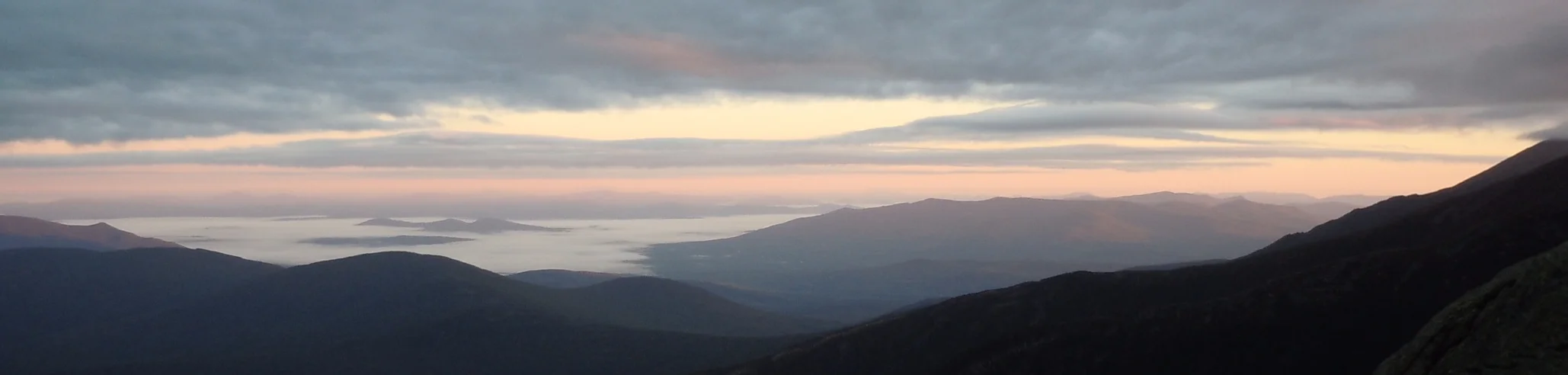
Just Within Arm's Reach

This past Saturday I got to go to the Natural History Museum with my cousin, her husband and their 2-year-old daughter. If you haven’t had the chance to go to a cool museum with a 2-year-old guide, I can only tell you that it makes even a great museum outstanding. Mostly because they view the exhibits with an energy and excitement of an entire lifetime bottled up in a tiny little body. And they are looking at everything not from the vantage point that you usually see everything, but instead from their vantage point at about 3 feet tall, and they are taking in everything that they can take in just within an arm’s reach. We think of just within reach as a small distance—as the opposite of a big accomplishment. But it turns out— an entire universe lives just within an arm’s reach.

The 2-year-old went from exhibit to exhibit looking at what she could reach—with her arms, with her eyes: dioramas at her height, a bronze statue of a little boy and any button she could push. She looked at bigger things that her mom or dad held her up to see—the dinosaurs, the elephant, the whales. But what really captivated her was within her reach—was something that she could go to and leave and come back to on her own.

The ability to approach it and then walk away, and then turn right around and go back, as if seeing it for the first time again. Some of the things were part of the displays and some of the things were just the stairs or the structures of the building. What mattered most was what she could figure out from it. What mattered most was that it was in scale with her learning, and within reach of her ability to take it in and try to figure it out. If she could reach out and touch it, or run to and away from it, all the better.

Just within reach. In case you are wondering, this isn’t my usual motto. Mine is more along the lines of that cheesy inspirational poster:  “If your dreams don’t scare you, they’re not big enough” which I confess I wrote on a 3 X 5 card and pinned above my desk.  But two-year-olds are such serious gurus of learning that I was struck by the difference of her approach to what was new and interesting to her, and my typical approach to what I am trying to do in the world. I began to wonder what it would mean to appreciate the learning and the reaching that was just within reach.

Just within reach doesn’t mean it’s easy to get or too hard to get. It’s a stretch, but a fun stretch. A challenging, but do-able stretch. It’s a lesson I seem to need to learn over and over again. And just within reach means that you are taking in more of what’s really happening in front of you, near you—in the moment—than the bigger demands that loom larger in our minds.

What does learning just within arm’s reach mean for an adult? I think it means first slowing down and being in the present moment. Feeling your feet on the floor. Taking a deep breath. Listening more carefully to the conversation. It means appreciating the smaller practices and goals of the work you are doing: the sketches, the drafts, the brainstorming, the first attempts.

What’s so impressive is that little kids come programmed to learn with a sustainable strategy or practice that’s filled with kindness and fun. They instinctively know to make it easier if it’s too hard, and to make it harder if it’s too easy. They know to do it again and again. They know when it’s time to shift to something else. And I think that their blueprint for learning is exactly what’s needed for growing—for healing. To lean into those things you are learning that are just within reach.

The thing about an arm’s reach is that it is exactly the words we use to describe being in relationship—being connected. Reaching out. And this is what working within an arm’s reach gives you—it means you are building a relationship with what you are learning. And more importantly you are building a relationship with yourself –the self that is learning. It means that you are curious and open to surprises about what you are learning—and you are curious and open to surprises about yourself.

Just within arm’s reach is incremental learning. It’s not about being great at something, it’s about getting better at something. It’s about being able to stay in a hard conversation longer, or stick with a tough problem longer. It’s about trying something new, or having the patience to stick something out. It’s about letting yourself be awkward, be loud, or be quiet. Or sit still, or get moving—or whatever is just within reach for you.

© 2022 Gretchen L. Schmelzer, PhD
An Invitation to Nourishment

We only see what we look at.
— John Berger
It’s not what you look at that matters: it’s what you see.
— Henry David Thoreau

I came out to my porch to write this morning. The weather has gotten cool enough to make writing outside pleasant again, and I like to be out here to sit quietly with my thoughts. Though as soon as I sat down I was reminded how wonderfully loud nature is. Late summer sounds of field crickets and crows in the distance. Katydids and squirrels.

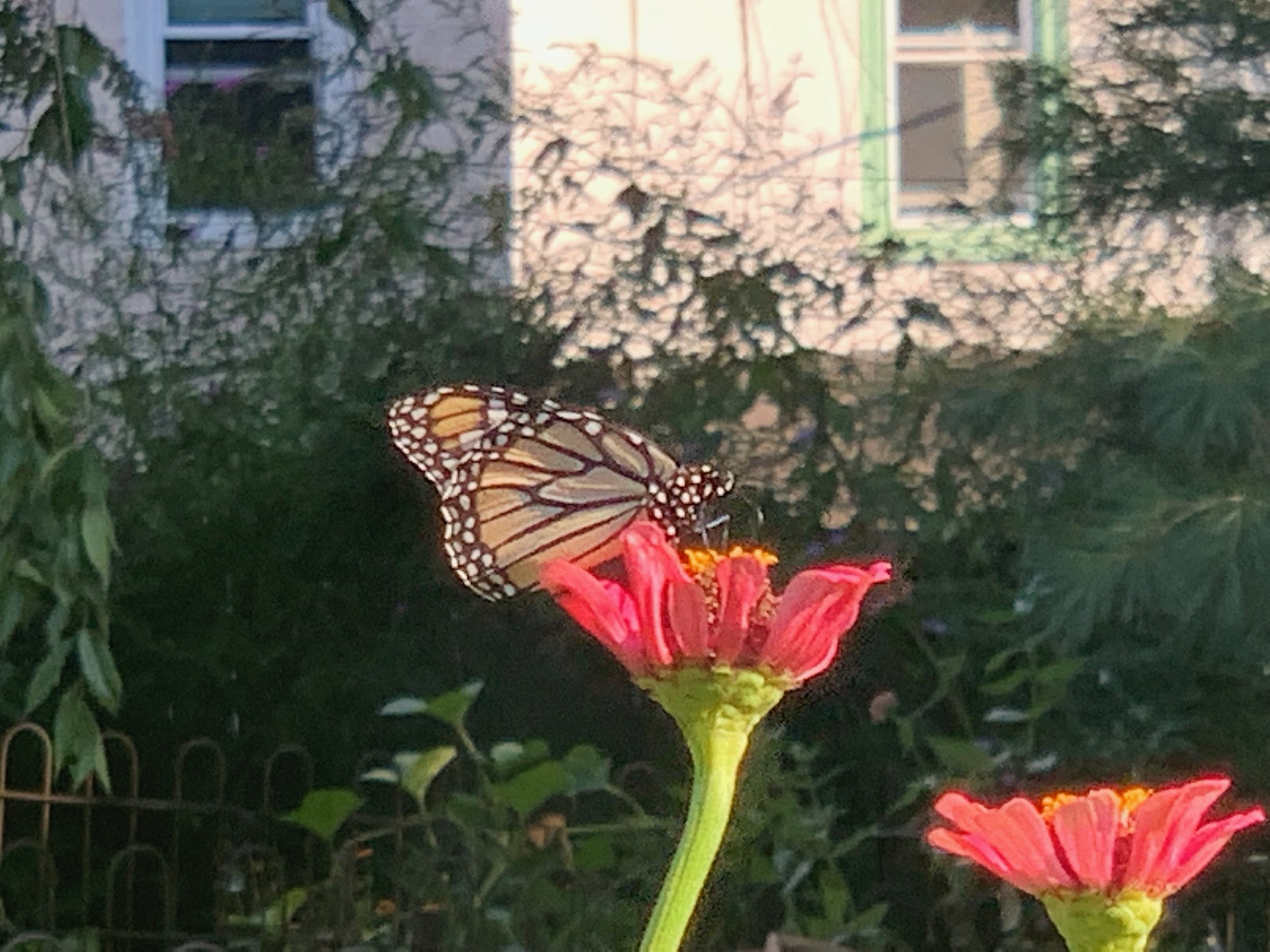
I look out to the back garden and there is a monarch on my hot pink zinnia. This is exactly the moment I dreamed of as I pored through seed catalogues in the winter. When the world was grey and frozen and cold. When the garden was perfect in my imagination. The butterfly is making a tour of the zinnias—orange, pink, yellow, and then makes its way to the butterfly bush, spikes of purple, in my neighbor’s yard.

Monday, I had replaced my old weed trimmer and finally cut the month old grass in my back yard. Work travel and Covid had interfered with my gardening tasks, so the back yard had turned into an overgrown meadow. I took half a day to tidy up the yard and the lawn, but I left the beds looking unkempt and boisterous. They reminded me of my overgrown perennial beds at my house fifteen years ago. Those beds were also really overgrown as I was traveling a lot for work and wasn’t able to keep up. One late summer I had a new stove delivered to the house and the one of the delivery guys stopped on his way out and looked around the yard and asked, “So, is this the look you are going for?” Which is pretty much what I asked myself on Monday as I looked around.

So, right now my garden may not be ‘the look I am going for’ but thanks to some self-seeded sunflowers and zinnias creating a cheerful jumble of color and food there – it is exactly the look that the monarch is going for.

“It’s not what you look at, it’s what you see.” The delivery guy sees a mess, and the monarch sees nourishment. And this is where the monarch reminded me of the true purpose of the garden. Gardens, in all of their forms, are invitations to nourishment.  You can’t make a monarch come into your yard. It is a delicate joy that arrives if you create conditions that make it likely. You have to create the conditions that invites it, that encourages it, that sustains it. Your garden needs to have nourishment.

I have been thinking a lot about nourishment lately because the people I am working with are so very tired. And the act of recovery—from Covid, or from other stressors seems to be more than just ‘reducing stress.’ It seems to require an infusion of energy—an infusion of nourishment. But when I ask them what is nourishing for them --I get blank stares. It’s almost like they’ve forgotten. It’s been so long since anyone has felt nourished.

Which has me wonder whether we humans are very good at seeing what is nourishing in our lives. Can we see our zinnias? Can we tolerate the messes so what needs to grow can get enough time and space? Can we create an environment in our lives that is an invitation to nourishment? Can we create a garden—a place where we can grow-- that has enough mess, jumble, and color, that our inner butterfly has a place to land—has a place to get nourishment from?

Nourishment happens a little at a time. The monarch spends moments at each flower and then heads off to find nourishment elsewhere. We aren’t good at seeing nourishment, and we forget how small the increments need to be in order absorb nourishment. A song that brings us energy. A conversation with a neighbor that brightens our day. The monarch on our zinnia. Look for nourishment. See it in the moments that it happens. And take it in.

© 2022 Gretchen L. Schmelzer, PhD

What tree will 'future me' be grateful that I planted this year?

In the New York Times this morning I read about a NYC program that has planted 13,000 trees in shade-deficient neighborhoods. The plan is to plant 20,000 trees a year until 2026.

Twenty thousand trees—twenty thousand acts of imagination and hope. Twenty thousand actions that required effort and planning—all with the requirement to act, support and be patient for the results. Be patient for the kind of change big enough to create transformation.

“On one block in East New York, a line of trees, planted in 2009, has grown into a canopy. Neighbors gather for cards, dominoes and barbecue. “When they first came, I could touch the tops of the trees,” Jaytee Spurgeon, 55, recalls. “It makes the neighborhood better.”

Planting trees is an entirely different time horizon than we are used to. It takes 10-20 years for many trees to reach a height that has impact that we recognize. And we humans aren’t good at doing something and waiting 10 – 20 years for results. In the world of quarterly reports, ten session treatment plans, and three easy steps to everything—results that don’t happen quickly aren’t considered successful. Even six months is a long time for most imaginations. Recent research by digital.com found that 52% of online shoppers won’t wait 6 seconds for a webpage to load. 6 seconds. It’s no wonder planting trees seems radical.

And if we are usually prone to short-term thinking—the pandemic has made it worse. Trauma changes the way we hold time. Trauma shifts our time horizons to an ever-present past. We organize ourselves to pay attention and protect ourselves from what already happened, and we stop orienting toward a future.

The antidote to this traumatic effect on our experience of time is to intentionally stretch into longer time horizons. We need to imagine and act toward a future. Yes, we need to plant trees—for the environment, for people, for neighborhoods. Actual tree planting is great. But the article stayed with me on my walk this morning because I began to wonder what the ‘trees’ were in my life—and in the lives of the people and organizations I work with. It made me wonder—what are we planting now for something for results or change in 10 – 20 years? And how can we help ourselves and each other have the patience to hold these trees as we wait for the results?

I think sometimes we not only need to plant trees, but we need to recognize the things we are doing that are trees. For example, in my work life organizations often see their projects as ‘initiatives’ and not long-term projects. A colleague and I worked with an organization for 5 years building a cadre of 25 leaders a year who could communicate well, develop their people and see the bigger picture. The organization saw this group in terms of short-term outcomes. Instead of seeing this group as a forest, they saw each leader or maybe the cohort as a lovely field of sunflowers. They didn’t recognize that they had planted 125 trees—that this combined group of alumni of this program was a resource that was bigger than any individual in it, and could support a lot of their other change and strategy work. By not seeing the trees that they planted, they didn’t put the resources in to nurture it or support it, and gradually the forest isn’t as strong.

And sometimes we don’t recognize when we are planting trees that are bigger than our initial acts. We confuse the means with the ends. We begin an exercise program—we walk on a treadmill, or we begin strength training, and as we get stronger we don’t shift our activity to things that we enjoy more or that interest us—we don’t hike more challenging trails, or take up a new sport. So we gradually lose interest in the exercise routine because the exercise program wasn’t the tree, it was the seed: the tree was the more meaningful activity we were trying to get to. When you plant a tree in your life it will keep growing and it will need you to grow with it. This is true for individuals and its true for the organizations I work in too.

So I sit wondering…Where am I thinking in too short a time horizon? Where am I being too impatient for a result? And ‘what will future me be grateful that I planted this year?’

© 2022 Gretchen L. Schmelzer, PhD

If you want to watch a wonderful allegorical tale of the vision and patience of planting trees, you can watch The Man Who Planted Trees by Jean Giorno

Or read the book:

And if you want to support actual tree planting nationally or internationally:

Million Trees NYC

https://trees.org/ 

https://tenmilliontrees.org

It's Okay to Be Done

The Renunciation

When the angel appears
Suddenly
to tell you of a new life
—no one is ready.
I was shoveling snow and
Mary was doing her thing
when Gabriel appeared,
wings high above his head,
giving her news
in a couple of simple sentences
that would change her life
and change the world—
she would birth a savior.

Oh, I too believed in saving
as an antidote to fear.
Fear not! I gathered the children
working year after year
to wash away the sins
of the father and mother
and suddenly—with grace,
but no wings, my angel,
Gabriel’s opposite,
with a streetlight halo,
of a million snowflakes
swirling and sparkling—
a voice echoing in my head
said: it’s over.

I could hear a
door shut and I knew
with an aching clarity
It was no longer my job
to save the world.
I could feel the snowflakes
blessing my head;
tears washing my face.
I watched the cars roll by
silently in the snow, moving
without any help from me.
— Gretchen Schmelzer

Despite all the talk about quiet quitting (a problem I ascribe to a lack of leadership, and not a lack of engagement, and a blog for another day) —and the great resignation -- adults are actually pretty bad at knowing when it’s time to be done with something.

It’s hard to hold the polarity between persistence and transition. The ability to stick with something through the hard times—and then the ability to, as Mary Oliver says in her poem, In Black Water Woods, when the time comes to let it go. The problem is that rather than seeing persistence and transition as interconnected energetic capacities that support learning and growth—these traits get turned into moral behaviors—where you are good if you persist, and bad if you transition—and this fear of a moral failing keeps way too many people stuck doing things that they need to move on from. Turning these capacities into moral behaviors makes it seem like you should do one and avoid the other. As if you should seek a singular state of persistence when in fact persistence and transition are polarities—you can’t grow without both of them—and the task is to be able to hold both ends of this polarity, and feel the loss when you move from one end to the other.

As a therapist and a coach I especially see this struggle when people are done with a current job –not because of any other reason than they have outgrown it—from a developmental perspective, or their values or purpose has changed, or their awareness of what now interests them has shifted. And their real struggle is a nagging feeling that they are ‘giving up’ rather than growing up. The job no longer fits them—and they can’t bring their biggest self, their gifts, their energy to the current one anymore.

The ability to be done with something allows you to grow into something else. Children and teenagers are not only allowed to this; they are outright encouraged to ‘leave those things behind.’ You don’t stay in 3rd grade forever, just because you liked it, or you liked your teachers. You move to the next grade. The structures of youth support us being done and moving and transitioning to the next thing—and then we hit adulthood and the easy conveyor belt of transition ends. And we are required to make these shifts on our own.

Don’t get me wrong—I’m not against constancy, or loyalty, or commitment. I am not against staying connected to work or relationships through difficulty. I’m not saying being done is ‘good’ and persistence is ‘bad.’ I am asking us to hold both of them enough to support our growth and our ability to use our gifts.

The problem with persistence, transition and done is that you find these places as feelings, as images, as quiet voices or drumbeats. They are places that you usually can’t get to with reason. The next thing pulls you toward it and you don’t give up, you persist. Or you suddenly have a sense deep inside you that the thing you are doing right now must stop. And the problem is that the feelings might not ‘make sense.’ They aren’t the logical answer. And often, you fear that they might disappoint somebody else.

I know this dilemma intimately. Ten years ago I gave up my private practice as a therapist because I needed a break from being so connected to other people’s emotions and thoughts. I was exhausted-- I had been taking care of people since I was a toddler, and I could feel, in my cells, that I wasn’t going to be able to heal myself unless I let go of healing others for a while. It was a wrenching realization, and ultimately, a crucial shift for me. A shift that came with a good deal of sorrow that remains. And that’s the hard thing about this polarity between persistence and transition, between persistence and done—there’s a loss, or grief, or sorrow at the parting. And there’s joy, excitement, hope and interest in what comes next—all things you might have missed if you hadn’t risked the grief, hadn’t risk the disappointment.

The nudge here isn’t to persist or to be done. The nudge here is to reflect. To listen to that small voice inside you tell you what it needs now. To trust the images and visions your unconscious offers you. To allow yourself to listen to what your body is telling you. And to hold that neither side is permanent. You can let yourself persist, you can let yourself be done. They are both okay.

© 2022 Gretchen L. Schmelzer, PhD

Poem Inspired by The God Abandons Antony by Cavafy in: