She let herself go

What I find amazing is that the statement, “She let herself go” is considered an insult, instead of a cause for celebration. True, it is what is said about (mostly women) who have gained weight or stopped caring about their appearance in the way that ‘they’ think you ought to care. It is a statement of judgement. Of lowering your standards. It implies that ‘she’ once had it together, and now she longer does.

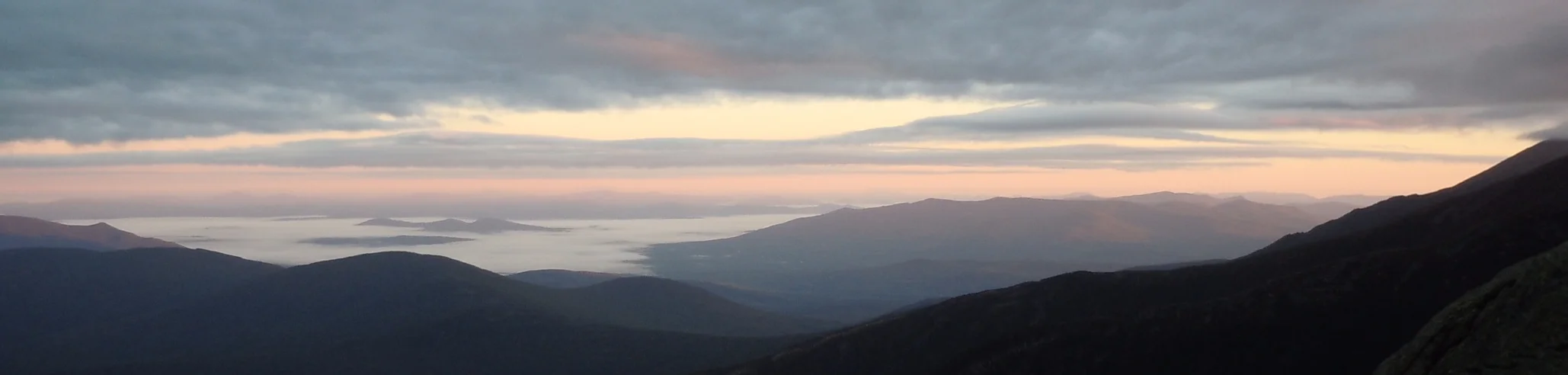
My work life is reawakening from Covid and my travel and ‘in-person’ work is resuming again. This past week I was in Fairbanks, Alaska to work with a team and had planned in 2 extras days before the work started as a buffer against flight delays which have become the norm. One of my Alaskan colleagues asked if I had ever been Denali National Park and I said no. I’ve been working in Alaska for a decade now but had yet to go. It always seemed like a too big of trip to add on to an already busy work schedule, and I often wasn’t there in the summer. But here I was with two extra days in the height of summer, and she generously offered me her car for the weekend so I drove the two hours down to Denali.  

The second day of hiking I walked for four hours in wilderness on a trail that went to three different lakes. I had the trail entirely to myself. Just wind and birdsong. Wildflowers blooming everywhere: fireweed, delphinium, bluebells, bunchberry. And as I was hiking along the trail, that old refrain, “she let herself go” came back to me. It came first from the feeling of having ‘let myself go’ on this adventure to Denali. “I let myself go.” And the statement jiggled in my brain because it’s a statement that is supposed to make you feel bad about yourself, yet what I actually felt was exhilaration—and freedom.  I began thinking of how often this refrain is used. All the times as a kid I heard the adults say it about people they met at the store or who had come for dinner. Said in whispers as they left. How it was said to me by a less-than-caring relative when my marriage ended: “well, you did let yourself go.”

I thought of being back at work in person and having to wear pants after gaining weight during Covid. How I hadn’t gotten new work clothes in two years because all of my work was on Zoom and how in some ways we had all ‘let ourselves go.’  We let ourselves go in ways we hadn’t imagined we could. We let go of our dress codes and our old routines. We let go of the ways we thought we could work together and found new ways. We let go of the priorities we once had and are now in the transition to figure out what they are again.

I found myself hiking to a rhythm of ‘let…go…let….go…let….go…’

And as I hiked, with each footfall, I began to wonder what it would really mean own this statement ‘to let yourself go.’  If you really let yourself go, what would do or what would you stop doing? What would you stop caring about? What would you care more about?

If feels like the life equivalent of that moment at the end of a long evening of wearing really uncomfortable shoes—where you kick them off and stand in your bare feet. Where you feel relief not only in your sore feet, but your whole body—in your whole self. All the ways we hold ourselves back. All the ways we hide the parts of ourselves we aren’t sure about. All the ways we constrict our emotions, our words, our voice.

So rather than fearing the statement: she let herself go. Let’s seek it out—let yourself go. And if we hear someone saying “she let herself go’ about someone else, let’s smile and reply: good for her.

 © 2022 Gretchen L. Schmelzer, PhD

*And in this spirit of ‘she let herself go’ I am going to be posting more frequently, and perhaps less eloquently. I have found that over time I had a higher and higher standard to write this blog to the point that I wasn’t writing at all. It is my intention to write once or twice a week now with pieces less polished and perhaps with more questions than answers. I understand that this may be more frequent emails than you wish—and you are welcome to unsubscribe and check in on the website when you wish.
Look for what is growing

There is a weariness at the start of this year. If you are like most of the people I am working with or coaching—you are exhausted. You are tired of managing Covid, and kids and meetings and schedules. You are tired of having to adapt and adjust again and again. You are tired of getting your hopes up and the disappointment that follows. You are tired of doing half of the things you loved, or not doing them at all. And you are tired of waiting for it to get better—to return to what you remember as ‘normal.’

Recently, I found that a post-walk ritual has not only helped me with my weariness—it has helped to see that the way I look at the world and myself needs revision.

Most of you found some outlet for your pandemic anxiety-- I became obsessed with my garden. Fueled by watching British gardening shows online, I dug up 5 new perennial beds for flowers and planted 4 raised beds for vegetables. At the time it felt hard to imagine a future, so I decided to plant one instead.

In the fall of 2020 I planted 450 bulbs in my tiny rowhouse lot. And in the winter and early spring of 2021 I planted hundreds of seedlings under lights. So, the spring and summer of 2021 was a blast! I had all sorts of flowers and vegetables coming up—from crocus to zinnias to kale to potatoes. And every day in the growing season I had a ritual I called ‘the daily bloom’ where I would go out to my garden and see who showed up. I considered myself the welcoming committee and would greet each new arrival and tell them how beautiful they looked, and how grateful I was to see them, and I would take their picture.

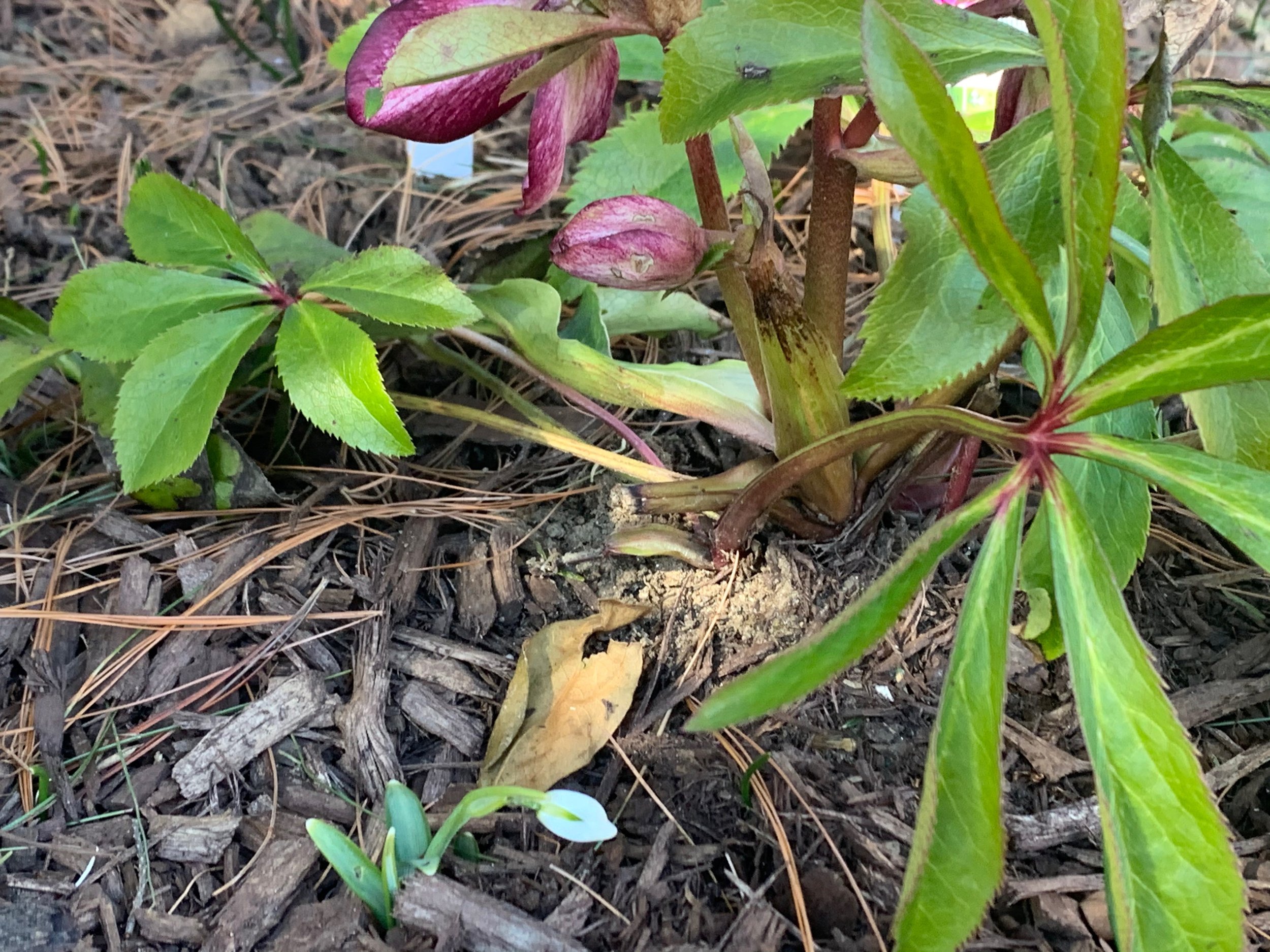
Winter is a slower season. It is grey and dark and cold—and I found myself missing my ‘daily bloom’ ritual, so after Christmas I instituted a new post-walk ritual. When I finish my run or my walk, I walk down the alley next to my house and into the back yard and I look for what is growing.  I scour my garden beds for signs of life. Have the snow drops come up? Are the winter aconite up? Do the hellebores have blossoms yet? It’s a mindfulness exercise—it’s an observation exercise. It’s like a scavenger hunt. It feels like play.

I look for any new green shoots. For the daffodil shoots. For lady’s mantle leaves. I look at the buds on the shrubs. I look at the kale still growing, even through snow. I see the snowdrops are up, and one had a flower bud that is not yet open. The winter aconite shoots are up, but no sign of a flower. The pink buds on the hellebores are visible on one plant, but closed tightly against the cold.

And it occurred to me, that in the rest of my life and my work I don’t usually do this. I don’t look for what is growing. Like most people, I often turn a more critical or judgmental view on what I am doing—and look for what I haven’t done, or what needs to be fixed or changed. And this isn’t always wrong. Sometimes it is important to pay attention to what needs mending or repair. Or to look at what hasn’t gotten done. But I think that the constant stress and the repeated trauma many of us have been facing these past couple of years has us fixated on what isn’t there—on what we can’t do, didn’t do, won’t be able to do. We have lost sight of what is growing.

I think this is especially true in how we are holding other people right now. Parents are so worried about what their kids aren’t experiencing and aren’t getting to do that they are missing the lovely little green shoots of empathy and compassion that their kids are growing for other people right now. Their ability to be creative and adaptable. Kids who are living through the pandemic are growing the capacities to hold difficulty – the very capacities I so admired in my grandmother who lived through the Great Depression and World War II—capacities I endeavored to learn from her. I know there is loss, but look carefully, there is also something beautiful growing.

The thing about looking for growth is that it is small and subtle. Last winter I when planted seeds in seed trays and put them on lighted shelves— I raced downstairs every morning to see if there were any signs of growth. I would scour the trays –scanning for green. When the seeds started coming up, they were so small and so fragile and tender. There is such beauty in this state—in the state of true beginning. But we don’t treat these beginning places in us with the same kind of love. So much of this pandemic demands or invites growth—change—adaptation. And yet it is rare that we look at our new growth with the awe it deserves—with excitement that I shine on my seedlings and new green shoots in the garden.

So can we do this? With ourselves and the people in our lives?  If I looked for what was growing—what would I see?

 © 2022 Gretchen L. Schmelzer, PhD

22 for '22

Heading in to 2022 in a state of exhaustion? You aren’t alone. It seems everyone is feeling as if they just get can’t get their feet underneath them—or if they do—the world shifts again—and they lose their footing or their bearings again. And this exhaustion has hit almost every family in different way—with different levels of intensity –different levels of loss-- and at different times. These two years have had the impact of chronic trauma—and one of the hallmarks of trauma is a feeling of hopelessness and powerlessness. How do you heal the exhaustion—and the feeling that you can’t make headway? How do you create some hope and energy for the year ahead? It can feel like you can’t make a difference—or you don’t have the power to make change. But one of the most important antidotes to these feeling of powerlessness and hopelessness is action—or agency. But how do you find it when you are worn out?

You start small and you work on constancy. Small, consistent, acts are the medicine we need.

I’m creating a plan called 22 for ‘22. The purpose of the plan is to create space for some small wins and the feeling of forward movement. I don’t know about you, but for me the world feels a bit too precarious for some big life goal—so instead I am advocating for a more modest intervention—a series of small intentions that can support me in feeling more sturdy right now.  22 for ‘22 isn’t a bucket list: think of it more like a teacup list. Small acts that you can repeat. Small acts that you can cross off a list.

I know you overachievers out there look at 22 for ‘22 and think it has to be big. It doesn’t. For those of you who see this and are immediately overwhelmed by your achievement motive or your internal critic: slow down—and think smaller. Over the course of this year it could be 22 thank you notes to people who have made a difference in your life. It could be trying 22 new recipes or different kinds of food (or different kinds of ice cream). It could be 22 new movies, or 22 books. It could be 22 nature walks, or 22 new kinds of flowers for your garden. It could be 22 smiles you give to others on your walk to work. It could be 22 bedtime stories for your kids or grandkids. A playlist of 22 songs that brighten your day. Identifying 22 kinds of trees in your neighborhood. You could write 22 letters to your elected officials. You could play 22 new songs on your guitar. It could be 22 acts of kindness for your neighbor or 22 prayers for those who are hurting.

You could play with the 22 and do 22 minutes of writing a day, or mindfulness a day. You could take 22 pictures on your phone of things that inspire you. You could take out food from 22 different restaurants to support them this year. You could donate 22 pieces of clothing or household items you need to get rid of. You could learn 22 new words in a language you want to speak. You could write 22 poems. You could make 22 plant-based meals.

Or if action feels too hard—what about observation? Could you notice 22 different kinds of birds? Look for 22 things that you are grateful for? See if you can spot 22 monarch butterflies this year? And if you are really exhausted it might be 22 naps you will take, or 22 times you will say “no” when you normally would have said “yes.”

Or, if like me, you can’t decide—you can mix and match! You can create a random list of 22 things because making a random list of things feels like a scavenger hunt—which feels way more “2022” than a life goal. The important thing is action. The important thing is constancy and the feeling of “I-can-do-it-ness” that goes with doing something—no matter how small.

And when you decide your 22 for ’22-- write them down, make a collage or vision board, post them, share them and inspire others. Get your friends, your kids, your parents and co-workers to join. Action and energy are contagious—and we could use way more of that contagion right now. So, what are your 22 for ’22?

© 2021 Gretchen L. Schmelzer, PhD

Emergence is the space between healing and growth

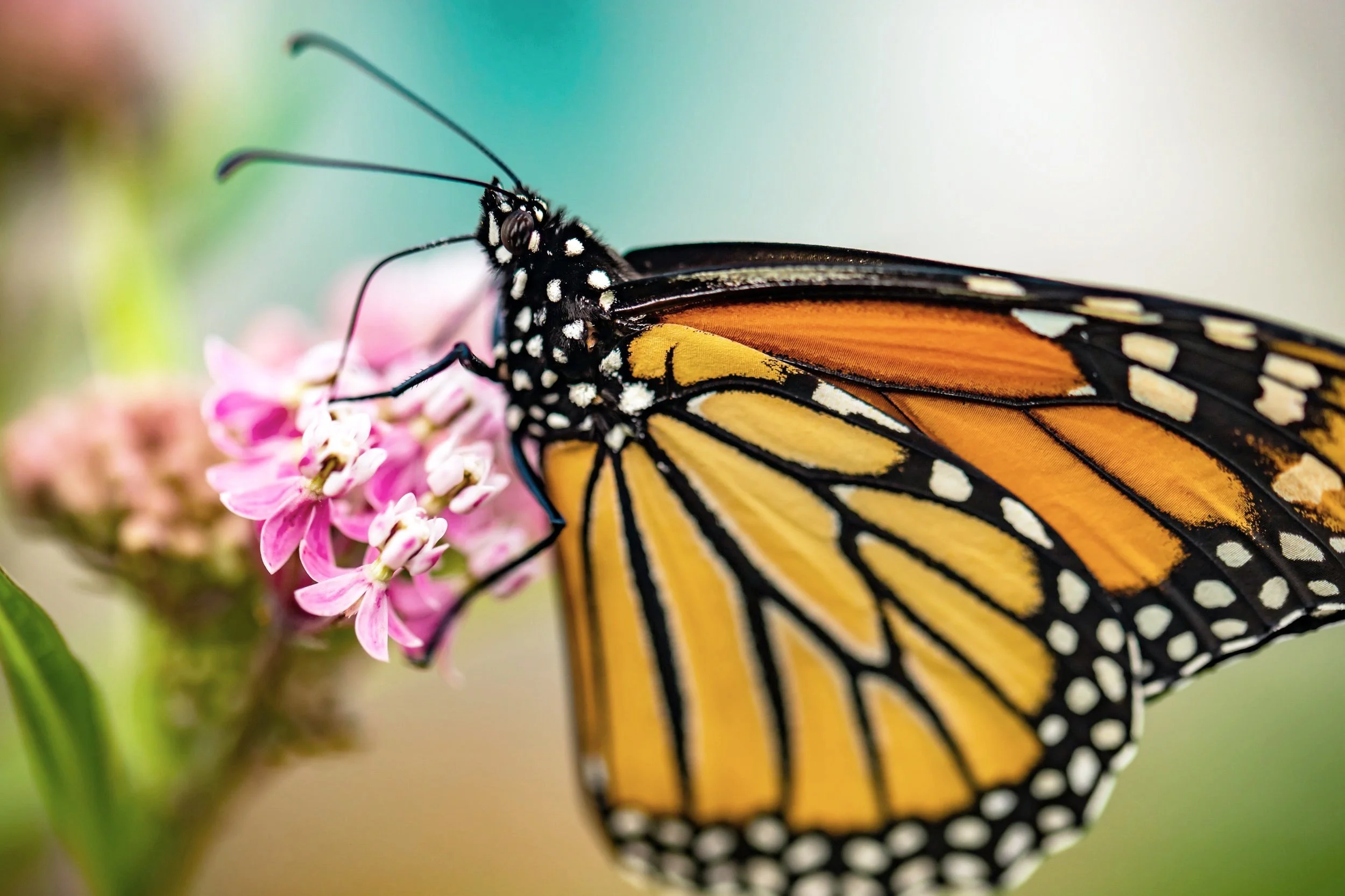
I don’t know how your therapist spent the pandemic, but mine raised monarch butterflies. So, yesterday while I was struggling to explain my frustration and impatience with myself, she told me a story about how a butterfly emerges from its chrysalis. How it emerges with a body that is full of fluid and bigger than we think about butterfly bodies, and how its wings are curled and crumpled.

And I began to cry. I could feel those crumpled wings.

Those crumpled wings that I was ashamed of. Crumpled wings I wanted to hide or ignore because I was so deeply disappointed, after years of hard work, to emerge crumpled, instead of whole.

She continued: a butterfly rests where it emerges and must flap its wings over and over to fill up its wings, to bring the fluid from its body into its wings and help its wings expand. She explained how this takes a lot of time, and lots and lots of flapping.

And I continued to cry.

I cried from that exhausted relief you can feel when you realize that you are not alone. I was suddenly in the company of millions of small delicate souls, who emerge from one of the biggest changes a being could make—and yet still need time to become whole. I felt an expansive permission to be where I was. I sensed the beginning of forgiveness for all the judgments I had placed on myself. I felt the love that the universe extends to butterflies and could feel, even for a moment, that I could extend that love to myself. I was surrendering to a fight I had been unaware of until that moment.

I could feel my shame lift. I could feel that my emergence with crumpled wings wasn’t because I had done it wrong or was hopelessly broken. I was reminded in a way I could not ignore that emergence is continuous.

Crumpled wings aren’t an error—they are a part of the very nature of emergence. I could finally feel my messy in-between place as a place in its own right—as a place that is necessary. I could see that the task of becoming requires you to rest and stay where you are: that growth requires both rest and stillness.

And growth requires awkward flapping. Flapping to feel yourself grow, to feel where your edges are, to feel the power and possibility of what you have created. Flapping that brings all the work of healing into the power of your wings—draws all that painful work you did to heal into your cells --so that you come to inhabit yourself differently—and inhabit your world differently. And I felt deeply, in my heart, which now hurt, that this tender space of stillness and awkward flapping was precious and sacred. This place I had covered in shame, was in fact a place of wonder.

© 2021 Gretchen L. Schmelzer, PhD