Man, that's amazing work--You are badass...

When you hear friends and family talk about having to go to physical therapy after an injury or a surgery—they talk about it in groans and laughs. They talk about how tough their particular physical therapist is —how hard they made them work, how sore they are—in a way that sounds macho, or badass. 

This is not the conversation that people typically have about psychological therapy. There is some mistaken notion, especially the worse someone feels, that after a session of psychological therapy you will not be sore, but instead will ‘feel better.’ As if you were sitting down to talk with an old kindly grandmother or a hallmark card—and not someone trained to help you heal and stretch and grow. 

Psychological therapy is exactly like physical therapy —except it is done though words instead of those colored rubber bands. Old tight habitual muscles are forced to stretch and find new ways of moving. Psychological bones that were broken and healed over are re-broken and reset and then slowly put into use for you to use again. All of this work makes you sore. All of this work requires stretching.

This is where the platitudes from other people become especially annoying because they ask you, “Are you feeling better?” and you want to shout “No!— I am sore, I feel raw, I’am anxious, I’m trying new things!” The problem is that just like physical therapy, terms like  ‘feeling good” and “feeling bad” don’t really tell you anything: you will always feel more sore on your way to feeling functional. We judge physical health by flexibility, strength and range of motion. Shouldn’t we assess psychological health the same way? It’s my dream that someday we view psychological strengthening just as ‘badass’ as we view physical training. So help me make this happen. When you hear of someone working hard on their issues say, “Man, that’s amazing work—you are badass!” Watch them smile. Change the conversation about healing.

This blog originally ran Oct 9, 2014

© Gretchen L. Schmelzer, PhD 2015

For more on healing from trauma you can read my new book: Journey Through Trauma;

The Frame as Art

In one of my very first blog posts here I talked about an art class I took in college—called Methods and Materials. For my final project I ended up doing giant watercolors of old family pictures—and our class got to have a show of our work in the art building. I had two whole walls.

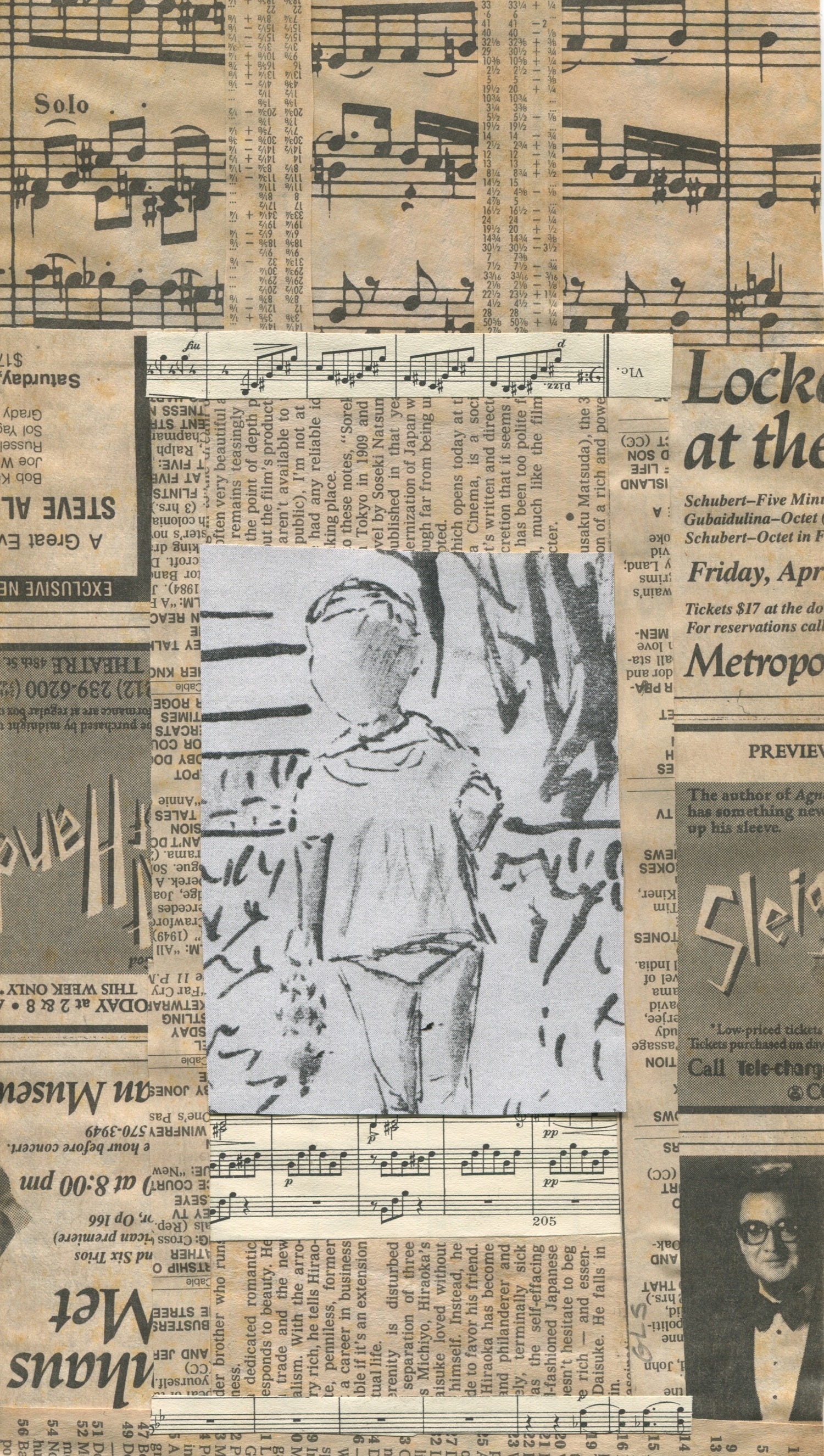
Over the course of the class I became enamored with Chinese hanging scrolls—not so much what was on the inside of the scrolls, but with the outside—the patterns and color block that made the framework for the picture. I thought the frames were as beautiful, sometimes more beautiful than the picture. I made collages of the frames with nothing in the center. And when it came time to hang my show, I created giant hanging scroll frames made of newsprint and maps and sheet music and put my watercolors in the center. I wanted my family pictures to have a framework. Something to hold them tight.

I had no idea then that I would end up traveling to China and Southeast Asia and I now have all kinds of hanging scrolls hanging in my house. Some of them Cambodian, made of fabrics, patterns of silk—hanging from old loom pieces. And some are traditional Chinese scrolls with paintings of bamboo or tigers. They have replaced the paper ones I created in art class.

As a consultant and therapist I often talk about containers or frameworks. These things are the invisible structure that allows change to happen. Not unlike art—we don’t always notice the frame—we take it for granted—the framing of the canvas, and then the frame of the painting—two frames providing structure and support and protection.

And in many ways the container should be invisible and taken for granted. It should be so interconnected that you think it is part of the art.

What do I mean by container or framework? When I teach people about containers and helping I go back to being a lifeguard. When I worked as a lifeguard I had a rule that there should be a lifeguard for every 10 people. At this ratio, it was a safe situation. A lifeguard can watch 10 people and interact with 10 people. Interestingly there is a magic number for human memory which is 7 plus or minus 2. It is what the human mind can easily hold in memory, and I have found that human beings somehow know if there are enough lifeguards or group therapists or consultants of groups to keep them in memory. When we unconsciously know that we are held in memory, we have the experience of knowing there is an emotional lifeguard. And so I have found the lifeguarding ratio to be the best container for work to get done by groups. When you have enough staff, or therapists or consultants—the group does its work and takes risks. When the ratio goes down, the work shifts back to being more superficial.

And the container can also be too tight. If a painting were all frame and crowded out the painting—that wouldn’t be right either. If there are too many helpers, therapists, consultants—people don’t feel safer, they feel scrutinized. In this scenario, they are held too much in memory and they get self-conscious and they don’t do as much work either. So in creating containers there is a balance.

And it is a balance that we participate in whether we are the helper or the one being helped. The helper provides the container in the beginning so healing can happen—it is the cast or splint that you can’t see, but which has to be thoughtfully put into place and adjusted as needed. Tighter when we are in crisis, looser as we heal. As the person helping you have to deeply understand that the container is as much of the work as anything else. And, like the frame of the canvas--it is the prerequisite for any work to happen. As the person getting help you have to learn to lean on it, lean in to it, and let it become something you trust. You come to depend on it, and then you learn to create it for yourself. Healing is so much like the hanging scrolls that I love so much: it requires that you become the beautiful frame and the artwork inside. You are both: the container and the art.

© 2015 Gretchen L Schmelzer, PhD

Healing as Mapping: Mapping the Self

“Cartographers call blank spaces on a map “sleeping beauties.”
— Annie Dillard

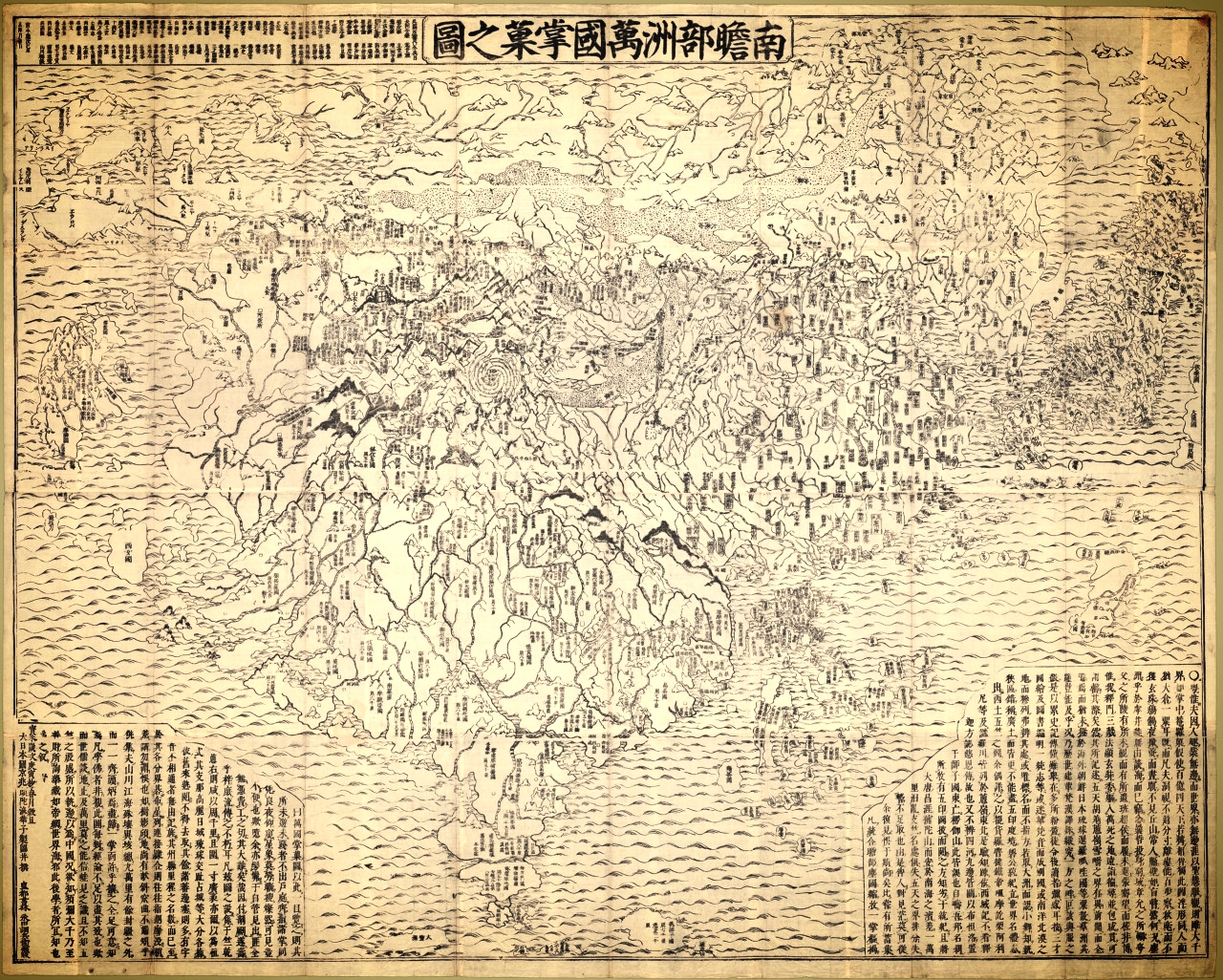
Healing from trauma is an expedition. It is a task of preparing for the expedition, the unraveling of the trail and the story, and slowly and painstakingly mapping the terrain.

You take a map with you of where you think are headed and where you think you need to go. But maps are always a mix of accurate truth and misinformation. Indeed what makes maps readable and usable is their loyalty to understanding and guidance, and not necessarily to accuracy.

All maps suffer from a problem of distortion—and all distortions on a map are there to serve some purpose, to create  order out of chaos. One of the most famous distortions was created by Mercator. In 1569 he created a map to help sailors. The map was a radical departure from other maps, but he wanted to make it easier for them to plan a straight course towards their destination. With his map, drawn with new meridians and parallels, all the sailors needed to do was to place a ruler on the map so they could plot a straight course. The map was never intended to depict the world as it was, just a journey that was as simple as it could be.

On this now familiar map, as you move away from the equator, the sizes of the continents become more distorted. Greenland and Africa seem to appear to be the same size, when in fact Africa is fourteen times the size of Greenland. We don’t see the distortions because this is the map we know. We grew up with this version of the world; pulled down by a string in front of the blackboards of our elementary schools.

Sometimes it what isn’t there that makes a map useful. The famous motto of the London Underground, “Mind the Gap” actually describes well the London Underground map—in that what was missing made it more understandable. Henry Beck’s 1930 map was a new map altogether—it dispensed with accuracy of exact locations and focused on the easy understanding of the interconnections between subway lines. It allowed people to understand how to simply get from station to station. In both Beck’s and Mercator’s work there was an important focus: how to order the world so that people could easily navigate.

I have a friend David Lindroth who is a mapmaker. He often tells about how when you are drawing a map of the coastline, you can’t draw it perfectly, the way you would see it in a photograph. If you drew the coastline the way you see it in a photograph, you would draw all of the inlets and edges of the coastlines which would actually make the coastlines of a country look porous and unfamiliar. In order for a coastline to look and feel familiar you need to leave out details. A general coastline feels more accurate than a real coastline.

Mapping the self is no less fraught with complexity. You need to begin the journey with some rudimentary map to make the trip—to know where to head. But you must remember that you are both using the map and creating the map. And trauma changes maps. If you are traveling in a war torn country—the maps made before the war will help you some, but not entirely. You need them all, you see. The maps before the war, and maps during war, and the maps of what exists now, the maps you are creating. They are different maps of a territory or place, but they don’t describe the same thing.

Putting names to things, locating the experience in time and place, understanding the closeness-distance of things. These are the actions of mapping. And when you head in to unknown territory it can be terrifying. Sometimes you are trying to talk about information you know, the experience you remember,--but even in the known there can be unknown.  The unknown can be the feelings that went with the experience or how the story will impact another. Whether you will be able to tolerate telling the story, tolerate the feelings, the shame.

 Sometimes the unknown is experiencing something you never let yourself experience before—it is truly unknown territory for you—perhaps trusting or depending on someone for the first time, or trying something brand new.

Sometimes the unknown is creating new structures altogether—building new bridges, planting new forests, destroying old fortresses.

But know this: creating maps is a brave endeavor. It takes courage to map your territory and account for what is there and not there. It takes courage to create a map that lets you be found—by you, by others, by the world. But the beauty is that the hard won courage you used to heal and create your maps stays with you. The bravery of the expedition stays with you. You get to use it to grow and learn for yourself. And you get to use it to help others. This courage is perhaps one of the many gifts of healing from trauma. It is one of the places on the map you can’t see before you start. It is one of the ‘sleeping beauties’ the cartographers speak of, and that your bravery allowed you to find. 

© Gretchen L. Schmelzer, PhD 2015
Mindful Monday: Moments of Sweetness

“Often a sweetness comes
as if on loan, stays long enough
to make sense of what it means to be alive,”
— Stephen Dunn

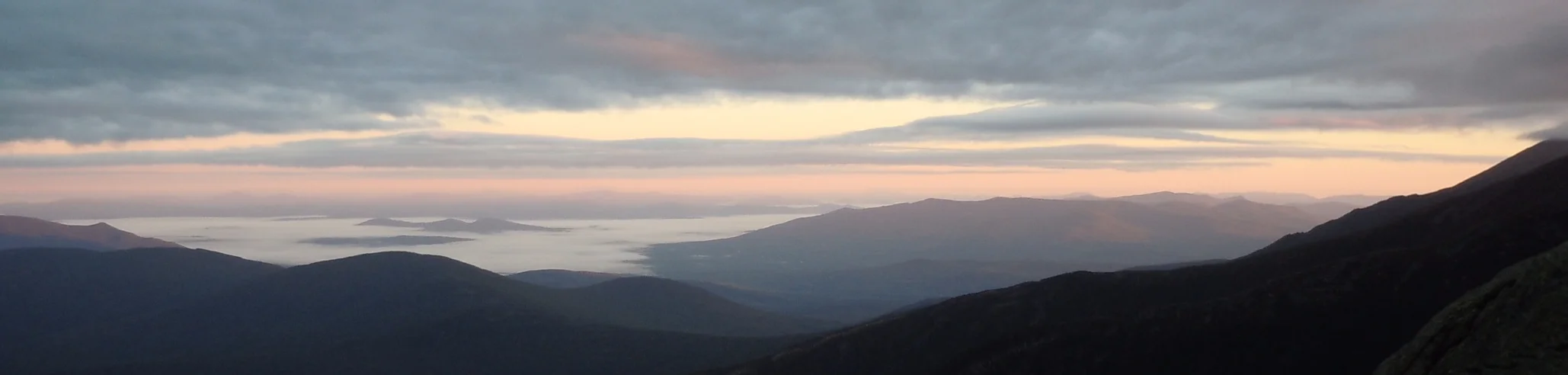
The first sound I heard when I walked out of the door this morning to shovel last night’s snowfall was a cardinal singing. Clear, high pitched and bright.  It was a sound of sweetness and a reminder to be mindful of the sweet things that roll in after a storm.

Today we had a brief thaw. It was a sunny day and mild temperatures finally above the freezing mark. And inspired by the cardinal this morning I headed out for a long walk this afternoon in a park that plows its driveway enough so that there is a space to walk. And I just let myself get taken in by moments of sweetness. The light through the trees. The kids sledding on the hill. The warmth of the sun on my face. The dogs wagging their tails. People all bundled up. People learning to cross country ski. A half built snow man.

In the same way that we learn to ‘free write’ where you don’t edit what you are writing and you don’t force yourself to have a narrative, I let my mind wander as I walked just noticing moments of sweetness. I just let each one just land on me like a butterfly where I could enjoy it for a second until my thoughts blew it away, or another landed. And perhaps this is the key to sweetness- don’t overthink it. Let the sweet moments float to you. Let them just appear. Just notice them and take them in. It is a practice in mindfulness and noticing. But it is also a practice in non-judgmental awareness. You are noticing with a welcoming heart and mind.

Moments of sweetness are such powerful medicine. They are the antidote to a long winter—of any sort, whether seasonal or emotional. They are what we need to heal from the daily dose of cynicism and contempt that the news and media send us. Moments of sweetness are free and the more we notice them the more we see how much we have, how much we live in a world of abundance. They help us see what is there, and train our thinking away from looking at what isn’t there.

Moments of sweetness are a salve for any healing you need to do—whether it's just daily wear and tear, or a much deeper wound. And moments of sweetness are available anywhere, any time. This week, try this practice. Just breathe and look around, with all of your senses—your eyes, your ears, your smell—and also your heart. Let yourself take in moments of sweetness. Let them land on your, one after another. And then see if you can recall them at the end of the day as you are falling asleep.

© Gretchen L. Schmelzer, PhD 2015