Want perspective? Manage your stress!

Today I was working with a client and was reminded again how important managing stress is. Not just because stress is, well, stressful,  but because when we are under stress we can’t see the whole picture—we lose our ability to have perspective. We lose the capacity to use our strengths.

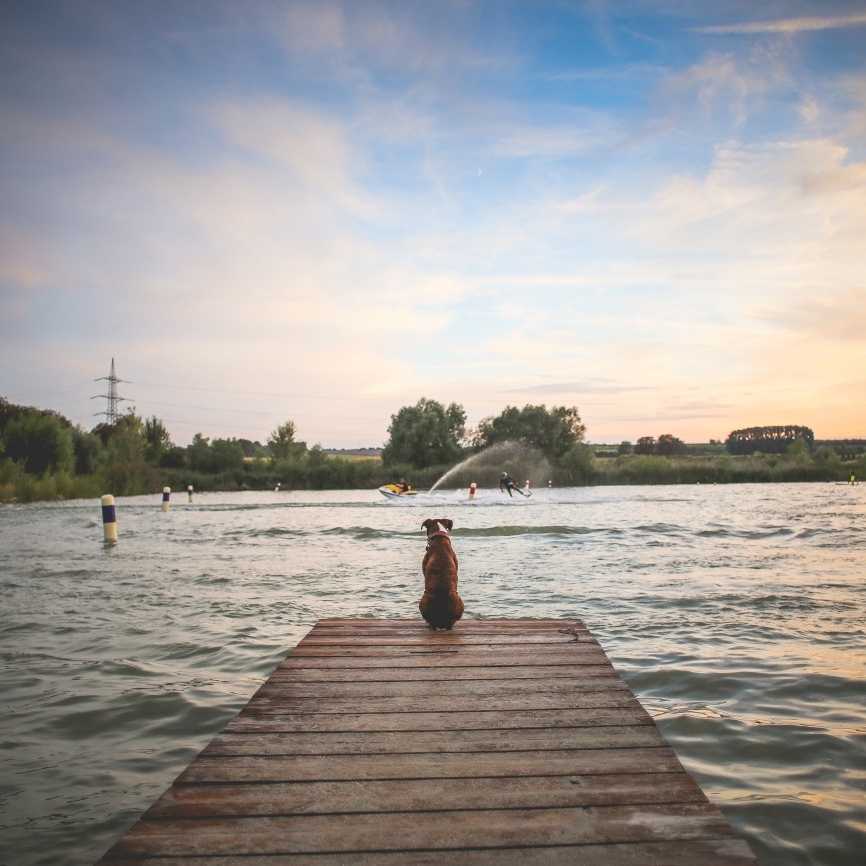
When we are under stress our ability to scan the world stops. Our fear-based-survival brain takes over and our visual and attentional focus narrows. We are only focused on whatever we perceive to be the root of our fear. Under stress we lack the ability to see around our world—to have any perspective—instead we become immersed in it—we go into the watery depths of our stress, and we can’t get back on the dock.

The problem is that we often don’t know that we have lost our perspective. That might be the  number one problem of stress—it creeps up on us and takes over our brains and we don’t know how far along we are until we get really stuck or in trouble. It’s that proverbial frog in hot water problem: it often starts gradually enough that we don’t know we are in boiling water until it is too late.

It is a reminder that making stress management a part of your regular routine is important for so many reasons. Mindfulness, exercise, --anything that soothes, calms, relaxes, nourishes. Yes, it is good for your body and your mental health—but it is also good for all of the things that matter to you—your work, your relationships—the gifts you want to bring to the world. When you are stressed you can’t problem solve, you can’t see where your team is getting in its own way—you can’t use the knowledge and experience that you have gained along the way to do the things that are important to you. 

It is also a reminder to have other people, other brains around you and get in the practice of giving and receiving feedback. When you are thrashing around in the water, often they have  a better view of the situation. It can be hard sometimes to hear the other perspective, to take in feedback when you are stressed, but if you can remain open to it, it really can be a life buoy that pulls you back to the dock. So you can get out and away from your stress and bring your knowledge and vision back to the whole picture--back to a larger perspective. 

So  take time this week to do whatever you need to, to lower your stress levels. And take time this week to tap into other people's perspectives. These are two big resources for your resilience-- for your ability to be able to tap into your strengths and experience. Both offer a way to move from survival mode to bringing the best of yourself to any situation. 

© 2014 Gretchen L. Schmelzer, PhD 


To truly leap...

Of all the formulations of play, the briefest and the best is to be found in Plato’s Laws. He sees the model of true playfulness in the need of all young creatures, animal and human, to leap. To truly leap, you must learn how to use the ground as a springboard, and how to land resiliently and safely. It means to test the leeway allowed by given limits; to outdo and yet not escape gravity. Thus, wherever playfulness prevails, there is always a surprising element, suggesting some virgin chance conquered, some divine leeway shared. Where this “happens,” it is easily shared and acknowledged
— Erik Erikson

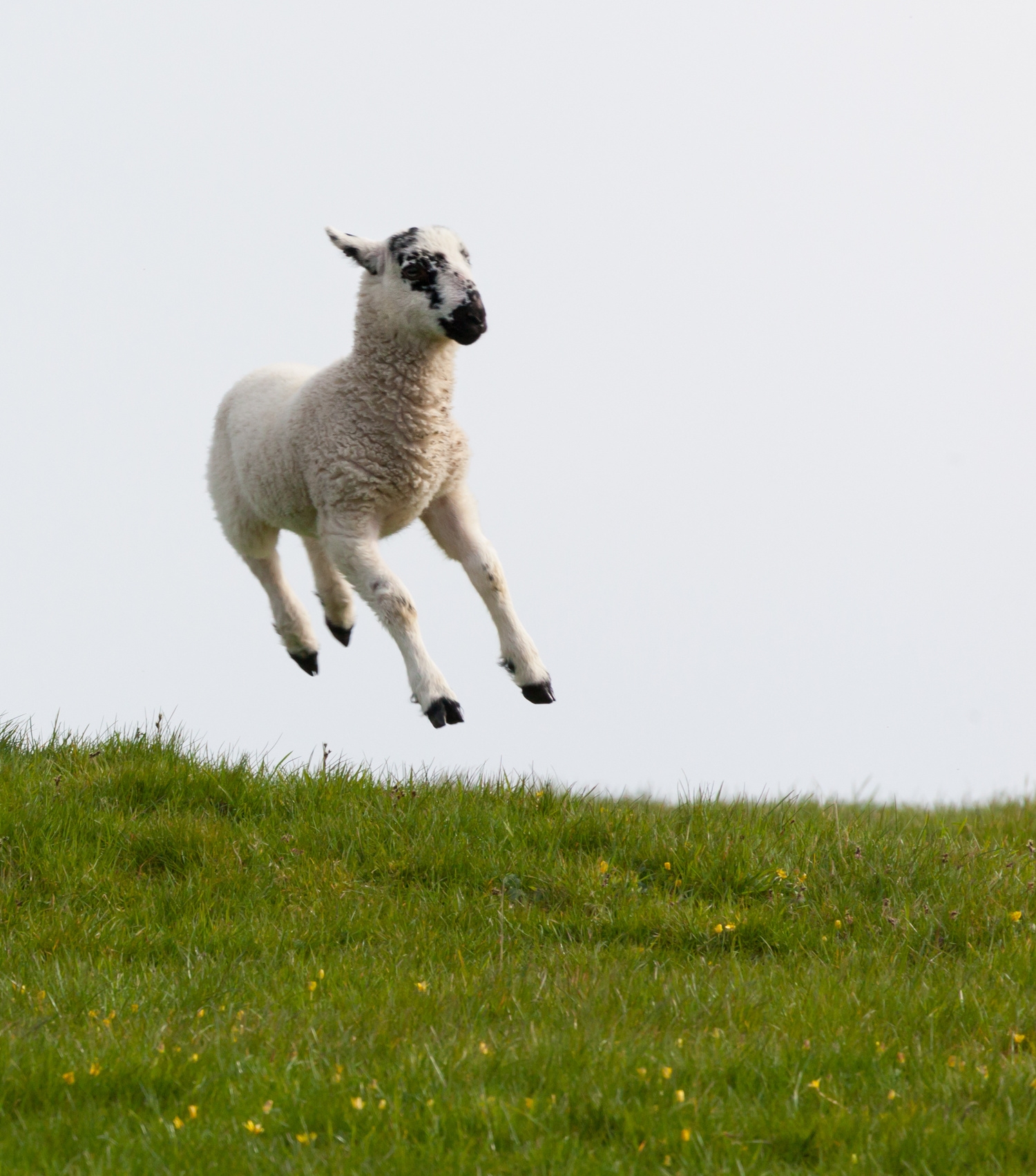
All growth requires leaps. And because healing is really growth on a careful, remedial plan, healing requires lots of leaps too. The first leaps are leaps of faith— in trusting yourself, in trusting your healing providers, in trusting a process of healing that you can’t really understand, but know that you need. These leaps of faith are huge, and the thing about leaping is that you have to do it a lot to believe in it. If you have ever watched baby goats, or sheep or foals, they try their legs out constantly —they buck, they leap and they land. They wiggle in the air. They leap and they find their ground. Over and over.

The thing about leaps is that they are both frightening and exhilarating. Like the first time you learn to jump off the high dive, or ride a bike. Leaping means testing out the laws of nature— testing out how you interact with the world. And in healing from trauma, the leaps are often to test out a world that does’t run on the old laws of trauma. Trauma creates a world with its own natural laws—and you know these laws in your bones. You know what will happen when you make the wrong move, you know what will happen if you speak. But in a world without trauma, you actually don’t know the rules. When you first start to leap — to speak up for the first time—to say what is true for you—to risk asking for help— to say “no” —risk being vulnerable— all the things that the laws of nature of trauma forbid: it will be both frightening and exhilarating. These things which look so average from the outside are truly leaps for healing.

And just like the baby animals learning to use their legs and understand the world: you need to enjoy those leaps. Savor the exhilaration. Take a moment to feel proud of the leap. Smile. Wiggle in your chair. Pat your self on the back.

Trauma is such serious business and healing requires leaping—it requires playfulness. It's so counterintuitive. The only way to heal is to stretch into the unknown, to try something again and again and when you leap—you are really playing— you don’t know the outcome—for a moment everything is suspended—and then you land—and know something about the world, and yourself, and probably relationships that you didn’t know before. What leaps can you take today? How can you savor the leaps? How can you support others to play and leap?

© Gretchen L. Schmelzer, PhD 2014


The Something Plan

Something is always better than nothing

Here are the rules of the Something Plan:

1. Just do Something.

2. Something is always better than Nothing.

3. Somethings always add up to Something More than you can imagine

I need a reboot of the Something Plan. I have written about it before, but like any good learning, it needs to be repeated. I have come off of a long fall of work and travel and have found that most of my healthy routines are a bit frayed around the edges. How do I get back on track—and do my work—and get ready for the holidays? It all seems like too big of a goal.

Like all good plans, the Something Plan was born in desperation after many years of failing at a more ambitious and noble plans. The kind of plans that are in self-help books and on the Internet. The kind of plans that seemed to work for everyone else who appeared to have more discipline and willpower than I did.  The something plan was initially created for exercise. I was a rower in college and a few years beyond and by the end I was training 6-8 hours a day. My warm up for a two-hour practice was a five mile run. My young athlete self was unaware of the precedent she was setting.

Flash forward 20 years or so and you find me working long hours, out of shape, and trying to fit in time to exercise. I only have maybe 20-30 minutes a day to exercise but since my old ‘warm up’ was five miles I continually decide that there’s ‘no point’ to only going 2 or 3. It should be noted that this is all in my head. With a wild animal chasing me I would be lucky to run even 2 or 3, but the comparisons in my head make it so that I stop bothering to do anything at all. Years go by. Not doing anything wasn’t helping me.

Enter the Something Plan.

Tired of feeling tired, and tired of never getting past “Day One” on any plan to get fit or healthy, I institute the Something Plan. The only rule is you have to do Something. And you have to do Something every day. Instead of complicated charts, the plan looks the same every day: Do Something.

Five minute walk. Something. 20 min walk/jog. Something. Stretching. Something. 30 minute bike ride. Something. Raking leaves. Something. Parking at the end of the parking lot and walking in. Something. As long as I did Something, I succeeded at my plan.

And as I did Something I repeated the Something Plan mantra: Something is always better than nothing. The mantra is the antidote to the ‘why bother’ voice. The mantra keeps you doing Something. The mantra keeps you from giving up because you aren’t doing ‘enough.’ The amazing thing about Somethings is they add up. And the more I did Something, the easier it was to keep doing Something. The Something plan for exercise has helped me back to doing a 5K and a mini-triathlon—and I am hoping it will again. And so whenever I fall off the exercise wagon, like I have recently,  I reinstitute the Something Plan.

The Something Plan is especially good for healing and recovery and anytime stress levels are high. Under stress or when we feel bad we often shift to hibernation mode. We avoid the activities that would actually help us feel better. And to make matters worse we usually beat ourselves up for not doing anything, or for not being able to do what we usually can do on our better days. This is especially true when we have put off our healthier behaviors for a few days or weeks. There’s some weird mental math that makes us think that we have to ‘catch up.’ That we have to do all the miles, or sit-ups or classes that we missed. And that’s too big, so we do nothing. Instead of Something.

This is when you need the Something Plan. Any time a task feels too big or you find yourself not getting started and you just keep saying “I should really do this…” Engage the Something Plan. I find the Something Plan really great for traveling, or times when commitments to other things make time scarce—like now at holiday time. Is there something that you are not doing because you can’t seem to do it ‘right’ or ‘enough?’ Exercise? Organization? Self-care? Eating more vegetables? Meeting new people? Writing? Give the Something Plan a try. Let me know how it goes.

© 2014 Gretchen L Schmelzer, PhD

Slow Days for Healing

GLS, 2004

GLS, 2004

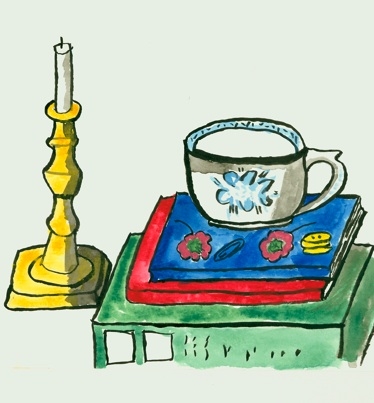
I’m sitting at home on my couch nursing a cold with a mug of tea and I have had to concede that today is just going to be a slow day. I am grateful that it can be; I have woken up with a similar fevery-cold on days when I had to be very much ‘on’ –in front of a large group of people for three days in a row, and so I am especially grateful that I don’t have to rally today. I can take it easy, stay in jammies, and let myself get better.

Physical ailments make it obvious when you need to slow down. Yes, there are times that you have to push through, but we mostly feel okay acknowledging when we are physically ill and need to take a break: even if it is only for the sake of others—so we don’t make them sick. And I know that when I am able to slow down, I get better faster—and the cold doesn’t turn into a sinus infection.

Healing from trauma or any psychological wound is much trickier. It is so much harder to see when you need to take a slow day. You are so used to struggling with it because the emotional ‘fever’ can feel so chronic that its hard to know what constitutes enough ‘need’ to stop, take a break, slow down.

There’s no manual for this. No emotional thermometer that can read your ‘temperature’ from the outside. You can create a 1-10 scale—where 1 is miserable, need to stay in bed and 10 is outstanding I feel great! Let’s go! But you need to understand, actually everybody needs to understand, that that scale only applies to you. Only you know when you start sinking below 5, or approaching it. Only you know what is too much. No one else can know that for you and it doesn’t matter whether your 5 is the same as anyone else’s. This is the big trap everyone gets in to with healing: I shouldn’t need the help, I can make it through, No one else needs this…

I confess that there were days that I told people I was sick when I needed a slow day, a healing from trauma day.  If we lived in a culture where people understood the need for such days, I might have been more forthcoming, but we don’t. So I told them my need for a slow day in a language they would understand—I have the flu, I have a fever, I threw up. These are understandable problems for which you are allowed space. And that is the most important part. A slow day gives you the space to heal. It gives you rest in any way that you need it: sleep, rest, old movies, walks in the woods, books, whatever. Rest. Mend. Repair.

I am talking days here. A day here. A day there. Maybe a few strung together. Truthfully, as a society, we are still lousy at slow days for physical illness and there is still a Rambo culture of never calling in sick. But there is an even more desperate need for slow days for psychological healing. They serve such an important purpose, they allow the healing to happen faster and allow you to replenish your resources. Slow days give you a break from having to perform when you are really not up for it—they respect other’s ability to carry on without us. We all need to pay attention to when we need slow days, and we can all do a better job of supporting others to take them. Remember…healing is brave, healing is badass. So, slow days are badass. So there. 

© Gretchen L. Schmelzer, PhD 2014